
Listen on:


 Transcript This Audio
Michael Georgiou (00:01.464) Hey everyone, welcome back to Tales from the Pros. I'm your host, Michael Georgiou, joined by my co-host, Eric Lawrence, here at Imaginovation. Today's conversation is one I've been looking forward to. We've been talking about where the smartest money in tech is actually going right now. And what that means if you're building or scaling a digital product in 2026. Our guest today has a unique vantage point. He sits across the table from hundreds of founders every year.
evaluates their technology, their business models, their teams, and decides whether to write a check or not. That pattern recognition is rare and very, very valuable. And it's exactly what we want to unpack today. Jim Ferry is a partner at Volition Capital, a Boston-based growth equity firm named a top growth equity firm of 2024 by GrowthCap. Since joining Volition in 2014, Jim has focused on high growth.
founder-owned businesses across software, digital marketplaces, ad tech, supply chain technology, and hardware-enabled SaaS. His portfolio includes companies like Butterfly MX, Jazz HR, Grove Collaboration on the New York Stock Exchange, and most recently, a co-led $80 million investment in PETScreening, a company built right here in the Carolinas. Jim, it's great to have you here today, man. Thank you so much. Thanks for being here.
Jim (01:22.43) Yeah, thanks guys. Thanks for having me.
Michael Georgiou (01:24.62) Yeah, very, very excited and kind of like what we were talking about a few minutes ago before the, you know, we started the episode. It's great to, honestly, man, it's great to have business leaders like yourself who have just such diverse experience. You've worked with so many different companies and, you know, right now with just kind of, with the way investment, the investment game is changing, obviously, you know, better than us, this is why we have you here.
but just kind of in technology with AI and just a lot of noise and there's a lot going on right now. Obviously, as you know, it's great to just have you as kind of a guide to help our audience and just kind of provide the highest value. So we really appreciate you being here.
Jim (02:07.851) Yeah, I will do my best. One correction, as you said, we look at hundreds of businesses is probably closer to thousands of businesses. we have a, I don't want to jump the gun, but traditional kind of growth equity sourcing model. So we're looking at thousands of business annually and investing in a handful of them. So it is a high volume, lower hit rate game. But for us, that means that we get to see tons of different business models and
Michael Georgiou (02:15.016) wow, okay. There you go.
Michael Georgiou (02:21.944) Yep. Wow.
Jim (02:36.203) a lot of different types of founders along the way.
Eric Lawrence (02:38.553) Well, in gym, I know you've been abolition for a decade now, right? What brought you there and what's kept you for so long?
Michael Georgiou (02:39.03) No, that's cool. Yeah.
Jim (02:47.947) Yeah, so I think it's 12 years now. So joined right out of undergrad, which is a little unique. I don't know too many people I graduated with that are still at the same company. So I think that says a lot about number one, the people here in the culture. I know that sounds cliche, but I spend more time with the people here than I do my wife and kids. So you got to like the people that you're working with. So I think that we built a good culture. Number two is, you know, it's been a growing fun. When I joined, it was
Eric Lawrence (03:05.807) Yeah.
Michael Georgiou (03:09.483) yeah.
Jim (03:16.523) $170 million fund. on our fifth fund now. It's $675 million. You don't kind grow without some level of success or you're not going to have continuous LPs that are investing in your fund. So that's number two. And number three, I just really believe in our underwriting strategy and how we think about the market as a firm. Just for context, we tend to be kind of series A, series B investors. So think about our check size.
Somewhere in the 15 to 60 million range, we tend to work with businesses that have found product market fit somewhere around five to 50 million of revenue. it's not like the earliest stage side of VC where you're kind of investing in an idea or back in a napkin, drawing like people might think of Silicon Valley that HBO show, I think. then like the other end of the spectrum would be like the large private equity funds that are many times buyers of the companies that we invest in.
You know, we're kind of right right in the middle there I'd say and I feel like that's a good place to be from a risk reward perspective so, you know ultimately try to limit the Another losses that we have were early stage VC has very high losses But you have a few winners per fund that kind of carry the returns of the entire fun So I think from our perspective we view it as You know low loss rates, which means, know, it's kind of lower risk, but we still can have those
Michael Georgiou (04:16.91) you
Jim (04:40.691) really big winners. So feels like a good kind of in-between asset class from a risk reward perspective.
Eric Lawrence (04:46.125) Yeah, that makes sense. And I have to imagine you've evaluated thousands of digital businesses up close at this point. I am interested to know like, what does that volume of exposure do to how you think about products and kind of like a second part of that? What do you see now that you didn't know beforehand? So like, what are you seeing now that you like understand that you didn't know before when you were just getting started?
Jim (05:10.771) Yeah, it's funny. think everyone that comes into this industry goes through a cycle where you come in and you think every company you talk to is like the hottest company of all time and you like everything you want to invest in everything. And then like you get beaten down a little bit by everybody. And then you think every company you wind up hating every company because we've never invested in a perfect company. They truly do not exist. Every business that we invest in has risks. Every business has
Eric Lawrence (05:20.612) Yeah.
Michael Georgiou (05:31.375) Yeah.
Jim (05:38.252) a little bit hair on it or something that you wish was better. I think what really separates great investors from folks who maybe are mediocre is being able to recognize the risk, see inflection points, et cetera, and be able to kind of take that risk. so I think that one thing that I probably underestimated when I first joined here is that
Ultimately, we invest in people just as much as we invest in the businesses. And that's really hard to quantify. We've done a lot of stuff like the personality test and so forth to try to figure out, you know, is this person like, you know, going to be successful? We've tried to run a lot of analysis internally, looking at our most successful portfolio companies relative to some of the ones that maybe didn't scale the way that we thought they would.
Michael Georgiou (06:14.284) Yeah.
Jim (06:33.503) There isn't a lot of commonality to be honest. It's kind of all over the place. So it's one of those things that through pattern recognition and trusting your gut, you kind of got to make a call. Is this the person that I want to back? like for me as an investor, know, I feel like I need to be excited coming out of the first meeting. And so many times you got to trust your gut and say, Hey, that's someone I want to back no matter what they're doing.
I just happen to like the product and market that they're growing after. And then obviously we request data and try to validate all that.
Michael Georgiou (07:05.794) And what's really cool, I like what you said, and I agree with you, is the people aspect of it, right? Because there's so many startups out there and existing businesses that have new ideas and things like that, and they're trying to get funding even for an existing product that they might have that they're trying to kind of maybe out say, I don't like the word pitch, but I guess pitch to you or even present to you.
But I think what's very important, what you said is very valuable is the fact that you look at the people that you might possibly be working with. I had a good, one of the best mentors I ever had, he was a big time investor and he was a CEO from large public companies and he said the same thing. He says, know, Mike, there's so many products out there but.
the person can make it very unique where you want to work with that person. It's not just the product. The product obviously is very important, obviously on the business perspective of it, but the person has to back it. You need to enjoy and have fun who you're dealing with. If they're a pain in the ass and they're kind of this, that, and the other, it just makes it a lot harder.
Jim (08:22.653) Yeah. And like to that point, like I've seen markets and businesses where the best product doesn't always win. It's execution, which stems from people at management.
Michael Georgiou (08:33.41) Yeah, very true. you know, talking now like with 2026 in this market, obviously it's ever changing. There's, you know, new technologies that are coming out. AI is everywhere. And as we know, and most of the products I'm sure that you come across, have AI. But, you know, when you look at like, kind of when you're evaluating a product in the beginning, what do you have to see?
in terms of like kind of what's going to get your attention. What's really going to get that attention from you in order for them to have a chance at getting some sort of investment or to go through the process with you.
Jim (09:14.484) Yeah.
Jim (09:18.283) Yeah. So, um, we're in like an unbelievable, a time of unbelievable transformation when it comes to AI and the speed at which the transformation is happening. So if you think about some of the other, um, ways of technology disruption that have happened over the past 30, 40 years, the, you know, the, internet was one, um, and there was a lot of, like, I think we can all sit here and say the internet was successful. Um, and, but there was also a.com.
Michael Georgiou (09:44.354) Yeah.
Jim (09:46.438) a bubble that burst and a lot of people lost a lot of money. But throughout that, you know, there's, there's been a lot of successful companies. I think the next wave that happened was, you know, on prem to cloud. that's like license and maintenance companies to SaaS businesses. And we're now in this kind of third wave. So, you know, I view this wave as, know, an unbelievable opportunity for me as an investor, because there's going to be, you know, tons of wealth creation made over the next 10.
20, however many years. know, but what we're trying to avoid is what happened in the dot com era of, uh, you know, backing, uh, you know, getting caught in the hype cycle, I'd say. Um, so the question that I think we're asking for every company in Volition's investment committee, that's, that's kind of where we go and present to the team on the companies that we're looking at, I think is very consistent across every firm that I'm talking to as well. It's the question of durability. Um,
Michael Georgiou (10:18.008) Mm-hmm.
Jim (10:44.911) And how durable is the asset over time? Even if it's a native AI business, for example, I think like what, you know, the first wave of AI businesses were kind of just a wrapper on top of someone else's technology in a way that what I mean by that is it's like a user interface on top of something that Claude or ChatGPT have created. That's easily replicable. That means there's no defensibility. Code is no longer a barrier to entry.
like it was before, because you can use AI for coding so fast. So there are other ways to have a durable product or a durable mode in the long run. Could be having first party data, could be distribution strategy, could be integrations that are non-public that are difficult to get, could be a network effect in your user base, et cetera, et cetera. So the durability question is the most important question that we're asking ourselves.
for every company that we're looking at for potential investment, as well as our existing portfolio. Cause we have existing portfolio that we've been invested prior to this AI wave, I'd say. And they're all in the process of adopting AI because every company is an AI business in a way these days, you almost have to be. So I think everyone's in this learning phase, but it is amazing the companies that we're seeing now that are native AI. And what I mean by that is they have been formed in this
Michael Georgiou (11:53.87) Mm-hmm.
Jim (12:13.131) world of AI and they just think differently. It's not okay, like I got to go hire five sales reps because they all carry this quota and that's how we're going to get to a five million run rate. A lot of them are thinking outside the box and creating their own tools and also you're of using AI tools where you a smaller head count and sometimes less is more. It's easier to manage a small amount of people. It's easier to hire A-list players when there's a smaller team, et cetera, et cetera.
Michael Georgiou (12:37.329) yeah.
Jim (12:42.571) Long winded answer, but durability is the question we're all asking.
Eric Lawrence (12:48.389) I actually want to drill a little bit deeper into the durability side because I think of durability in a lot of ways. There's the durability from the business standpoint. Like you mentioned, is this a business that's built to last or can it be easily replicated? but on the technology side, do you guys ever dig deep into like the durability of the technology and look into that? And what I mean by that is you're, you see with a lot of people that they can create digital products using
Jim (12:51.467) you
Eric Lawrence (13:17.581) no code, low code platforms nowadays where it might take them a couple of weeks to spend something up and put it out in the market. but yeah, exactly. There's, there's a lot of those out there. Do you guys ever evaluate like the technology stack behind a business when you're evaluating the durability of it?
Michael Georgiou (13:24.344) or a vibe coding tool, lovable, replant, yep.
Jim (13:35.884) 100%. Because I think what happens for most, pretty much every company where we invest is like, they're young, they're scrappy, they're probably telling customers they have a product feature they don't have yet and they sell it and then they have to go create it really quick. So a lot of times that we come in, there's a decent amount of technical debt that needs to be cleaned up. That's not uncommon. And, you know, I tend to think about businesses in three different phases. Like one is the building phase.
Eric Lawrence (13:48.09) Yeah.
Jim (14:05.233) the next is growth, next is like operating in a way. And we kind of invest in between that building and growth phase. And I think like that's where you start to clean up all the things to become a business that can scale from a scalability perspective on the tech side. So it's not uncommon to have third party, excuse me, technical debt. So a lot of us here are kind of career investors.
A lot of us don't have a super technical background. We use third party firms to help us evaluate that. Sometimes if it's like, for instance, like a cybersecurity company, we've had successful cyber investments before. So we may just pull in the CTO there to spend a day with the team and, you know, kind of go through the code and so forth. So there's a lot of different ways to go about it, but to answer your question, Eric, for sure, it's always on our mind.
Michael Georgiou (14:59.938) And I do have a question about that as well. think, Eric, that's a great point, great question about durability aspect of it. Because we see that too kind of on the other side of software development. At least we'll deal with technical debt, right, when there's a product and it's just kind of a mess and we have to redo it or clean it up or whatever it is. But coming to that, for what you see, Jim, in these days, at least the last 12 months or so with just this kind of technology revolution, so to speak.
Do you work with these product companies that are developing their product through more of these vibe coding tools? Like they have a great concept and idea and they might even have customers. Obviously we kind of understand, right, when you have a customer base and you're making revenue from your product, that's a lot more enticing to investors because they're going to get their return on investment quicker and all that type of stuff I'm sure is very helpful in your process.
But in terms of like initially, when they're a little bit earlier, or even when they are trying to scale and they're trying to seek funding from someone like yourself or a firm like your, like, like volition capital, is it more like they are building the product using vibe coding tools or do they actually have, agencies like us, who they use and who you also talk to where they need to improve the product on a skill ability, skill ability perspective, or is it
completely changed now, it's not the same.
Jim (16:29.235) I think that there's a spectrum of how, different companies and even within our existing portfolio are kind of using the AI tools, for, you know, for product and engineering, I'd say that that's probably the segment of, or operational function of a lot of the businesses that has been transformed the most, which makes sense. Like the people that are going to adopt the tech tools and AI tools first are going to be the coders and the engineers.
And, yeah, so that we've seen like massive improvements on our, on our, in our portfolio. And it's not like we're, firing half the, you know, the, R and D team is that you're not hiring as many incremental. You're almost holding them flat because the output is so much more efficient and you might even be spending a little bit more on R and D because now it's usage based and token based, but you're picking up cost efficiencies on the GA side and.
Michael Georgiou (17:16.43) Mm.
Jim (17:24.971) you know, the sales and marketing side, because there's a lot of repetitive tasks that you would have hired people before customer support, for example, that can be accomplished by AI. So I think most companies, pretty much every company I talk to, the engineers are, of course, are using some type of coding platform to kind of get a, a prototype. It's not there yet where you can just like, you know, okay, now I have this prototype, like launch it, you know, commercially. So
Michael Georgiou (17:42.318) Mm-hmm.
Yeah, the prototype.
Jim (17:53.002) I think that's where a firm like you can come in and help out, or if they have enough capacity on their engineering team, it's about building the scalable solutions to avoid some of the tech debt that you're asking about, Eric, around all the back office stuff and hosting, as well as all the security and compliance stuff, depending on the industry.
Eric Lawrence (18:12.419) Yeah, that's what we're noticing too, is that for a lot of people when they are going through that initial phase, where they're just seeking product validation, they want to make sure that their business is validated. Using vibe coding tools is an excellent way to get it in the hands of people and really understand, hey, is this something that the market has a demand for? And then when they go a little bit deeper into the maturity side of things, they say, Hey, we want to grow our business and really kind of get the forever home, so to speak of, of
Michael Georgiou (18:13.206) No, that's helpful. Yeah.
Jim (18:21.407) Yep.
Eric Lawrence (18:41.497) technology and in the product itself, they would go more custom development route.
Jim (18:47.037) Yeah, that's right. And I think we're even talking about like Bobcoding for, you know, for a commercial product that third party users are, or, companies are using. I've seen within our existing portfolio, people are looking at all the third party spend that they have and saying, Hey, where can we eliminate this third party spend and create the solution in house? and
That's another area where like it might be easier to spin things up a little bit faster because you're only using it internally. So it doesn't need to be a scalable. And the guide to portfolio company eliminate almost a million dollars of annual spend. They're a pretty big business. but they, eliminated almost a million dollars spend, just by looking at their software vendors that they were using and deciding, Hey, there's a few products here that we're just going to build in house. what I found interesting though is there's a lot of
Michael Georgiou (19:34.027) Mm-hmm.
Jim (19:36.906) you know, some portfolio companies are doing the same analysis and saying, it's a matter of convenience. So it's like, yeah, I could definitely build that, but it's only five grand a year. Like if it's like a simpler tool, it's like, it's not worth our time to maintain it. So I think like the thought process that, you know, software is dead because everyone can vibe code something like.
There's a convenience factor to having someone who's built something that's purpose built out of the box. I find it hard for a company to build everything in a house because they also have a product they need to be building to sell to customers. Like at a certain point it's like, Hey, like we, we, just makes sense from a convenience and probably cost perspective from a maintenance perspective to, to be using third party AI and software solutions.
Michael Georgiou (20:17.576) Exactly, I agree.
Michael Georgiou (20:30.402) That's so great. Eric, we should hire Jim to kind of be a spokesperson for us. No, it's so true. You're a thousand percent. Yeah. We're seeing things very similar to you in kind of a different, obviously a different way, not the investment side, but yeah, you're exactly right. It's like every company really is, if they're not already, well, many older companies are still not nowhere near innovative as they should be, but
Jim (20:35.659) Thank
Michael Georgiou (20:59.244) You know, me and my business partner, my brother-in-law, when we started this, you know, our company, 2011, we've always said that every company is going to end up being a software company. You know, like they're going to have to try to be up, they're going to need to be super, super innovative and have, you know, their own IP and things like that, or at least use a lot of IP and different softwares and tools to run their company. But like I was saying before is the main owners of, or the founders of the startup, for example, they, they,
Like we've noticed that they really need to focus on sales and marketing and kind of the operational side. There's so much to do in building actual business. And then the technology side is like a whole different beast to tackle.
Jim (21:41.14) Yeah. It's funny, like even from a consumer perspective. So, there was a mobile app called Cal AI where you can take a picture of your, your food and it tells you the calories and everything. like, yeah, I, I, I use that app, as my new year's resolution. you know, it, I could eat probably vibe code that myself. I can also just take a picture and, ask.
Michael Georgiou (21:50.604) I've used it. Yeah.
Jim (22:09.146) ChatGPT, Gemini, Claude, all of them, how many calories are in this? And they'll all tell me, but it's a convenience factor of having the app, the user interface is nice. Like I'm like, ah, it's $30 a month, or a year, I think. That's worth it. And they were just acquired. you know, so I think that's a great, just like microcosm of how I think about convenience when it comes to
Eric Lawrence (22:30.851) Yeah, in actually, speaking about examples, I wanted to touch on, you know, one of the ones that you guys have worked with the company pet screening. And specifically, these guys I see they're based out of Morrisville, like we have our home base right in Morrisville, North Carolina. So right next to where they are. And I know pet screening for I guess the audience who aren't aware of who they are. They basically give
Michael Georgiou (22:31.202) Yeah, I you.
Michael Georgiou (22:44.206) Mm-hmm.
Eric Lawrence (22:54.917) property managers and landlords, the ability to screen renters, pets, and validate the status of, assistance animals. So it's, it's a pretty niche vertical software solving an unglamorous problem. But I wanted to know, you know, your company volition co-led an 80 million investment in pet screening from a product perspective. What made you go from interested to convicted on this?
Jim (23:23.411) Yeah, it's interesting. So we've done a lot in kind of property technology investments over the years. And that's ultimately what this is at the end of the day. It's part of the application process for people when they have a dog and they're trying to move into a multifamily building. And the key question of diligence was, once again, durability. How hard is it to have a consumer fill out a form and
you know, basically validate that, their pet that they're saying, you know, as a service animal is actually a service animal or in vice versa. because I think everyone's seen like the dog on the plane that someone that slaps us service vest on that clearly the behavior is not a service animal. you know, that only hurts the people who actually need service animals. it kind of gives them a bad rap.
Eric Lawrence (24:12.485) Yeah.
Michael Georgiou (24:21.634) Yeah, that's true.
Jim (24:23.147) So pet screening, they have like a large database and that's difficult to replicate. There's a lot of disparate systems around this. Like there isn't like a central depository to say yes or no. And it's difficult to get all that data. So even though it's kind of third party data, it's the way that they're integrating and going to get that data that I think.
almost becomes their own first party data, if that makes sense, over time, which makes us feel like there's a durability component to that relative to potential new entrants that would have to go get all these data sources where it's almost like the bigger they get, the more the people that are actually collecting the data are saying, why would we work with someone else because PET Screening is already doing this. And they're a pretty skilled business at this point.
Eric Lawrence (25:18.425) Yeah, I'm taken away from that. Build a product, solve a problem that's hard to replicate.
Jim (25:25.195) 100%, that's it.
Michael Georgiou (25:26.188) Yeah. Yeah, no, that's very true. Yeah. I mean, yeah, it's that's think a really a key component to getting kind of the funding at least that they're that they're kind of looking for. know, and when it comes to Jim, like when it comes now in twenty twenty six, you know, and now I can't believe it's already April 1st. It's this year. It's already flying by. It's nuts. But, you know, what are you seeing, like in terms of like
Jim (25:50.4) Yeah.
Michael Georgiou (25:56.685) you know, smart money that's actually going out right now. What categories are getting kind of serious looks in business? in terms of, you know, supply chain companies or, you know, healthcare, whatever it might be. Like what industries and categories are you seeing that's really getting a lot more attention these days from you?
Jim (26:22.371) well, I think like, if you rewind again, back to like the last evolution of technology where it was licensed maintenance to cloud and SAS businesses, like if you picked a winner in every single SAS category, you would have made a lot of freak of money. And I think that's playing out now. so I don't like think it's necessarily like a sub sector. It's that every existing, sector is being, almost reinvented with the use of AI. So,
Michael Georgiou (26:32.055) Mm-hmm, yeah.
Jim (26:52.349) we're continuously looking for interesting AI solutions. And there's almost like two buckets of them. One would be like the super hypey ones. We just saw one that, that are growing like incredibly fast. And we just saw one that, you know, went like zero to 20 million run rate got over a billion dollar valuation in like nine months. And from Volition's perspective, we're not going to play there. that, that that's like, more of like a Silicon Valley venture type mindset. And so we're looking for,
Michael Georgiou (27:09.739) my god.
Jim (27:21.919) You know, AI businesses that have the durability that I mentioned, but the founders are, you know, less consumptive on in terms of capital burn, but still have huge aspirations. So, we're seeing a lot of like subcategories in what's interesting is I feel like there was this initial wave of like the early adopter native AI companies and everyone just assumed that all of them would be crazy successful. So they all got crazy valuations. I think we're kind of getting into this zone now where everyone's like,
Well, every new business is a native AI business, so they don't all deserve this crazy valuation. like multiples, they are kind of coming back to reality, I'd say. So we're spending a lot of time there. And also note that I'm also thinking about, okay, what are businesses that are already less disruptible from AI because maybe like the core software was never the differentiator and what I like. So.
A couple of examples of that, we have a lot of hardware enabled software companies in our fund. it's like basically a hardware component with a recurring subscription. I don't care how good your AI is right now. I can't create hardware. So that becomes a moat in and of itself. And even like the larger funds that tend to be acquirers of the types of business that Policien invest in. A lot of them before were like, we don't want to touch hardware. We don't want to deal with the inventory cycles and the ordering. Now those are the companies that they're asking us about.
Michael Georgiou (28:30.926) .
Jim (28:44.051) because they see that there's durable mode to AI. Another example would be marketplace businesses. So have a few marketplace businesses. Technology was never the differentiator there. It's balancing the supply and demand in a marketplace and then ultimately creating a virality effect where hopefully they kind of build on each other. Where the more supply you have, the more demand you build and then vice versa. And so we've had a bunch of companies like that.
Michael Georgiou (28:48.61) Hmm.
Jim (29:11.891) because we haven't been like a pure play software investor, it's, you know, tech generalists, we've done a lot of software and some people, some people may call those software, but when I said pure play software, I just kind of think of like your workflow software tool that's been like heavily disrupted by AI that hasn't really been our portfolio. So our existing portfolio is a little more stable than, maybe some other funds who kind of had that strategy. so I'll put it into like two camps of ones like that, the native AI business, and then the other one's like,
Michael Georgiou (29:29.955) Mm-hmm.
Jim (29:40.651) Hey, what are these categories that they're all adopting AI, but you can't vibe code your way into a competitor into those categories, if that makes sense.
Michael Georgiou (29:51.087) Yeah, no, makes sense. Yeah, it's kind of like, you know, I think Erica and Jim, touched on this before. It's something that, I'm trying to remember, it's very difficult to be replicated. know, it's something that's a lot more complex, not like a simple, you know, just to take a photo and all that. And obviously the convenience factor of it, I'm sure it makes a huge difference. And even just the market demand of it and...
even if they have like a, if that product or whether it's physical or software or both, it helps, I'm assuming to have like a kind of like users and maybe even already generating revenue. Cause it seems like they already have a proof of concept and they're a little bit further down the path.
Jim (30:39.635) Yeah, that's right. mean, like, as I mentioned, we tend to work in businesses like 5 million plus in revenue. So from our perspective, we're taking away, you know, product market fit risk, we're taking on sales and marketing product, like future product and execution risk. However, I think for earlier stage VCs, because to our point, it's easier to get the prototype in market. Now with vibe coding, and like they're probably looking for more traction from a revenue perspective to your point, Michael, like
Michael Georgiou (30:44.907) Okay. Yeah.
Jim (31:09.067) I think gone are the days where it's like, Hey, we need a million to go build this product. It's like, no, like one person can go build this product now. and so, you know, think companies are just getting to scale exponentially faster than they were before. which means for us evolution, like the historically you might've had two or three years worth of data. You might have six to nine months now. So like, it makes it a little bit harder where, you know, some customers may not be up for renewal yet.
Michael Georgiou (31:09.217) Okay. Yep.
Michael Georgiou (31:32.824) Crazy.
Jim (31:37.472) if they're on annual contracts or something. So you might have a lot of customers that are in a trial phase, for example, and yeah, the business is getting a lot of hype, but like all of sudden there's a mass turn event or something. And we've seen companies that have had that, especially in the consumer side. So there's ways to diligence that, but like the diligence has changed a little bit. You got to talk to a lot of customers and ask the questions around like, is this core to your actual day-to-day usage or?
Michael Georgiou (31:45.614) Mm-hmm.
Jim (32:06.153) is this kind of a nice to have where you may churn in a few months. So there's ways to diligence it, but probably less data companies get into scale faster.
Michael Georgiou (32:17.526) And why, a quick question is, why do you have the minimum, I guess the, yeah, that minimum of five million and not three, or is it just something that, just with your ICP?
Jim (32:27.773) It's a little, it's not a hard line in this end. think like a lot of growth equity funds have 5 million run rate as like, Hey, someone found product market fit. But, for some companies, like if you're a lower price point product, for example, like a lot of these AI companies are it's, you know, sub a hundred dollars a seat and people are kind of that's what makes it easy to trial them as well.
Michael Georgiou (32:34.509) Mm-hmm.
Jim (32:51.081) You know, if you have a ton of users and enough data and you're at 3 million run rate for us, like we'll, we'll absolutely look at that, especially if you're growing fast, cause it takes a couple of months to close the deal anyways. So you may even be at 5 million run rate by that point. flip side is if you're a 10 million run rate business and there's some sectors like health, like healthcare, technology solutions, for example, if you sign like two carriers, you might get to 15 million of revenue.
Michael Georgiou (33:00.846) Hmm.
Eric Lawrence (33:14.405) Yeah.
Jim (33:15.027) We have two customers, like, do you have product market fit? So it's a little bit of an arbitrary line that a lot of people use. And ultimately you just want to feel like there's enough data points that you have product market fit and we can probably build some type of financial model that to some degree of certainty, feel comfortable with based on the unit economics.
Eric Lawrence (33:37.476) Yeah. Yeah. From, from a pattern recognition standpoint, because you've seen a lot of businesses succeed. You've probably seen a lot of them fail for the ones that have grown. get funding from you, but then they hit a wall. there any patterns that you notice that happened behind the scenes as to why they don't succeed even after the funding?
Michael Georgiou (33:38.092) No, that's cool. Yeah, it makes sense.
Jim (34:02.387) think that total addressable market opportunities is probably one of the largest limiters or most common. Yeah, total addressable market. So like what is the market opportunity that they're going after? I think Tam tends to be overstated pretty much on a lot of investment memos because
Michael Georgiou (34:10.808) Can you say that one more time?
Jim (34:29.467) It's easy to say, all right, yeah, we can serve every SMB in America, a software company. So our tam is enormous, but there's almost a cut below that. Some people call it some, some people call it Sam, but it's basically like who is serviceable out of that addressable out of that tam. And that's a huge cut. And I feel like that's where people. And I'm sure I'm guilty of this as well. Like maybe miss like who the actual core buyer of this product is. Cause it's probably a sub.
sub-segment of your TAM, if that makes sense. So, you know, the serviceable addressable market relative to the total addressable market can be a huge delta. That's one. I'd say the other is I think sometimes there's a tendency of founders to be thinking short-term. And what I mean by that is they're thinking
All right, I got to hit this year's revenue, which means I need to hit this quarter's revenue. So they're thinking quarter by quarter in terms of like their vision. And I think a really good founder and management team is thinking, where do I want to be three to five years down the line? And they're working backwards from there. So part of that would be, Hey, I know we want to hit this number this quarter, but there's other products that we need to be building to get us to where we want to be three to five years from.
So it's kind of having that long-term vision and aspiration as opposed to like short-term wins and success.
Eric Lawrence (35:55.674) Yeah, that could lead to burnout for sure is if you're only focused on the quarter ahead and you're doing everything you can and once that's up then what's next.
Jim (36:06.059) Yeah, well, many times I think for companies that we invest in, the exact product and systems that got you to 25 or 50 million in revenue are not going to be where the next 50 million of revenue come from. You may need to reorg the sales team. For example, we've done that multiple times where, you you start with three sellers and it becomes 10 over time and then it becomes 20, for example, and
You need to change up the regions that they're in because it doesn't make sense anymore. Or you need to change the lead distribution because the best reps are getting the best leads and that means that no one else is scaling. So there's little things like that that kind of come into that concept that I mentioned earlier of like building growth and operating. Like those are the type of things when like you become like a CEO becomes an operator. They start like managing, you know, they're
They're hiring people that can go operate and they're not, and they're delegating. They're not trying to get their hands in everything, which is like another thing that I see sometimes holding businesses back is not hiring the right people for a founder to go focus on whatever they do the best and let other people do the other stuff.
Michael Georgiou (37:19.756) Yeah. Yeah. I like what you said before about, I think it was Tam. Was it Tam? Okay. Yeah. It's kind of like the way I see it and it correct me if I'm wrong, but the way I see it, like you evaluate obviously the internal pain point that they're going through the problem, of course. And what you kind of review and analyze is who exactly are they targeting or who's actually receiving that value or who could be
Jim (37:26.165) Yeah.
Michael Georgiou (37:48.952) better receiving that value from that product because maybe they might be serving the wrong people or the wrong businesses.
Jim (37:54.826) Yeah, we'll stick with Cal.ai because we brought it up earlier. I feel like this is an advertisement for that company. You can look at Cal.ai and say, this is applicable to every consumer that's trying to lose weight or who wants to be healthy. But really, maybe they're only an iPhone app. So you eliminate all the Android people. So now you've cut it in half. And it's only people in ages 18 to 35 because my parents would never download this.
Michael Georgiou (37:58.701) Yeah
Yeah.
Jim (38:22.965) So now you've caught it again and you probably keep cutting it based on the data and getting to know who the ideal customer profile is, the ICP, as some people call it. And you're going to get to a lot smaller number than you would have before.
Michael Georgiou (38:37.55) No, no, that answers it. Yeah. No, that's yeah. I agree. Yeah. I guess just to kind of close out here, Jim, you know, the one of the final things we wanted to know that I think can can really serve serve our audiences in the next five, even 10, we'll say five years. I know things are changing so much, but in the next five years, where do you see things going when it comes to, I guess, a high level, like even just technology and even investing? Where do you where do you see things are going to be in the next?
five years or so.
Jim (39:09.515) If I could give you 100 % accuracy, I'd make a lot of freaking money. But I guess that's what I get paid to do. I mean, my general feeling is that we're probably overestimating AI in the short term, underestimating AI in the long term. And I think a lot of, like, there's a lot of quotes around that. I think I tend to agree with that. think that...
Michael Georgiou (39:13.484) You would.
Michael Georgiou (39:31.33) Mm.
Jim (39:37.644) You know, right now there's a lot of panic that, as I mentioned, everyone's going to vibe code every single software solution. Like I struggle to see that happening. I think like if you just think about the pace of innovation of AI over the last year and a half alone, the last three months alone, it's taken a step function leap in terms of capability. When you think about cloud coworking, there was a great quote where someone said that they were, you know, visiting AI until they started using cloud.
Michael Georgiou (40:00.591) Mm-hmm.
Jim (40:07.411) cowork and now they're using AI. And it was kind of like the way that my parents use AI is more of just like a glorified search engine on chat GPT. You know, they're not really like automating any tasks in their day to day life. So I can imagine a world where. Like we are so much of your day to day life is, is just automated through agents. so think about.
All right, based on my patterns, my cell phone knows that I am going to a dinner tonight at 8 p.m. and so I can just walk down the elevator and it knows to automatically call me in Uber so I can get there on time and it sends me the alert that it's doing that. And hey, I'm gonna be 15 minutes late, they're gonna notify the restaurant.
that I'm going to be late, don't give up my reservation. Like that's a microcosm of how I view it. But think about that and expand it from to a business perspective. So for us, we're always looking for high growth companies. We're already doing this. We're building AI agents that are constantly scouring a lot of different places, both kind of public and private data sources to
help us find interesting companies. And when I first joined Volition 12 years ago, we would do that by kind of just clicking through LinkedIn. It was super manual, low hit rate. Now the analysts show up here and they got 200 companies to go through the first thing in the morning. So I can just imagine a world where agents are running our lives a lot more than they are now. And I think open call is kind of the first step to that.
Michael Georgiou (41:32.246) yeah.
Michael Georgiou (41:45.815) Agreed.
Jim (41:48.918) But right now you need to be somewhat technical because you need a terminal and so forth to set up an OpenClaw agent. But that's going to get easier and easier and they're going to make it similar to Viper.
Michael Georgiou (42:02.764) Yeah, yeah, no, I agree. Yeah, it's definitely, it's definitely changing so much, it's honestly, it's fun though. mean, some of these, using some of these AI tools, I'm going through some open class stuff and we've kind of set some things up with a cowork and it's crazy. You can just automate so much on your, on on my, my Mac book, my whole kind of flow here. And it just, it saves you time. And I think with that, like,
It gives us as people new ways of thinking, new opportunities, new ways to evolve, to adapt as human nature always will, in my opinion. I think it just, there will always be new opportunities where people are always gonna be needed and other things maybe not so much, but it's always been like that in human history, right? Things evolve and change over time and there's always new opportunities. just, yeah.
Jim (42:53.973) Yeah.
Yep, I completely agree. There's, you know, there's a lot of doomsday articles out there that are probably click bait that like the economy is going to crash because they are going to automate everything. I think it's just going to create a new type of work. I think over the last like, you know, 200 years, like the most popular job in the prior century doesn't even exist anymore. So like we just continue to evolve. Like John Maynard Keyes once said, like given all of automation of factories, everyone's going to work 15 hours a week that assumed that
Michael Georgiou (43:04.79) I know.
Jim (43:25.385) demand was static and not elastic. So we're going to continue to evolve. We're fine. Hopefully we, AI doesn't take over the world, but I personally think that it's a good thing and it is fun. think if you have a high level of intellectual curiosity, I encourage all your listeners to go and just play and learn with AI because it's going to set you apart.
Michael Georgiou (43:31.342) So true.
Michael Georgiou (43:49.014) No, that's awesome, man. very cool. Yeah, I think that's perfect closing. Yeah, Jim, this is a great conversation. Really appreciate you. I know you're so, so busy and just giving us some of your time, 40, 45 minutes of your time today was, we're very blessed and thankful and grateful for you. So we appreciate you very much. Yeah. So I think awesome. Jim, and where can everyone find you? Your website, if you're active on social, anywhere they can find you.
Jim (44:06.603) Thank you for having me.
Jim (44:14.641) Yeah, if you have an interesting company that you want to chat about, my email is jim at volition capital.com. So volition capital.com is obviously our website and I'm starting to get more active on Twitter. If you want to follow me at jimferryvc.
Michael Georgiou (44:31.064) Sounds good. Well, Jim, thank you so much again. Really appreciate you. And everyone, please listen to this episode and contact Jim if there's any opportunities. yeah, thanks again, everyone. Thank you so much for listening and being here today. And we appreciate you. Again, my name is Michael Georgiou, your host from Tales from the Pros, along with our co-host, Eric Lawrence. Thanks again, everyone.

If your tech product can be replicated with a weekend of prompt engineering, you don’t have a software business—you have a temporary feature.
In 2026, venture capital and growth equity firms are not writing checks for clever AI wrappers. As code generation tools make building software faster and cheaper than ever, the traditional barrier to entry has collapsed.
"Code is no longer a barrier to entry like it was before, because you can use AI for coding so fast," explains Jim Ferry, Partner at Volition Capital, a Boston-based growth equity firm managing $675 million in its fifth fund. "The question that we're asking for every company in Volition's investment committee is very consistent: It’s the question of durability. How durable is the asset over time?"
Ferry evaluates thousands of high-growth, founder-owned businesses every year, backing Series A and Series B companies with $15M to $60M checks.
In this conversation on Tales from the Pros with Imaginovation co-founders Michael Georgiou and Eric Lawrence, Ferry unpacks where smart capital is actually moving, why unsexy vertical software and hardware-enabled SaaS are winning, and how founders must transition from scrappy "vibe coding" prototypes to battle-tested enterprise architecture.
1. The Three Waves of Tech: Navigating the 2026 AI Paradigm Shift
To understand where technology investment is heading, Ferry points to the structural macro waves of software over the past four decades:
- Wave 1: On-Premises to Cloud: The shift from legacy license-and-maintenance software to multi-tenant SaaS created immense wealth for early backers of Salesforce, Workday, and ServiceNow.
- Wave 2: Pure-Play SaaS Proliferation: Every departmental workflow got a dedicated SaaS tool. However, this category is now oversaturated and heavily vulnerable to AI disruption.
- Wave 3: The Native AI & Autonomous Wave: AI is fundamentally transforming how software operates, but the market is shifting past the initial hype cycle where every AI-labeled startup commanded sky-high multiples.
"We view this wave as an unbelievable opportunity because tons of wealth will be created over the next 10 to 20 years," notes Ferry. "What we're trying to avoid is what happened in the dot-com era—getting caught in the hype cycle. Multiples are coming back to reality. Every new business is an AI business, so they don’t all deserve a crazy valuation."
For teams exploring enterprise AI adoption, understanding why early AI pilots fail when scaling to production is critical to avoiding the trap of shallow AI implementations.
2. What Creates True "Durability" When Code Is Cheap?
When any solo developer can spin up an MVP in days using low-code platforms and AI generators, where does defensibility come from?
Ferry outlines the specific moats growth equity investors look for before writing an eight-figure check:
| Moat Factor | Why AI Wrappers Fail | How Durable Companies Win |
|---|---|---|
| Data Advantage | Relies on public LLM APIs (OpenAI, Anthropic) with zero proprietary data. | Proprietary first-party data loops that compound with usage and scale. |
| System Integrations | Shallow surface-level API connections. | Deep, non-public, mission-critical workflow and ERP/legacy system integrations. |
| Physical Defensibility | 100% digital interface vulnerable to instant automated cloning. | Hardware-Enabled SaaS: Physical infrastructure tied to high-margin recurring software. |
| Network Effects | Single-user utility with zero viral retention. | Multi-sided marketplaces where supply and demand balance creates a self-reinforcing flywheel. |
| User Convenience | Raw LLM output requiring user assembly. | Flawless UX packaging that solves complex, everyday friction out of the box. |
Case Study: PetScreening’s $80M Investment & The Power of Unsexy Vertical Software
One of Volition Capital’s recent marquee transactions was co-leading an $80 million investment in PetScreening, a vertical SaaS platform based in Morrisville, North Carolina that helps property managers and landlords screen household pets and validate assistance animals.
Why did an unglamorous problem attract an $80M check?
- Fragmented, Hard-to-Replicate Data: There is no central government registry for service animals. Validating pet documentation requires navigating disparate, messy data sources.
- Self-Reinforcing Data Flywheel: The bigger PetScreening gets, the more data it aggregates, making it impossible for new entrants to compete.
- Mission-Critical Compliance: Property managers face major legal liabilities with Fair Housing compliance regarding assistance animals. PetScreening eliminates that risk.
"The key question in diligence was durability," Ferry highlights. "PetScreening has a massive database that is difficult to replicate. The way they integrate and aggregate that data becomes their own first-party data over time. The bigger they get, the more partners ask: 'Why would we work with anyone else?'"
3. The Hardware-Enabled SaaS Renaissance
For years, mainstream venture capitalists avoided hardware, wary of physical supply chains, inventory cycles, and capital expenditure. In 2026, the script has flipped.
"I don’t care how good your AI is right now—AI cannot manufacture hardware," says Ferry. "We have a lot of hardware-enabled software companies in our portfolio (like ButterflyMX). Large private equity buyers who used to say 'we don't touch hardware' are now actively asking us for those deals, because they see a durable moat against pure AI disruption."
When your digital product controls physical access (e.g., smart intercoms, IoT sensors, supply chain trackers), software is merely the operating system for a real-world asset. That physical presence prevents competitors from replacing your business with a single AI model update.
4. Vibe Coding vs. Production Reality: Bridging the Scale Gap
With tools like Lovable, Replit, and v0, "vibe coding"—building functional software through conversational AI prompts—has lowered the barrier to rapid prototyping. But there is a dangerous misconception that a working prototype equals enterprise-ready software.
Ferry views digital product maturity across three distinct phases:
| Stage Dimension | Phase 1: Building & Validation | Phase 2: Growth & Refactoring | Phase 3: Operating at Scale |
|---|---|---|---|
| Typical Revenue | $0 – $1M ARR (Early Seed) | $5M – $50M ARR (Series A/B) | $50M+ ARR (Growth / PE) |
| Primary Objective | Fast product validation & customer discovery | Technical debt cleanup & scalable architecture | Enterprise governance & operational efficiency |
| Engineering Approach | Vibe coding, low-code, rapid MVPs & scripts | Refactoring, modular APIs, scalable cloud infra | Hardened microservices, automated CI/CD, HA infra |
| Security & Compliance | Basic authentication & quick integrations | SOC 2 Type II, HIPAA/GDPR, data encryption | Enterprise SLAs, continuous audits, zero trust |
| Team Structure | Solo founder or 1–2 generalist developers | Professional dev agency or dedicated in-house team | Executive engineering leadership & specialized squads |
| Investor Focus | Initial traction & user demand | Unit economics, retention moats & durability | EBITDA margins, predictability & market expansion |
Why Scrappy Code Hits a Wall at $5M ARR
Early-stage founders often sell features before they exist, stitching together temporary scripts to close early deals. By the time they reach growth-stage investment ($5M–$50M revenue), that accumulated technical debt becomes a growth bottleneck.
To scale successfully, founders need strategies to build an MVP fast without accumulating technical debt.
"Pretty much every company we invest in is young and scrappy. A lot of times when we come in, there is a decent amount of technical debt that needs to be cleaned up," Ferry explains. "It’s about building scalable solutions to avoid tech debt—around back-office infrastructure, hosting reliability, data governance, and industry-specific security and compliance."
The Packaging Advantage: Why Convenience Still Wins
Even in areas where consumers or internal teams could build custom tools, purpose-built commercial software continues to win on convenience.
Ferry cited mobile nutrition app Cal AI as a prime example:
- Users can snap a photo of their meal to calculate calories.
- While anyone could theoretically take a picture and upload it to ChatGPT or Gemini, users happily pay $30/year because the dedicated UX, history tracking, and mobile interface remove friction.
- Cal AI was recently acquired after rapid consumer adoption.
Similarly, while large enterprises can use AI to build certain internal tools in-house (one Volition portfolio company eliminated ~$1M in third-party software spend by rebuilding select tools internally), smaller $5,000/year workflow utilities remain far cheaper to buy than to maintain.
5. The New Due Diligence Playbook: 6-Month ARR Spikes vs. True Retention
The velocity of growth has changed dramatically. A few years ago, growth investors required 2 to 3 years of historical financial data before writing an expansion check. Today, native AI companies are exploding from $0 to $5M or even $20M ARR in 6 to 9 months.
However, rapid scale introduces hidden volatility:
-
The Trial Phase Illusion: If a business signs hundreds of clients on annual contracts within its first six months, zero customers have reached their renewal window.
-
Mass Churn Risk: If the software is merely a "novelty" or "nice-to-have" experiment rather than an embedded operational workflow, churn spikes as soon as initial budgets renew.
-
The Diligence Shift: Growth investors now spend less time analyzing retrospective spreadsheets and significantly more time conducting deep customer interviews:
- Is this product embedded in your core daily workflow?
- If this software went down tomorrow, would operations halt?
- Who inside your organization uses it every single day?
6. The Two Traps That Stall Post-Funding Growth
Even after raising a major funding round, many companies hit an unexpected growth ceiling. Based on thousands of evaluations, Ferry identifies the two most common culprits:
1. Overstating TAM vs. Realistic SAM (ICP Discipline)
Founders routinely pitch massive Total Addressable Markets (TAM): "Every small business in the US needs this."
In reality, the Serviceable Addressable Market (SAM) is a fraction of that figure:
- Once you filter by operating systems (e.g., iOS only), regulatory constraints, industry niches, and target buyer demographics (e.g., ages 18–35), your real market narrows significantly.
- High-performing companies obsess over their Ideal Customer Profile (ICP) rather than chasing broad, generic audiences.
2. The Quarter-by-Quarter Survival Trap
Scrappy founders often get trapped in short-term survival mode—focusing only on hitting next quarter's revenue target.
"A really good founder and management team is thinking: Where do I want to be 3 to 5 years down the line? And they work backwards from there," Ferry emphasizes. "The exact sales structure and product architecture that got you to $25M in revenue will not be what gets you to $50M. You have to transition from a founder doing everything to an operator who hires A-list talent and delegates."
7. The 5-Year Outlook: Autonomous Agents Running Core Business Operations
Looking ahead toward 2030, Ferry echoes the famous maxim: We are overestimating AI in the short term, but underestimating it in the long term.
The future of software is not typing prompts into chatbot interfaces; it is autonomous, goal-directed AI agents operating in the background. As the paradigm shifts from conversational generative chat to autonomous workflows (explore the breakdown in our guide on Agentic AI vs. Generative AI for software projects), businesses that invest early in custom AI agent development will gain an unmatched operational edge.
At Volition Capital, this shift is already live:
- 12 Years Ago: Junior analysts spent hours manually clicking through LinkedIn profiles to source prospective investments with a low hit rate.
- Today: Custom AI agents continuously ingest public and private datasets overnight, delivering a curated list of 200 high-growth target companies to analysts every morning.
Ferry dismisses apocalyptic economic narratives around automation, quoting economist John Maynard Keynes to emphasize that demand is elastic:
"Over the last 200 years, the most popular jobs of prior centuries don't even exist today. Automation doesn't destroy work—it creates new, higher-leverage categories of work. If you have intellectual curiosity, go play, build, and learn with these AI tools. It’s what will set you apart."
Key Takeaways for Product Leaders & Founders in 2026
- Moats Are Not in the Code: Build defensibility around proprietary data pipelines, unique hardware integrations, deep enterprise workflows, or network effects.
- Prototype with AI, Scale with Architecture: Use vibe coding and low-code tools to validate product-market fit fast, but invest in professional engineering, security, and refactoring to support multi-million-dollar ARR scale.
- Beware Fast Growth Without Retention Proof: Validate that your software is an indispensable daily workflow, not an experimental nice-to-have vulnerable to year-one churn.
- Target the Real SAM, Not the Vanity TAM: Focus your product and sales distribution on a tightly defined Ideal Customer Profile.
- Prepare for the Agentic Shift: Transition your product strategy from conversational chat interfaces to background autonomous agents that deliver proactive, end-to-end business outcomes.
Need to Turn Your Prototype into an Enterprise-Grade Digital Product?
At Imaginovation, we help innovative founders and enterprise leaders clean up technical debt, modernize legacy systems, and build scalable, secure custom software that commands market authority.
Explore our custom software development services, learn about our approach to legacy system modernization, or contact our product strategy team to scale your technology with confidence.
Latest Episodes
Subscribe



Meet The Host
Michael Georgiou is the Co-founder at Imaginovation and the podcast host of Tales from the PROS. As an entrepreneur and business leader, he is passionate about sharing stories that inspire innovation and growth.
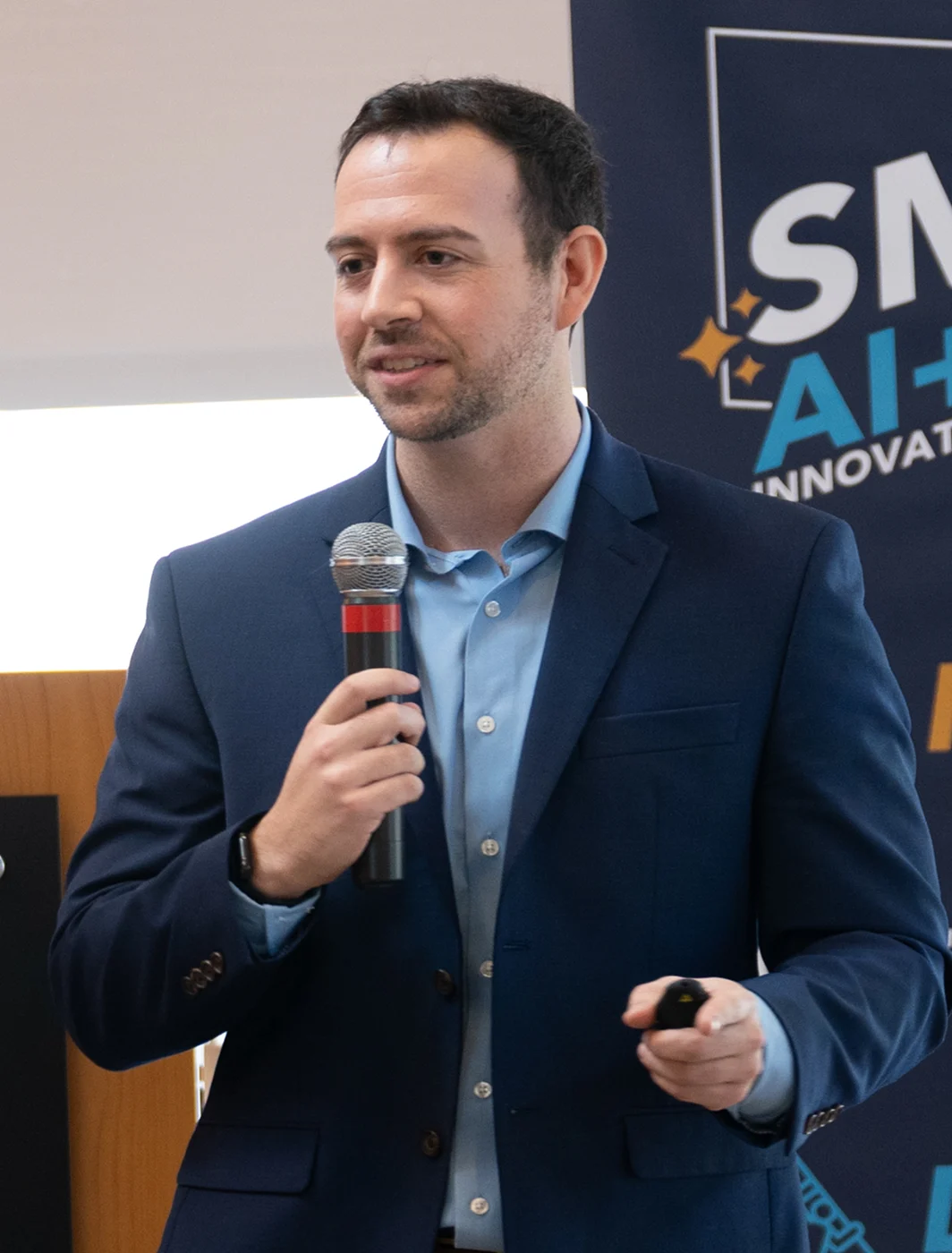
Eric Lawrence is the Director of Growth at Imaginovation. As co-host of Tales from the PROS, he brings years of experience working directly with clients seeking software and application development solutions. His insights help businesses understand what to look for in a development partner and how to set projects up for success.


One of the best business podcasts! 🚀

I have listened to several business podcasts over the years and I have to say that Tales from the PROS is within my top three favorites. Michael does a GREAT job creating an authentic and real conversation and atmosphere with the amazing guests he has on the show. If you want to learn about the realities of business, insights on how to be successful, the power of storytelling, and how overcome the business struggles that life throws at us, then this podcast is for you. I highly recommend checking it out and be ready to learn and be inspired! 🎙🎯
Amazing insight!
Michael is a great host and I really enjoy listening in on the conversations he has with business leaders. This podcast is great for anyone wanting to borrow ideas for their own business and looking to expand professionally!
An Educational Delight
This podcast presents fascinating insight into the world of business and entrepreneurship. I am in no way, privy to these topics and have found these interviews to be incredibly educational. Michael talks with trailblazers from all walks of the business world and I am here for it!!!
Love “Tales from the PROS”!
Michael Georgiou is a thoughtful and engaging host who chooses such a fascinating group of interviewees for his podcast! All of the thought-leaders, entrepreneurs, and business pros Michael invites on are exemplary in their fields and on the vanguard. I love listening to “Tales from the Pros” for inspiration and also a well- rounded and entertaining session. I highly recommend getting hooked on this podcast!
Mr podicast
Michael’s podcast’s are amazing and very inspiring. As his best friend I’ve seen the great times and the struggles of Michael building his company. He has put sweat and blood into his company and I couldn’t be prouder of him. These podcasts are great to see and anyone would be so lucky to be on it. Mike keep grinding and you are doing amazing things in life brother!!!

Check Out More Episodes
Explore more episodes packed with practical insights, expert perspectives, and real-world lessons you can apply to your business.


Justin Miller revolutionizes the wedding photography industry
 50 Minutes
 Play This Episode
World renowned trance DJ, Jaytech discusses building his own musical community
1 Hour 10 MinutesPlay This Episode
Michael Brenner talks on the content marketing formula for B2B companies
1 Hour 5 MinutesPlay This Episode
Fitness social celebrity Megan Ewoldsen proves how to STRIVE for progress - not perfection
1 HourPlay This Episode