
Listen on:


 Transcript This Audio
Michael Georgiou (00:43) Hey everyone. Welcome back to Tales from the Pros. And I'm your host, Michael Georgiou co-founder at Imaginovation joined by my co-host and director of growth, Eric Lawrence. Today's episode is a little personal for us because we've got our co-founder and the creator of MagicTask Pete Peranzo back on the show. You've probably listened to him before and maybe even a couple times. he kind of pops pops up here and there. But you know, you know Pete thinks
about products differently than most people, honestly. MagicTask just shipped its biggest release ever, version 3. And it doubles down hard on the idea that being productive should actually feel rewarding. We want the real story today. What did the last version teach us? What made us decide to rebuild instead of patch up? And what did we learn watching real people use the product? And how did that shape what we built next?
If you've ever built a software product of value, shipped it, launched it, and then had to really be honest with yourself about what to do next, this conversation is for you. Pete, welcome back, man. Appreciate it.
Pete Peranzo (01:51) Thanks having me again. I'm surprised you guys
Michael Georgiou (01:52) Yeah.
Pete Peranzo (01:53) called me back. I I must have not done enough to make you hate me.
Eric Lawrence (01:57) Not yet at least.
I think it might be helpful for the listeners as we get into this. I know that we're on V3 of MagicTask, but can you give us the origin story of MagicTask? Why did it come to be and and what is it really setting out to solve?
Pete Peranzo (02:13) Yeah, so V one, me and Zach, you guys I think you've had Zach on the on the podcast a couple of times. So
Michael Georgiou (02:19) Mm-hmm. Yeah, a couple of times.
Pete Peranzo (02:20) we were sitting in the in the office and like we were just running the whole business off of Notepad++ And I started it I had like ten things on my Notepad++ I would I would have all my my things that I need to do and when when they were when I was done I would just X off and I would open up another tab for the next day and just do the same thing and
I was like, dude, there has to be a better way to do this. Because what when I used to leave the office and I would go home, I wouldn't take my laptop and I'm like, hey man, I want to see what I need to do for tomorrow or whatever. And it wasn't web based. so then we built version two, which was essentially sorry, version one, which is essentially Notepad Plus Plus in the web so that we could check check things off. It was super simple. and I'll I'll send you guys like an an old screenshot, you can take a look. So we were using that, it was awesome, it was cool, but like we I f
Like no one was using it. Like we started to use it for a little bit and then it's like, man, like, okay, this is tedious, this sucks. Like I don't want to enter my crap in here anymore. So then we came up with like, hey, like what could we do to where this is actually consistent, right? Productivity is consistency, right? If you're if you're productive for two days, are you really productive? No. Right? But if you're productive forever, then you're really a productive person. So
We said, what do we need to do to make this thing like we what what do we want to do so people want to use this? So
Michael Georgiou (03:40) Hmm.
Pete Peranzo (03:40) we came up with the gamification layer. So V two was born. We spent a lot of time, I think like six
or seven years developing that. and it was cool, really cool. but then like people weren't buying it. so you know, and me and Mike have talked a lot about this. So it was a really good concept and really
the ideas were there but they weren't put in the correct like order. and then also like the monetization as Mike Mike will tell me this a million times the Mike's Mike's the big advocate of changing the monetization for V two. but like
Michael Georgiou (04:12) Yeah.
Pete Peranzo (04:13) th the way it was structured, it just there was no incentive for people to to pay for it. and there wasn't enough there. The implementation was bad.
Michael Georgiou (04:21) Yeah, true.
Pete Peranzo (04:22) The implementation was horrible. It was cool
Michael Georgiou (04:24) Mm.
Pete Peranzo (04:24) It was still cool. It was still cooler than any product out there in my opinion. but like we needed to take it to the next level. And you know, we we go off this book, it's called what's it called here? How to how to build great products. Hold on, let me see, let me get it. this this is yeah Yeah. So this book ha inspired
Michael Georgiou (04:37) You've you've read so many you've read so many books with productivity. Let me see. It's a little blurry. Inspired. Yeah, yeah, yeah, yeah. Inspired.
Pete Peranzo (04:45) how to create tech products customers love. That the the whole premise of the book is basically
You know, you need to build something remarkable, right? And what is remarkable? Something that people are gonna tell other people about. So V V3, that is the goal of the system, of the full rebuild. So we started over and everything that we've done, everything that we've built in the system, it's to make other people people tell other people about the system and make it truly remarkable.
Which I think
Michael Georgiou (05:13) Yeah.
Pete Peranzo (05:13) we've done.
Michael Georgiou (05:15) Yeah, I agree. You know it and and going back to the to the origin story, I remember I think it was are you talking about 2019 or even earlier than that?
Pete Peranzo (05:25) And it's V one point
Michael Georgiou (05:26) Might have been early.
Pete Peranzo (05:27) if I if I send you the screenshot, you might not even remember what it looked like because I don't even think you had access to it, Mike, potentially. Like it was like it
Michael Georgiou (05:34) Yeah, maybe not.
Pete Peranzo (05:35) w I think it was just it was just the dev team. I don't think it was it was too bad for the marketing team to to pull you guys in. but we but you know, we started
Michael Georgiou (05:41) Yeah, yeah, yeah. Yeah.
Pete Peranzo (05:43) getting you guys in when it w it looked it e even like it was like V one point five, I'll call it. It was like that mist. Remember that like it was like black with like smoke, it was like a purple haze.
But the first version, dude, it it was ju it just looked like a like a piece of paper on your screen. It was like super vanilla.
Michael Georgiou (05:59) I think I kind of remember that. Yeah. Yeah. Yeah. Yeah. Yeah. And I I remember at least back in twenty nineteen when when w the team was really starting to take it seriously. It was like before COVID, maybe five, six months before COVID. and we were all using all these different task systems, right?
Pete Peranzo (06:18) Everything.
Michael Georgiou (06:19) Everything. We I mean the marketing team was using
something sometimes something different than the than the development
team. Development team used Jira, even we used it. Marketing team used used Jira as well. We use Base Camp. I've tried Monday dot com. w
Pete Peranzo (06:32) We used decine.
I don't know if you remember that. It was before it was bef I think it I think Monday.com Monday.com bought the Kine.
Michael Georgiou (06:42) I forgot about that one! I forgot
Pete Peranzo (06:44) Yeah.
Michael Georgiou (06:44) about the kind. Yeah. Yeah, that's crazy.
Pete Peranzo (06:47) We ha and then w you you you
you had a bunch of we we had Imagine Commerce imagine management. Imagine management. was our first internal tool that we we built our C R But we also used like Salesforce and there were some other
Michael Georgiou (07:00) Yeah.
Pete Peranzo (07:00) like CRM systems that you guys were using for a while.
Michael Georgiou (07:04) Yeah, and we used like specifically for task and like projects was yeah, it was Trello, Base Camp, Monday, and Jira. Yeah, and and at that time a lot of were just very clunky and they were difficult to use. It's like you had to add a diente, a diente, I think.
Pete Peranzo (07:18) Aviente, aviente, wasn't it?
Michael Georgiou (07:23) Yeah. Yeah, yeah. my gosh. It was so yeah, so clunky. It try it tried to do s it tried to do way too much. Like they like Eric, basically they the the
You know, it's it's crazy the evolution the evolution of of SAS products over over the years. You know, especially like in my journey, I've used thousands of tools, man. Like I'm I'm like the king at trying I'm like I try to
Pete Peranzo (07:45) Mike is the toolmaster.
Michael Georgiou (07:46) I'm the tool guy and I try I try so many tools.
Eric Lawrence (07:48) Yeah, I know that.
Pete Peranzo (07:49) Yeah.
Michael Georgiou (07:50) and it and it it goes it raises our expenses like like crazy and Pete yells at me. but no, you know, yeah it it's crazy. So like we we I remember, you know, we used all these different systems and they were
They were just like not just difficult to use. They were difficult to use, but they were they were boring. They were cluttered. It was, it was over kind of it was too
Pete Peranzo (08:11) Loaded.
Michael Georgiou (08:11) too bloated in features, way too much. Too much. Like they were trying to do every everything, everything to everybody. And it just yeah, and and they're successful. great, good good for them, and that's awesome. But it's just too too much, you know. So that's where the this start this concept that
Pete envisioned really started to kind of come to fruition, you know?
Eric Lawrence (08:33) Yeah.
Pete Peranzo (08:33) Exactly.
Eric Lawrence (08:34) And Pete, was there a moment in time during
Michael Georgiou (08:36) Mm.
Eric Lawrence (08:37) V two where you realized the gamification side of things was not where it won you wanted it to be or it wasn't exceptional like what we you know, what's been built for V3?
Pete Peranzo (08:50) Yeah, yeah. So I mean first off when we first built V two there was a lot of bugs. So it took us a long time to clean everything up. We didn't have the best architecture. The AI you know, there was no AI coding tool, so you know, we were doing it was a lot more difficult to to to write clean and and perfect code and stuff like that. So besides that, like I think the big the big punch in the face is like when we tried to sell it, right? and we we didn't really market it too heavily, but like
None of our existing users were buying our themes and and we changed the monetization strategy. So in V two we had there
was eight themes and each one was like a dollar to like ten dollars. and we at in the very beginning, like we had everyone kind of like you know, our big like rush order where we had people that want were were queued up. They came in and they purchased a few, but like after that the sales just went to zero. so
Maybe like two or 3 years in Mike wanted to change the monetization strategy, so I was like, Okay, we you know, it's time, like we got a decent product here. And we changed it to where it was gonna be five dollars a month and they get access to all the the features of the product. And we kinda tiered it like, hey, if you don't pay, then you can only create like two hundred tasks or something like that. and no one no one paid. We h I think we had like maybe like ten or fifteen users. So and and and
Nothing wrong with th those types of users. Like we still a lot of those people transition from V two. We just did a big migration from V two to V3 and those people are grandfathered in for life. We're never gonna charge them. Even the people that were paying five dollars a month, they're now free users. and now we're starting with the V3 marketing and we're we're gonna kind of like start heavily acquiring customers, hopefully.
Michael Georgiou (10:31) Yeah and
yeah. And you know, and to piggyback off what what Pete mentioned, Eric, is I remember back in twenty twenty one, I think is when we launched V V two, I think. Yeah, I remember it was the summer, it was when I got married. That's how I remember. It was like right right when I got married that summer in in July, August. And we put out all these ads and stuff. And what was what was crazy, I remember I was in Cyprus and I was looking like I
You know, I would check Slack. I know I was on vacation, but I would still like check it, see if everything's, you know, going okay, whatever. And I would see like all these signups. It was it we were just getting notifications and they w it was free, right? We were we the you know, Pete and Zach wanted to create like this kind of big community, which is is very typical for a lot of SaaS companies, like Hotjar did. I mean, many c many SaaS products, successful SaaS products did it, where you build like this kind of massive
kind of cult following, massive community of of of users that really believe in the product and they kind of grow with you during the journey. But yeah, I mean, I I I we were we were marketing on Facebook, Instagram, and you know, and you know, some other platforms. And I remember we got, I mean, P we we got like five thousand users. I remember four to four or five thousand users. Obviously it was it was free, but even for them to like the concept and the concept's changed. It's evolved.
Pete Peranzo (11:49) Yes.
Michael Georgiou (11:50) A lot, but even
Pete Peranzo (11:51) Yes, and that
Michael Georgiou (11:52) then it's like the gamification element of
Pete Peranzo (11:53) Yes.
Michael Georgiou (11:54) productivity. They're like, shit, dude, this is like.
Pete Peranzo (11:56) We're
yeah, we're we're definitely filling a market gap, I feel like. and
Michael Georgiou (12:01) Exactly. Yep.
Pete Peranzo (12:02) and you know, the implementation what what we what we did over these last six or seven years is we learned, we gather data, we listened to our customers, and now we've really built something and and I mean the the people that have tested it and have started using it, our V two users, they're loving it. They're loving it. So I think we got something really,
Michael Georgiou (12:21) Okay.
Pete Peranzo (12:22) really
Great here, really remarkable, right? I'll probably keep saying that I'm gonna say that a hundred times this episode. But I I think
Michael Georgiou (12:27) Pete's favorite word.
Pete Peranzo (12:28) we we we we learned our lessons and and the cool thing about this is we didn't just take a financial hit and invest all this money and and resourcing into this project because
we always use this product to run our own business our our our agency, Imaginovation. So even though we're
Michael Georgiou (12:46) Internally, yep. Yep.
Pete Peranzo (12:47) like losing technically losing money on this product over the last six or seven years, we're learning
We're we're we we took our development team, we learned the the new technologies, we kept rebuilding it, we kept upgrading the tools and training people on good code bases, and then also it just runs all of our client projects. So it's it's extremely simple, extremely fast. A little it V two was a little bit fun to use, but now V3 we fixed the gamification layer essentially.
Eric Lawrence (13:16) I I actually wanted to dig a little bit into the gamification piece because that's
Pete Peranzo (13:19) Okay.
Eric Lawrence (13:20) what's really been doubled down on. What user behavior lessons did you pick up for the gamification of the past version that you decided, hey, this needs to like be revamped and and is now in this newest version?
Pete Peranzo (13:33) Yeah.
Yeah. Okay. So that's a great question. I know and the biggest thing that wa a b the biggest problem with V two was the more you worked, the more difficult the system got. So when you're on level five of like the the hardest theme, you don't get a reward for six months, which is absolutely stupid.
Michael Georgiou (13:55) I forg I forgot about that.
Eric Lawrence (13:58) Yeah.
Pete Peranzo (13:58) So I was like I was like after six months I'm like yeah I completed I'm like dude like this was tedious dude that it was like playing like a like a Japanese RPG dude it was like it was worse than like going to work you know at a at a coal mine every day and just digging ditches you know so the biggest the biggest
Michael Georgiou (14:16) I think I was I think I was
working on a theme, Pete, for like two years. I was like, when is
Pete Peranzo (14:20) Yeah.
Michael Georgiou (14:20) this damn thing gonna be done? I'm I wanna I wanna get to the next theme. I'm like I wanna use
Eric Lawrence (14:22) Yeah.
Pete Peranzo (14:22) Yeah, it was Yep.
Michael Georgiou (14:25) I wanna use purple haze or whatever. And I was on glit I was I think glitch or one was taking forever dude to
Pete Peranzo (14:30) It w I think yeah,
I think it was like the not Cars, which one was it, man? The gaming theme or yeah, I I I I forget which one it was, but and the thing is the implementation of the theme wasn't great either. So it was like it was it it was it was not fun to use it.
Michael Georgiou (14:43) Mm.
Pete Peranzo (14:44) So we fixed it's actually, you know, and Eric Eric's approving some of the the the stuff. So it has to pass through Eric and then pass through me, pass through Mike, pass through Zach. So we have all these different layers of we don't want the system to be like annoying.
There was some stuff in V two that was annoying, like the sound effects. and Mike's been bugging me to turn the sound effects off and I say no Mike, we're not turning the sound effects off. We need to make the sound effects good enough so that people want to use them and they're remarkable. And maybe at some point we'll add a little flag in there, but like for the first maybe six months to a year, we're not gonna do that 'cause I don't want I d it's an off button, right? It's an easy it's a cheat code. We don't wanna w we d we we
Michael Georgiou (15:19) It is, it is. I see what you're saying. Yeah.
Pete Peranzo (15:21) need to we need to make sure that we're building this thing so it's actually fun to use. but going back to your question
Six months to get a reward in V two and now V3 is designed so that you get rewarded every day. And if you don't get rewarded every day, when you do get rewarded, the system dynamically changes its difficulty
Michael Georgiou (15:40) Mm-hmm.
Pete Peranzo (15:41) to be easier. So for you, you may not work as hard as I do, which I know is probably true. So your system's gonna be easier than me. And for me, my when I let's say I would get two chests in a day, two two rewards in a day, my system actually gets more difficult.
And what happens is over time the system's smart enough to average out so based on your work and and your your habits, you get rewarded around one time per day.
Eric Lawrence (16:05) Mm.
Pete Peranzo (16:06) So you go in, do your work, get rewarded, go home, go to sleep, come in the next day, you're in a totally different dungeon, different realm if you wanna be, and and no no two work days are the same.
Eric Lawrence (16:17) And I'm sure that there's going to be a lot of lessons
Michael Georgiou (16:18) Yeah, it's cool.
Eric Lawrence (16:19) as users start getting onboarded with V3 that there might be some even some curveballs thrown your way as as to how people engage with the system. I think when there's this level of uniqueness to each user, there's there's going to be some interesting behaviors that pop up.
Pete Peranzo (16:38) Yeah.
Michael Georgiou (16:38) Mm-hmm.
Pete Peranzo (16:39) And I think we figured all that out with V two. so a lot of the productivity side of the app is for for me it was it was very very good. We gotta add some more features. but you know, just like the usage and the actual like platform to put your task in, manage your projects, manage your day to day, that's there. The gamification we revamped it, but but I don't think we're
Michael Georgiou (16:59) Yeah, I agree.
Pete Peranzo (17:01) gonna I I don't think
I don't think there's too many there's gonna be too many curveballs. There's definitely gonna be some, but like I feel like there's no other system out there, right? So people are they're it when you when you have something that's never been created, we're gonna see some weird patterns here and there, but at the same time I think people are gonna explore and and and discover and they'll give feedback but they're gonna b i
They can't ri they can't really say, hey, I don't like this because there's nothing else to compare it to in a sense.
Michael Georgiou (17:36) Yeah.
Eric Lawrence (17:37) Right.
Pete Peranzo (17:37) Some
Eric Lawrence (17:37) Yeah. Every other task system, there's not much reward in it other than it's there to to keep you organized, which is just a given
Pete Peranzo (17:45) Right.
Eric Lawrence (17:46) for every task system.
Pete Peranzo (17:48) Right. Yeah. And and and that piece we've already kind of like flushed out all those curve balls is what I'm saying. Like we know that
Eric Lawrence (17:54) Right.
Pete Peranzo (17:54) hey we had these bugs and and we need to add these features and these are the these are the features that people want. But for the gamification layer, like it's like hey, like we we try to make it kind of passive in a sense, so it's not interruptive i interfering with like their productivity. but at the same time like the productivity side I I thought V two was awesome. and we we've we've taken what we had in V two and just made it better.
Michael Georgiou (18:16) Yeah, it it's it it's been a it's been a really cool process. I mean, you know, for from my experience, especially, excuse me, from my experience, you know, I had but Pete knows this, like I had my concerns with V two. I I mean I used it every day. I I liked I liked the
I really like like the leaderboard to kind of compete. I think that's cool. I I think that's something that that we might be adding back, right, Pete? Or or
Pete Peranzo (18:40) We are. We are.
Michael Georgiou (18:41) or we are. Okay, awesome. Yeah.
So, you know, and and there was a lot of good things with V2 that I do like. I mean, I like some of the themes. and the task management part. I think when obviously when we flushed out the bugs and stuff like that was was really, really cool. it was really easy to use. It wasn't overwhelming for me, nothing like that, especially when we fixed like the loading and all that stuff was good. but when I got when like I got more involved, kind of not development, but I at least like
understanding what the developers are doing, what how how Pete and Zach are guiding the team and just structuring the the features, the everything, the whole build of it. It was really honestly like I really enjoy it. It it's i I never thought I'm like usually I I'll get bored sometimes when you're too involved with like tech tech guys and all this stuff. But it's really cool to see the way they're structuring the the the you know just the environment of the whole application, right? The
kind of understanding the good, the bad, the ugly, what things that they're taking out, things that they're shifting, you know, new, new features that they're building, talking about the users, what they want, you know, just a lot of different things. And I I thought was really, really interesting, like with development, the design, cause I'm more of a creative guy. So I loved seeing the different designs and the dungeons that that the the team was building, the realms, you know, just kind of setting up the marketing, the marketing of it is
is fun, but I really enjoy the the development kind of this the discussions and and everything was really cool. And I learned a lot from it. You know, I I thought just the way the way Pete like you structured back going to the gamifications like my favorite my favorite part, but going into like just the the structure, the the how do I say it, the the flow of the gamification and how it rewards users and incentivizes them when they use the system,
Pete Peranzo (20:26) Yeah.
Michael Georgiou (20:27) not just by completing a task.
The other the other system V2 was more like when you when you add a task, you complete it, and then it levels it levels, you know, le increases the level bar, and then, you know, then you go to a new kind of a new theme. This one's like it's complex, the back end at least, but in a very simple way on the front end to the to the user. So it it it it feels like you're you're really viewing your progress as a user.
Pete Peranzo (20:55) Yes.
Yes.
Michael Georgiou (20:56) You
know what mean? It isn't and that's true, right? That's kind of like your your vision.
Pete Peranzo (20:58) Yeah.
Michael Georgiou (20:59) It's and it's and and I see it and and it I've gotten like really obsessed with it. It's it it's really cool, man. Like I I never thought I would, but I'm like, man, now I see what Pete I now I see what he was he's been trying to do. Yeah. Because you don't
Eric Lawrence (21:11) See the vision.
Michael Georgiou (21:13) see it sometimes from the outside when you're not in the in in like the guts and the weeds of it. But when you're in it, you're like, dude, this is actually like
Pete Peranzo (21:22) Yeah.
Michael Georgiou (21:22) this is.
I couldn't wait to launch it. I know we kept delaying it in the market and everything, but no, it's cool. So I wanted to yeah, I think it's important for people to know that.
Pete Peranzo (21:31) A big issue, Mike, that you talked about too with V two was the like the progress, the progression. So like we re the in V two we had themes and now V3 we have realms and dungeons. And it's
Michael Georgiou (21:41) Mm-hmm.
Pete Peranzo (21:42) a very cool like gamers know they just know a realm. They know what a realm is, they know
what a dungeon they know you have to like get to the end of the dungeon to get the chest. It's a very linear, and and just kind of natural just even just like almost like
verbiage and and wording changes made a massive difference to V3. and I think that's really gonna make your life easier as a marketer too. I I think it will be, you know, I've told you this a l a million times, like a very easy product to sell. and
Michael Georgiou (22:09) Yeah. Yeah.
Pete Peranzo (22:11) it's just you know, it's it's gonna be a natural a natural world for these people that you're targeting to step into.
Eric Lawrence (22:20) Mm-hmm.
Michael Georgiou (22:20) Yeah,
and and I think what's really what's really cool, you know, I I think something that's really going to be valuable and interesting for for for listeners, for people, you know, watching and hearing this. i i when it comes to like MagicTask, where I know we're talking about this product, but even just when you're building your own product, your own software product, it it's like it's okay to build
Something that, you know, like for example, the example will clarify it. Basically, like productivity. Okay. So yeah, there's a lot of task management, project management systems, CRMs, and and and just and just task systems, to-do lists and all that stuff. There, there, there's tons of them. But the the the difference with this one is like we know that there's so much demand for that because people now, especially with AI, they want to work less, they want to to, you know, they want to focus on the important things in their
professional lives their personal lives at home, their families. So, you know, they they want to do more kind of with with less in a way. They they want to work efficiently, but at the same time be engaged and enjoy what you're doing because life's too short to just do do stuff and and work on a desk all day when you're like, I can't, I can't look at the screen anymore. You know what I mean? So it's it's like we found, you know, when Pete was envisioning this, it's like he kind of found like a a a dent in the market.
In a sense, this is where I'm getting at is like there's so much demand with this space and productivity, but there's that angle, that very, very unique angle of the gamification component that that is added into this into like this framework, into this type of system. So the productivity side is there, right? But the gamification is is so layered and so complex and so robust, like on the back end that people don't see, but it's made to be very simple on the front end, on the design side.
Pete Peranzo (24:09) Exactly. Exactly.
Michael Georgiou (24:10) You know what mean? So it's like
Pete Peranzo (24:11) Yep.
Michael Georgiou (24:12) it's o it's good for other people to to to be able to create a product that it doesn't have to be like, like a I don't know, something that's so so so unique where you're like, is there even a market for this? We know there's a market. And the gamification, as we know, right, it's future of work that's completely shifting and changing. It's been changing for years. and yeah, we just saw that there was a a massive gap.
Like like Pete said before, massive dent in the market and we we kind of want to fill it, you know? So it's I feel like it's an enhanced version of of just getting things done.
Eric Lawrence (24:45) Yeah.
Pete Peranzo (24:45) Yeah, your work day becomes an adventure.
Michael Georgiou (24:48) Yeah.
Eric Lawrence (24:49) I like that. I
Pete Peranzo (24:50) And you ev and every
day is different. That that's what's cool, man.
Michael Georgiou (24:52) Every day is different.
Pete Peranzo (24:53) Like there's other systems and they they can try to gamify this and that, but you're
Michael Georgiou (24:58) Mm-hmm.
Pete Peranzo (24:58) not gonna find a system. I at least I've never seen a system that changes every single day you use it.
Michael Georgiou (25:03) No.
No, I've never
Pete Peranzo (25:04) What do you think about
that? Eric, what do you think about that?
Eric Lawrence (25:06) I I have a a philosophical question for you as far as gamification is concerned.
Pete Peranzo (25:09) Okay. Okay.
Eric Lawrence (25:12) At what point does gamification become distracting?
Pete Peranzo (25:15) Mm.
Eric Lawrence (25:16) Because I I I feel like I'm firmly in the camp that if there is a limit,
Michael Georgiou (25:21) Mm.
Pete Peranzo (25:21) Yes.
Eric Lawrence (25:22) it's it's really far down there. And maybe that's just
Michael Georgiou (25:24) A very good question.
Eric Lawrence (25:25) coming from a place of like, I like to be competitive, I like to be rewarded for things. I've got like that, I need that dopamine fix, but
I I'm wondering like, cause you're trying to balance this thing, right? And I'm like, go
Pete Peranzo (25:36) Dude, this was the
Eric Lawrence (25:38) for it. Just make it wild. Like reward me, you know.
Pete Peranzo (25:40) Yes.
So yeah, so i there's been a lot of ideas, but the biggest the biggest thing that I've been thinking about the last five or six years is how do we make this thing you're trying you're trying to combine two things that are it's like oil and vinegar. They shouldn't go together, right? Productivity
Michael Georgiou (25:56) Yeah.
Pete Peranzo (25:56) and gaming, they don't mix. Dude, I remember I installed c I were I installed Clash of Clans one day on my phone and I was sitting there playing it. It was like I went to bed at like eleven and I was
I look down at the clock, I was on the side of my bed, and I looked down at the clock, it's 3 AM. I'm like, I I've just been standing here for four hours. And I like it literally like felt like a minute, right? So you could really get sucked into these games. and and the gamification layer that we're trying to add. We wanna do that, but that at the same time we wanna make sure that we're not doing that. Right? So we wanna make it super
Michael Georgiou (26:32) Yeah.
Pete Peranzo (26:33) fun, you know, and and
Easy to use at the same time, but like we need to make sure that we're not losing sight of what we're trying to accomplish, which is to help people be productive. So that's how we've designed the system and and with the design, you know, we like I said, we try to make it so you could you come in, you choose your you choose your realm, set it up for the day, do your work, and then at the end of the day, if you've done all your
stuff, you get you you you fight the boss and you collect your reward.
And then the next day comes in and you kinda do it again. So the actual interaction with the gamification layer, if I just doing some math in my head, it's probably less than two minutes. Less than two minutes per day. but the dopamine, man, that's what you're after, right? So like I even I've only been using it a few weeks. It's only been out for a few weeks, and I'm like, dude, I didn't get my chest for today. Let me go, I g I gotta log in and do something. So like even at night, I'm like, dude, I gotta let me go do another task because I haven't
I haven't got my chest and it i I feel incomplete.
Michael Georgiou (27:34) Yeah.
Pete Peranzo (27:36) there's also a streak system as well built in. That's how you get you you get your points, what we call magic tokens, to be able to enter the realm. So there's a little incentive for people to you know, make sure they're logging in daily to get the maximum multiplier.
Eric Lawrence (27:50) What's your take on PvP as far as task management? Because
Pete Peranzo (27:53) Okay, all right.
Eric Lawrence (27:54) I I will say, on the one hand, a a person like me, I love competition. But I also know anytime something like opens up a I'm not saying this would open up a pro league, that that wouldn't make any sense, but anytime there's
Michael Georgiou (28:08) Mm-hmm.
Eric Lawrence (28:09) too much PvP true, true. But anytime you open things up, there's there's a level of toxicity
Pete Peranzo (28:09) Well don't w don't say don't say no yet. Yeah. Yeah.
Eric Lawrence (28:17) that can can sometimes be let in.
Pete Peranzo (28:19) Yes. So yeah.
Eric Lawrence (28:20) so I'm I'm interested to get your take on especially in the productivity space,
if we want this system to be more like a planet fitness, so to say. Not not to say that we're giving out Tootsie Rolls and having, you know, pizza parties and having a lunk alarm for the Ashton
Pete Peranzo (28:34) Mm. Yeah.
Eric Lawrence (28:35) Hall type personalities out there in the in the productivity space, but
Pete Peranzo (28:39) N no. I I I would love for MagicTask to become like an epic games. Like this is a gaming company. This isn't a productivity company in my mind. and what we've done is we've created a foundational piece, which is the productivity, right? But really the gamification layer is what we're gonna be enhancing. And you can see V one had no gamification layer, V two had a poorly implemented gamification layer, V3 has a really
Michael Georgiou (29:03) Mm.
Pete Peranzo (29:04) good gamification layer.
Now V4 and V5 are gonna in theory add almost a separate game. There's no more it's not gamification, it's gonna be game. So like the original vision was you work during the day, you get your items, you build your character up. When you go home, you can log into the to the to the actual world, and you can use the stuff that you've earned during the day and
for n maybe
a some sort of a arena game, survival game. There could and especially with the the the rise of AI now, we can generate the games on the fly, right? So you can use your character
Michael Georgiou (29:43) Yeah, it's true.
Pete Peranzo (29:44) and maybe we have like a thousand games or or we're just building games that you you know you work all day and then you can choose what which game you want to put your character into. so so that's kind of the the right now the long term vision, I'm sure it will change. but that's what I would love to build next.
And I think we're a small you know, we're a small team, but with with the the evolution of these tools that are coming about, I I I think it's gonna be a lot easier to do with a lot less money.
Eric Lawrence (30:14) Mm-hmm. It's the in states like ready player one.
Pete Peranzo (30:18) Ready player two.
Eric Lawrence (30:20) I like
Michael Georgiou (30:20) Ha ha ha.
Eric Lawrence (30:20) it.
Michael Georgiou (30:21) Yeah, no, it's
Pete Peranzo (30:21) So would you play
would you would you play that? Let's let's say you
work all day, you get a bunch of cool gear, loot, and like dude, I gotta log in so I can't wait to log in tonight to you know go use it and and gank some fools. We're gonna roll roll d roll deep on these fools, you
Eric Lawrence (30:34) Yeah.
Pete Peranzo (30:35) know. I I I'm a competitive gamer. Like the only games I play are full loot indie games that you've probably never heard of where when when I kill you, I want you to like I want you to like log out for a week and cry and and just go like
Eric Lawrence (30:48) Ha ha.
Michael Georgiou (30:49) Yeah.
Pete Peranzo (30:50) binge eat, you know?
so I'm the same way, man. I'm the same way. I wanna I wanna destroy you.
Eric Lawrence (30:55) Yeah. Yeah. I'm I'm the same way. Like in my mind, when I'm opening crates and I'm seeing the stuff that I get, it's has its inherent value to me. But it you know, it's it's about okay, well, what about the other people on my team? What are they rocking right now? How how am I stacking up? That sort of thing.
Pete Peranzo (31:13) Yep.
Yep. Yeah, so we're you know, a lot of the stuff that you're talking about we'll be adding into this V3, the gamification layer. You know, it's a social aspect. You can see what other people are doing. I do in V3 want to add some utility. so that's coming,
Michael Georgiou (31:24) Yeah, that's gonna be awesome. Yep.
Pete Peranzo (31:27) you know, w having different pieces of gear, different pets, different skins, different items will allow you to do different things, maybe like a crafting system.
some sort of like special realm entries based on like combinations of gear and and stuff that you have, but that's V3. Like there were you know, V and V3, you know, V two was around for six years. So V3 is gonna be around for a bit, but at some point, hopefully we'll be develop be developing V four, which would actually be a full game. At at some point, you know, V V the next V four or V five is gonna be an actual game in my opinion. You can quote me on that.
Michael Georgiou (32:04) That's gonna be awesome. P I I
Eric Lawrence (32:05) Excited for it.
Michael Georgiou (32:06) I have a question. So for for the gaming aspect of it, so you when you when you say like the future of it will be more like a kinda like a like a game, not just gamification within a system.
Pete Peranzo (32:17) Mm-hmm.
Michael Georgiou (32:18) unless I'm unless I'm incorrect about that. But I guess if it becomes like an actual game, how do you think teams and companies will use it, like certain teams, even like that that's
Pete Peranzo (32:27) think about that.
Michael Georgiou (32:27) gonna be that's gonna be interesting, right? Because I I think like
culture, right? We're we're kind of targeting like, how are they going to be be able to improve the how can a project director or head of product or whatever where he has a team of 50 people, let's just say he
Pete Peranzo (32:39) Yeah.
Michael Georgiou (32:39) wants to use something like this, something to motivate his team, incentivize them, but
Pete Peranzo (32:43) Yes.
Michael Georgiou (32:43) he also wants them to work and get things done, right? And not just play all day. Obviously they need to work.
Pete Peranzo (32:46) Mm. Yeah. Yes.
So so so that's dude, listen to this. You're gonna love this. So let's
Michael Georgiou (32:52) Yeah, yeah. Tell me, tell me.
Pete Peranzo (32:53) say you let's say you know, you own a company, what you do? We put
Michael Georgiou (32:55) Mm-hmm.
Pete Peranzo (32:56) we give this to the company, everyone logs in all day, they work hard, they get their rewards, they build up their character, and then you know, every night at seven PM you queue into a server with your company and your and let's say t only ten people log
Michael Georgiou (33:10) Yeah.
Pete Peranzo (33:11) in, right?
So then you're you're dropped into an arena with ten with another company that has ten people that they have their gear that they that they gained all day and you're actually battling your company against their company.
Michael Georgiou (33:23) That's
I see what you're saying. That is cool. So you're so okay. No, that no, that makes sense. So like we you want to keep essentially you want to keep
like still the ga the the productivity side you you don't want to go away. You want to still keep it in there, right? Or yeah.
Pete Peranzo (33:42) Mm-hmm. Yeah, th the the V V one,
V two, V3, i that that's all gonna remain. But then like V four would be a separate application, but it would take your all your stuff that you have in this that you've earned, that would be your character. And you would drop in with your
Michael Georgiou (33:57) Yeah, I see.
Pete Peranzo (33:58) team into a arena or some survival based type game and battle other companies. You know, it'd be Imaginovation versus Google for ten V ten and then you can kinda see who who wins and and
gain the leaderboard like that. So it'd it'd be another almost like a
Michael Georgiou (34:13) That's
Pete Peranzo (34:14) it's a game, essentially.
Eric Lawrence (34:16) Yeah.
Michael Georgiou (34:16) That's cool. And you can and can you imagine like just the creativity that we can come up with with that? Like the rewards and things that they can whoever wins could I mean, it's a it's limit it's limitless. It's limitless.
Pete Peranzo (34:26) Mm-hmm. Yeah, it's it's limitless. It
is. And and you know,
Michael Georgiou (34:31) That's cool.
Pete Peranzo (34:32) going back to like upper management, like they're gonna eat this up because,
Michael Georgiou (34:34) Mm-hmm.
Pete Peranzo (34:36) you know, you're gonna have this built in camaraderie that you get through gaming that you just can't get at work. Like some companies they
Michael Georgiou (34:45) Yeah.
Pete Peranzo (34:45) have tournaments in their company, like Call of Duty, FIFA, they have like a little break room where people play games. But imagine if everyone every day is working to get better.
in the game, the more work they do, the stronger their characters are.
Eric Lawrence (35:00) Mm.
Michael Georgiou (35:01) Yeah, no, it's it's a no, I lo I I I love it. And and I I'm thinking too like
You know, a lot of teams within within companies, like you know, creative teams, even a good example, Pete, we we heard this from from a a company the other day, Clutch. They even said they're like, this would be amazing for our sales team. Cause they're very competitive, right? And and there's probably some gamers in there, whatever. But even if they're not, like
Pete Peranzo (35:24) Everyone's a gamer now, right?
Michael Georgiou (35:25) yeah, that's true. Yeah, yeah. I mean I even I play some gamers on my phone and stuff like that, you know. Everyone loves the you know, everyone loves to, you know.
Pete Peranzo (35:34) Toilet games. The toilet games.
Michael Georgiou (35:35) So I was gonna say that, like
Eric Lawrence (35:36) Yeah,
exactly.
Michael Georgiou (35:38) you gotta kill some time.
Pete Peranzo (35:39) I knew what you were thinking.
Michael Georgiou (35:42) no, but I was gonna say, like, you know, the the kind of the camaraderie within like a sales team that uses this, you know, where they they can be unified, whether they're virtual or they're in in-house or they're in the same office. This is it's good for both of them. That's what's awesome about the product as well. Like the current product and and the future of it.
Right. Of MagicTask is that for the the the the bus the team side of it, within within organizations and companies, you know, so many different teams can use it, right? Because it will allow them, if they st if they use it consistently, will allow them to be able to compete with one another, unify their culture, right? Be able to see you know, like what everyone else is kind of working on as well, have that alignment, right? that transparency.
You know, but I think the the unique part of it is really gonna be that
that like what you said, the the kind of that that competitive nature and that camaraderie, which I think can really help people, you know, just work better, have more fun while doing it. yeah, I think just just enjoying the experience.
Eric Lawrence (36:53) you know, it's especially sales, there's the conversation about leading and lagging indicators. And really,
Michael Georgiou (36:59) Yeah, true.
Eric Lawrence (36:59) MagicTask is all about maximizing your leading indicators. So are you being productive on a day-to-day basis? And then you trust that through your productivity and through the team's
Michael Georgiou (37:12) Mm-hmm.
Eric Lawrence (37:13) ability to push each other to be better, those lagging indicators, sales.
you know, revenue,
Michael Georgiou (37:20) Hmm.
Eric Lawrence (37:21) production, all of those things start to go up on your on the company's behalf.
Pete Peranzo (37:26) Yeah, absolutely.
Michael Georgiou (37:27) Yeah, no agreed.
So yeah, we're really excited. So we new things coming up, new new features, new new everything.
fixing fixing obviously some issues, right? Software, there's gonna be some bugs and stuff like
Pete Peranzo (37:39) Lots of realms.
Michael Georgiou (37:40) that. Yeah, lots of realms and dungeons and it's gonna be very, very exciting. But yeah, man, we're gonna we're gonna have more episodes on on MagicTask and just to kind of you know give people an update on the journey. but yeah, this was cool. I think I think I think a lot of people will find this really really remarkable.
Pete's word. So
Pete Peranzo (38:07) Yeah, one thing too, guys, like you know, Mike, you know this, we have a lot of people with ADHD. really
Michael Georgiou (38:13) Mm-hmm.
Pete Peranzo (38:14) love the system. We've gotten a lot of like direct messages just like, guys, this is the only system I've ever found that can hold my attention. so if you
Michael Georgiou (38:22) Yeah, true.
Pete Peranzo (38:23) know, if you are struggling with something like that, I I I think it's worth giving this system a try.
Michael Georgiou (38:28) Yeah. And and Pete says that because the the simplicity of the product when you actually access it for yourself, you'll see the simplicity of it, right? So there's the kind of the gaming part, the gamification aspects that make it really fun to to you to use the system, but it's also the simplicity of it, right? And that allows you to focus.
and kind of pri prioritize your day much easier where you're not looking at something and doing something on a on a on a tool like a task management platform that's that's kind of boring and it's it's cluttered and difficult to use. People with ADHD, you know, I know I I have it, you know, it's the systems really help help me a lot. and I think the the more fun that we make it is is even better. A lot of a lot of a lot of user a lot of people with ADHD are also gamers, so which I found very interesting.
as per my research. So, but no, I think that's cool, guys. this was this was awesome. Yeah. And Pete, we'll have you back, man. I mean, this definitely like I said, I think it's very valuable. And yeah, we're just excited to to keep evolving and improving the product. And yeah, man. It's exciting. Yeah. Thanks for being here. Yeah.
Pete Peranzo (39:35) Awesome. Thanks for having me again.
Michael Georgiou (39:37) No problem. Everyone, thank you so much. Really appreciate you. Thank you for listening. I'm Michael Georgiou, your host.
From Sales from the Pros. We have Eric Lawrence here, director of growth and co-host, and Pete Peranzo, creator of MagicTask Thank you everyone for listening. Appreciate it.
Pete Peranzo (39:53) Thank you guys. Take care.

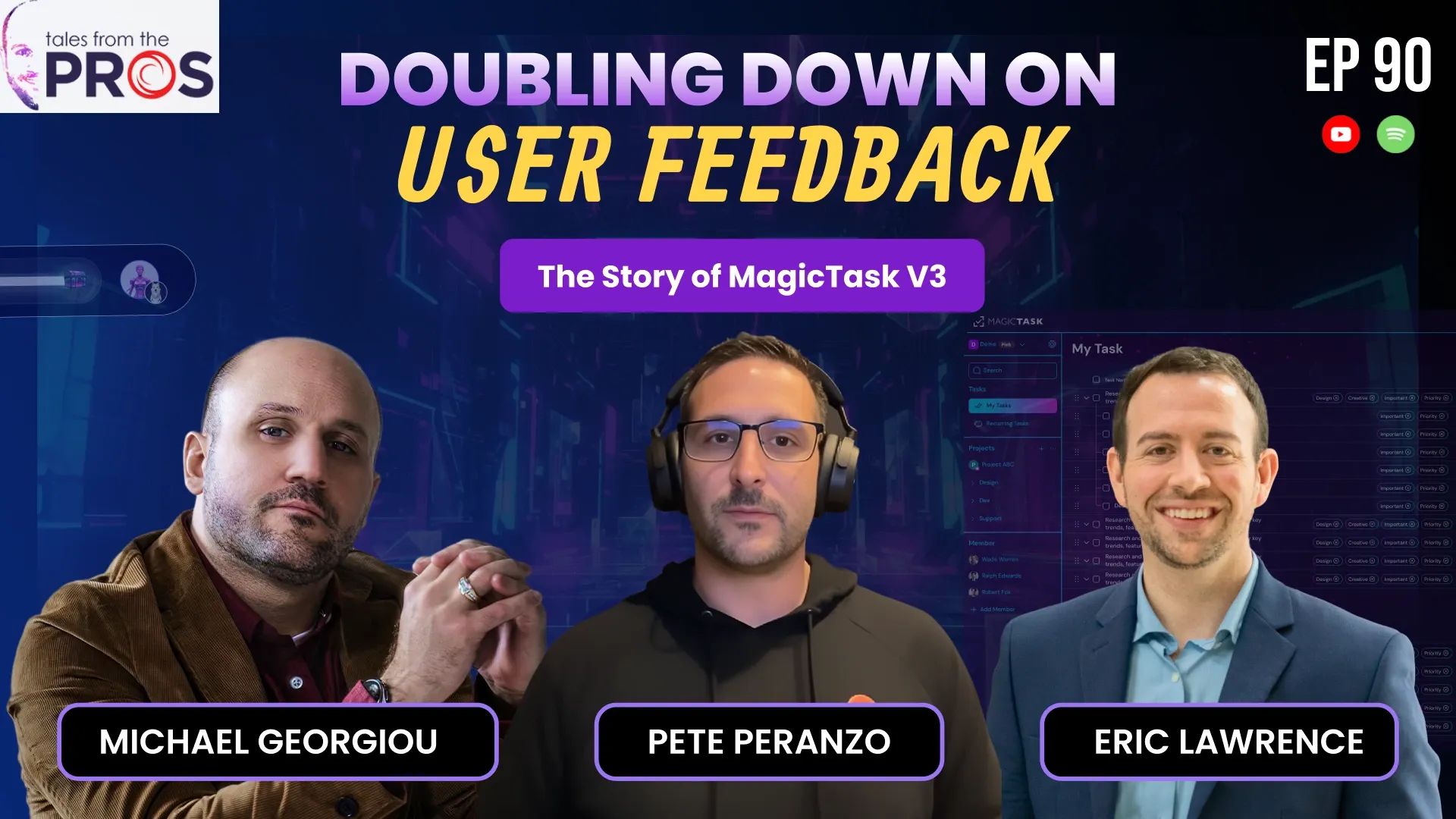
In this episode of Tales from the Pros, hosts Michael Georgiou and Eric Lawrence sit down with Imaginovation co-founder and creator of MagicTask, Pete Peranzo, for a candid, behind-the-scenes look at what it truly takes to build, launch, fail, and completely rebuild a digital product. While MagicTask just shipped its biggest release ever—Version 3—the journey to get there spanned more than six years of technical pivots, monetization mistakes, and fundamental breakthroughs in user psychology.
Pete shares the raw origin story of MagicTask, starting back in 2019 when Imaginovation's leadership ran entire agency and development workflows out of Notepad++ text files. After building Version 1 as a web-based checklist and finding it too tedious to sustain long-term use, the team introduced gamification in Version 2. But despite acquiring thousands of users through paid campaigns, V2 fell into a punishing trap: an inverted difficulty curve where working harder resulted in months-long reward droughts, paired with a monetization model that failed to convert users.
Rather than continuing to patch an architectural dead-end, the leadership team drew inspiration from Marty Cagan's product benchmark Inspired: How to Create Tech Products Customers Love and made the bold decision to scrap the codebase and rebuild from scratch. Version 3 completely reimagines gamification in SaaS product design with a proprietary Dynamic Difficulty Adjustment (DDA) engine that balances daily rewards to ~1 chest per day, a strict 2-minute daily interaction limit that prevents distraction, and intuitive gaming terminology centered on Realms, Dungeons, and Boss Chests.
The conversation also explores how radical simplicity and gamification for ADHD users help maintain daily focus in high-churn environments, how daily task execution functions as an operational leading indicator driving business revenue, and Pete’s ambitious long-term vision of transforming task management into a competitive team arena where companies can battle asynchronously based on their daily work output.
If you're a founder, product manager, or software engineer navigating product pivots, technical debt, or exploring enterprise gamification solutions to boost engagement and retention, this episode delivers a transparent, practical breakdown of how to build remarkable digital products that people genuinely love.
🎯 Highlights You Won’t Want to Miss
- The origin story: Moving from Notepad++ to building an in-house agency task tool
- Why Version 2 failed: 6-month reward droughts, monetization missteps, and technical debt
- The decision to rebuild vs. patch: Applying Marty Cagan's Inspired philosophy to software development
- Solving the gamification paradox: Why productivity and gaming are like oil and vinegar
- The 2-minute guardrail: How passive gamification delivers dopamine without disrupting deep work
- Dynamic Difficulty Adjustment (DDA): Calibrating backend algorithms so every user earns ~1 reward chest per day
- Replacing abstract "Themes" with intuitive mechanics: Realms, Dungeons, and Boss Chests
- Why radical minimalism makes MagicTask a game-changer for ADHD and neurodivergent professionals
- Leading vs. lagging indicators: How daily task execution drives bottom-line revenue
- The future of work: Pete's vision for company-vs-company arena battles (Imaginovation vs. Google)
🎧 Listen and Subscribe
- Spotify: Tales from the Pros on Spotify
- Apple Podcasts: Tales from the Pros on Apple Podcasts
- YouTube: Tales from the Pros on YouTube
- SoundCloud: Tales from the Pros on SoundCloud
💡 Key Takeaways
- Productivity is defined by consistency, not sporadic bursts of high output
- Gamification must never compete with work—keep direct game interactions under two minutes daily
- Inverted progression curves kill user retention; systems must dynamically adapt to individual workloads
- Internal dogfooding uncovers architectural and UX flaws faster than synthetic testing
- Don't patch broken fundamentals—when a product isn't remarkable, commit to a ground-up rebuild
- Cluttered enterprise suites overwhelm users; austere simplicity empowers focus and neurodivergent minds
- High-performing teams focus on leading indicators (daily completed actions) to ensure lagging results (revenue, growth)
- Effective gamification uses universally understood mental models (Dungeons, Chests) rather than abstract points
🗂 Topics We Cover
- Software product evolution and complete rebuild strategy
- Gamification psychology vs. workplace productivity
- Dynamic Difficulty Adjustment (DDA) algorithms
- MVP validation, user retention, and SaaS monetization lessons
- Overcoming technical debt and modernizing software architecture
- Cognitive overload in legacy enterprise project management tools
- ADHD-friendly product design and focus mechanics
- Workplace culture, camaraderie, and team-based competition
- Leading vs. lagging business performance indicators
⏱️ Chapters
00:00 — Introduction: Why productivity should feel rewarding
02:13 — The origin story: Running an agency on Notepad++
03:40 — Consistency as the true definition of productivity
04:13 — The failure of V2 monetization & early implementation traps
04:45 — The catalyst: Marty Cagan’s Inspired & building something remarkable
06:18 — Escaping the clutter of Jira, Basecamp, and Monday.com
08:50 — The technical realities: Bugs, architecture, and building without AI tools
11:49 — Acquiring 5,000 users vs. validating willingness to pay
12:47 — Dogfooding: How MagicTask powered Imaginovation’s agency operations
13:33 — The gamification flaw: The 6-month to 2-year reward drought
15:21 — The V3 breakthrough: Dynamic Difficulty Adjustment (DDA) explained
18:16 — Shifting from "Themes" to intuitive Realms, Dungeons, and Boss Chests
23:00 — Finding the market gap: Radical simplicity over enterprise bloat
25:12 — The gamification paradox: Balancing gaming dopamine with deep work
26:33 — The 2-minute rule: Making gamification passive and non-intrusive
27:36 — Daily streaks, magic tokens, and building consistent work habits
28:39 — The long-term vision: Evolving from a task manager to an arena platform
32:06 — Gamification for B2B teams, sales motivation, and culture
33:23 — Company-vs-Company battles: Imaginovation vs. Google
36:53 — Leading vs. lagging indicators: How daily habits drive business revenue
38:07 — Why MagicTask holds attention for ADHD & neurodivergent users
39:35 — Key takeaways and final thoughts
Latest Episodes
Why AI Projects Fail to Scale: The Data Integration Problem | Matt Soltau
 37 Minutes
 Play This Episode

Subscribe



Meet The Host
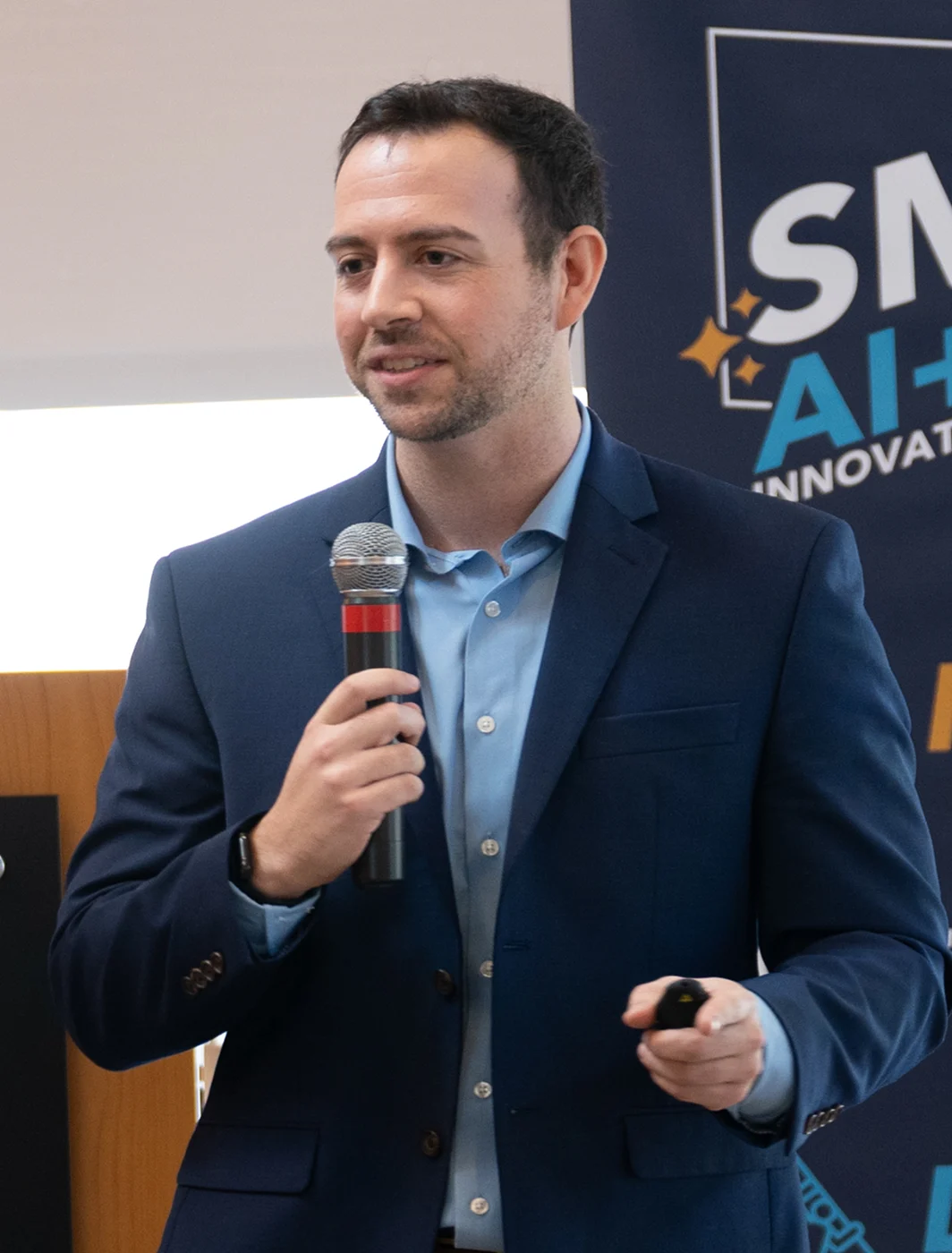
Michael Georgiou is the Co-founder at Imaginovation and the podcast host of Tales from the PROS. As an entrepreneur and business leader, he is passionate about sharing stories that inspire innovation and growth.
Eric Lawrence is the Director of Growth at Imaginovation. As co-host of Tales from the PROS, he brings years of experience working directly with clients seeking software and application development solutions. His insights help businesses understand what to look for in a development partner and how to set projects up for success.


One of the best business podcasts! 🚀

I have listened to several business podcasts over the years and I have to say that Tales from the PROS is within my top three favorites. Michael does a GREAT job creating an authentic and real conversation and atmosphere with the amazing guests he has on the show. If you want to learn about the realities of business, insights on how to be successful, the power of storytelling, and how overcome the business struggles that life throws at us, then this podcast is for you. I highly recommend checking it out and be ready to learn and be inspired! 🎙🎯
Amazing insight!
Michael is a great host and I really enjoy listening in on the conversations he has with business leaders. This podcast is great for anyone wanting to borrow ideas for their own business and looking to expand professionally!
An Educational Delight
This podcast presents fascinating insight into the world of business and entrepreneurship. I am in no way, privy to these topics and have found these interviews to be incredibly educational. Michael talks with trailblazers from all walks of the business world and I am here for it!!!
Love “Tales from the PROS”!
Michael Georgiou is a thoughtful and engaging host who chooses such a fascinating group of interviewees for his podcast! All of the thought-leaders, entrepreneurs, and business pros Michael invites on are exemplary in their fields and on the vanguard. I love listening to “Tales from the Pros” for inspiration and also a well- rounded and entertaining session. I highly recommend getting hooked on this podcast!
Mr podicast
Michael’s podcast’s are amazing and very inspiring. As his best friend I’ve seen the great times and the struggles of Michael building his company. He has put sweat and blood into his company and I couldn’t be prouder of him. These podcasts are great to see and anyone would be so lucky to be on it. Mike keep grinding and you are doing amazing things in life brother!!!

Check Out More Episodes
Explore more episodes packed with practical insights, expert perspectives, and real-world lessons you can apply to your business.


Justin Miller revolutionizes the wedding photography industry
50 MinutesPlay This Episode
World renowned trance DJ, Jaytech discusses building his own musical community
1 Hour 10 MinutesPlay This Episode
Michael Brenner talks on the content marketing formula for B2B companies
1 Hour 5 MinutesPlay This Episode
Fitness social celebrity Megan Ewoldsen proves how to STRIVE for progress - not perfection
1 HourPlay This Episode