



Get a personalized assessment of your operational efficiency and accelerate growth for your business.
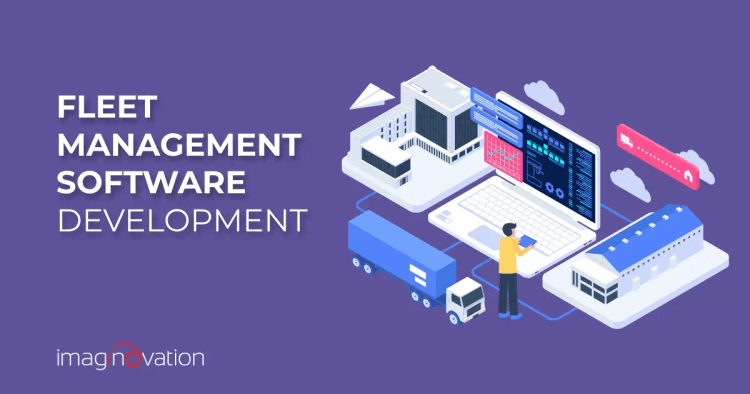
The global fleet management market reached approximately $37.7 billion in 2025 and is projected to surpass $70 billion by 2030, expanding at a CAGR of 13.3% according to MarketsandMarkets. That growth is driven by real operational pressure: rising fuel costs, tightening FMCSA regulations, last-mile logistics demand, and the transition toward electric commercial vehicle fleets.
For companies managing 50 vehicles or 5,000, the question is no longer whether to invest in fleet management software. The question is whether to buy off the shelf or build something that fits how your operation actually runs.
This article covers both paths, with specific attention to what custom fleet software costs, what it takes to build, and where the biggest returns come from.
Why Companies Invest in Custom Fleet Management Software
Fleets operating without centralized software face predictable financial leaks: unmonitored fuel burn, reactive roadside maintenance, and compliance violations that carry $16,000+ fines per incident under FMCSA enforcement.
As a fleet grows past 50 vehicles, off-the-shelf software and manual spreadsheets break down under operational complexity.
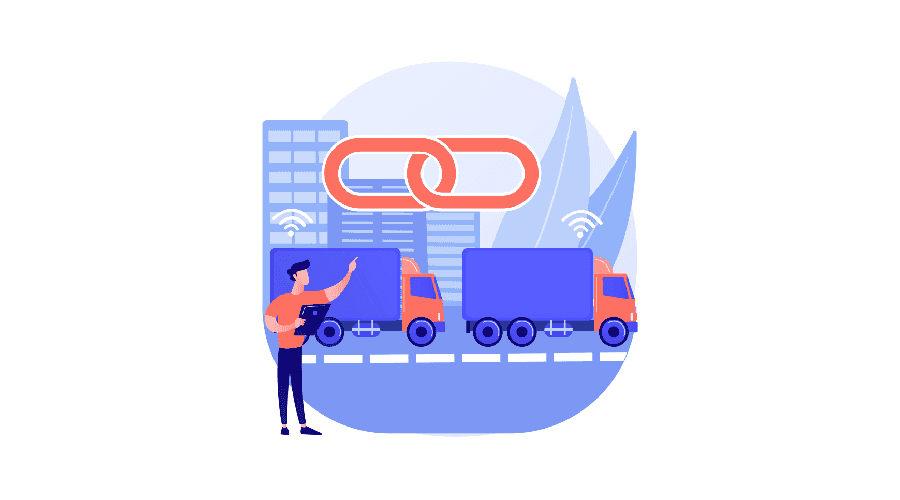
Building custom fleet management software comes down to three primary business drivers:
Direct Operating Expense Reduction
Fuel, maintenance, and unplanned repairs account for 40-60% of a fleet's total cost of ownership. Integrated telematics provides per-vehicle cost breakdowns, fuel-per-mile trends, and predictive maintenance alerts.
Fleets implementing real-time visibility consistently cut total operating expenses by 10-15% in the first year by eliminating excessive idling, unauthorized vehicle use, and deferred maintenance.
Automated Compliance and Risk Management
Since the ELD mandate, interstate commercial motor vehicles must log hours of service electronically, track state-by-state mileage for IFTA fuel tax, and submit digital DVIR inspection reports.
A custom FMS automates compliance logging, reducing driver administrative burden while protecting against FMCSA penalties that start at $16,000 per violation.
Custom Workflow Scale and Data Ownership
Standard SaaS products lock telematics data inside vendor silos and force your team to work around rigid templates.
Custom software gives you 100% ownership of your raw telemetry data, allowing seamless bi-directional integration with proprietary ERP software development services, custom TMS, and freight management systems tailored to your exact cargo and operational needs.
Key Architecture and Features of an Enterprise FMS
When building a custom fleet platform, you are essentially creating an operational engine for dispatchers, safety managers, and drivers. The platform typically brings five core modules together into a single dashboard.
1. Real-Time Telematics and GPS Tracking
Standard GPS tells you where a truck was five minutes ago; real-time telematics tells you what the vehicle is doing right now.
Platforms leveraging specialized IoT software development services hook into the vehicle's diagnostic port (OBD-II for light commercial trucks, or SAE J1939 CAN bus for Class 8 heavy rigs) to stream location, speed, fuel level, and engine load simultaneously.
Setting up spatial geofences gives dispatchers automatic alerts the moment a vehicle enters a customer terminal or leaves a designated service zone.
2. Dynamic Route Planning and Dispatch Optimization
Fixed routes break down the second traffic hits or a customer changes a delivery window. Optimization algorithms evaluate vehicle weight restrictions, live traffic data, and driver hours-of-service availability to calculate the most efficient delivery sequence.
When urgent changes happen mid-shift, dispatchers can reassign loads on the fly and push updated turn-by-turn routes straight to the driver's mobile device.
3. Driver Safety and Performance Management
Fleet safety management combines sensor metrics with video context. By tracking events like harsh braking, rapid acceleration, and cornering forces, the system calculates transparent safety scores for each driver.
Adding forward-facing and cab-facing AI dashcams gives safety managers immediate video context when an event occurs, helping defend drivers against false claims and providing clear data for coaching.
4. Predictive Maintenance and Engine Diagnostics
Rather than waiting for a truck to break down on the highway or servicing vehicles on a rigid monthly schedule, incorporating predictive maintenance solutions allows the software to monitor engine health in real time.
The platform reads Diagnostic Trouble Codes (DTCs) directly from the vehicle's engine control unit (ECU). If an engine fault triggers or a service threshold is reached, the system automatically creates a shop work order before a minor issue turns into an expensive roadside repair.
5. Automated Regulatory Compliance (ELD, IFTA, DVIR)
By engineering dedicated compliance and regulatory automation, compliance is easiest when drivers do not have to fight with paper logs:
- Hours of Service (ELD): Automatically logs driving time, rest breaks, and duty status in line with FMCSA 49 CFR Part 395 regulations.
- IFTA Fuel Tax: Calculates exact mileage driven across state lines to generate clean, audit-ready quarterly reports.
- Digital DVIR: Replaces paper inspection pads with mobile pre-trip and post-trip checklists that send defect reports directly to shop mechanics.
Step-by-Step Engineering Guide: How to Build Fleet Management Software

Building fleet management software is fundamentally different from standard web application development. You are dealing with physical hardware, high-frequency telematics streaming from vehicles in the field, intermittent cellular connectivity, and strict federal compliance rules.
Recommended Fleet Software Architecture and Tech Stack
Before initiating development, align your engineering team around a scalable real-time telemetry architecture:
| System Layer | Recommended Technologies | Primary Operational Function |
|---|---|---|
| Hardware Protocol Ingestion | MQTT, AMQP | Lightweight M2M streaming from vehicle telematics dongles |
| Telemetry Message Broker | Apache Kafka, AWS IoT Core | High-throughput ingestion buffer for location & engine pings |
| Time-Series Storage | TimescaleDB, InfluxDB | Efficient storage for high-frequency GPS & diagnostic history |
| Application Backend | Node.js, Python (FastAPI), Go | Core business logic, dispatch rules, & API integrations |
| Dispatcher Web Console | React, TypeScript, Mapbox GL | High-density live mapping, geofencing, & load dispatch |
| Driver Mobile Application | React Native, Flutter | Offline-first mobile HOS logging, routes, & digital DVIR |
The 5-Phase Development Roadmap
Phase 1: Hardware Strategy and Telematics Selection
Map your fleet's vehicle composition and hardware interface requirements up front:
| Vehicle Class | Diagnostic Connection | Standard Protocol | Extracted Telemetry Data |
|---|---|---|---|
| Light Vehicles (Vans/Pickups) | OBD-II Port | ISO 15765-4 (CAN) | Speed, fuel level, engine RPM, basic DTCs |
| Heavy Commercial (Class 7–8) | 9-Pin Deutsch | SAE J1939 CAN Bus | Odometer, fuel burn rate, J1939 fault codes |
| Cold Chain Trailers | Wireless/BLE Sensors | Modbus / Bluetooth | Multi-zone temperature, reefer engine status |
| Video Safety Units | Hardwired Dashcam | H.264 / Cellular Streaming | Forward/cab video clips, AI fatigue alerts |
- Key Deliverable: Hardware compatibility matrix and M2M cellular data plan strategy.
Phase 2: Cloud Ingestion Pipeline and Database Architecture
Build the backend infrastructure to handle sustained telemetry streams without dropping data points:
- Establish MQTT/AMQP message brokers to manage thousands of concurrent vehicle pings per second.
- Configure time-series databases for rapid spatial and timestamp queries (e.g., retrieving a truck's exact speed profile over the last 90 days).
- Design custom API development and integration pipelines using REST and GraphQL to connect telemetry streams directly with your internal ERP, TMS, or yard management system.
Phase 3: Dispatch Console and Driver UX Design
Engineering splits into two distinct user interfaces built for different operational environments:
- Dispatcher Web Console: High-performance web app engineered with custom web app development services, featuring interactive Mapbox layers, instant load assignment tools, and real-time geofence alerts.
- Driver Mobile App: Offline-first mobile application built via mobile app development services, storing trip logs, Hours of Service (HOS) data, and inspection checklists locally during cellular dead zones, syncing automatically upon reconnection.
Phase 4: Protocol Normalization and API Integrations
Raw telematics data from different hardware manufacturers arrives in varying formats and intervals:
- Protocol Normalization: Build custom data parsing adapters to convert proprietary hardware payloads into a unified JSON format.
- Out-of-Order Packet Handling: Implement queue reconciliation to re-order telemetry pings delayed by cellular signal drops.
- Third-Party API Integration: Connect live traffic (Google Maps Platform) and weather feeds to inform dynamic routing algorithms.
Phase 5: FMCSA Compliance Testing and Field Rollout
Compliance cannot be audited at the end—it must be verified against federal standards:
- ELD Certification: Test HOS recording against FMCSA 49 CFR Part 395 regulations.
- IFTA Mileage Verification: Audit state-by-state mileage calculation algorithms against GPS coordinates.
- Phased Field Rollout: Install hardware across a 5–10 vehicle pilot fleet, calibrate sensors, and train dispatchers before full fleet deployment.
What This Comes Down To
The decision between buying off-the-shelf fleet software and building a custom platform depends on three things: how specialized your operations are, whether you need to own your telematics data, and how much you are currently losing to inefficiencies you cannot measure.
For fleets with standard routing and basic compliance needs, an off-the-shelf commercial SaaS product may be sufficient.
For operations with custom workflows, mixed vehicle types, specialized cargo requirements, or plans to scale past 500 vehicles, a custom build pays for itself through operational savings that generic software cannot deliver.
Frequently Asked Questions About Fleet Management Software
How much does it cost to build custom fleet management software?
Costs vary based on fleet scale, hardware complexity, and regulatory requirements:
| Platform Tier | Estimated Cost Range | Typical Development Timeline | Core Included Features |
|---|---|---|---|
| Minimum Viable Product (MVP) | $70,000 – $120,000 | 4 – 6 Months | GPS tracking, basic dispatch dashboard, driver management, & trip logs |
| Full Enterprise FMS | $150,000 – $300,000+ | 8 – 14 Months | Telematics streaming, AI route optimization, ELD/IFTA compliance, & dashcams |
| Hardware & M2M Data | $150 – $400 / vehicle (Hardware) $15 – $35 / vehicle / mo (Cellular) |
Ongoing Operational Expense | OBD-II dongles, SAE J1939 CAN adapters, AI dashcams, & M2M SIM cards |
How long does it take to develop a fleet management application?
An MVP with core tracking and dispatch features typically takes 4 to 6 months. A full-featured enterprise platform with automated compliance modules, predictive maintenance, and third-party ERP integrations takes 8 to 14 months. The timeline depends heavily on the number of hardware integrations and the complexity of your compliance requirements.
What is the difference between telematics and fleet management software?
Telematics is the hardware and raw data layer: the physical devices installed in vehicles (GPS trackers, OBD-II dongles, dash cameras) and the data pings they transmit (location, speed, engine diagnostics, video). Fleet management software is the application layer that ingests that telematics data and turns it into actionable tools: dispatch dashboards, maintenance scheduling, compliance reporting, and driver safety analytics. You need both—telematics hardware collects the data; the FMS makes it usable.
Can custom fleet software integrate with existing telematics hardware?
Yes. Most commercial telematics devices (from manufacturers like CalAmp, Queclink, or Teltonika) transmit data using standard protocols (MQTT, HTTP, TCP/IP). A custom FMS can be built to ingest data from your existing hardware, avoiding the expense of re-equipping your entire fleet. Building custom protocol adapters for each device type typically adds 2 to 4 weeks per hardware model to the development timeline.
The Imaginovation Approach for Fleet Software Development
At Imaginovation, we build fleet management systems the way we would want them built if we were running the fleet ourselves:
- Discovery and Hardware Audit: We start by analyzing your fleet composition, existing telematics hardware, and operational bottlenecks. If you already have telematics devices installed, we assess data quality and protocol compatibility before writing code.
- Architecture and Telematics Pipeline Design: We engineer the real-time data pipeline (MQTT ingestion, stream processing, time-series storage) to handle your current fleet size with plenty of headroom for growth.
- Agile Engineering with Compliance Built In: ELD, IFTA, DVIR, and HOS compliance are not features we add at the end. They are baked into the architecture from Sprint 1, tested against real hardware in the field.
- Deployment, Calibration, and Ongoing Support: Rolling out fleet software means deploying to drivers in trucks, not just users at desks. We handle phased hardware deployment, driver onboarding, and ongoing post-launch maintenance.
We are an award-winning software development company in Raleigh, NC, and we have built custom fleet and logistics platforms for companies that outgrew off-the-shelf software. If you are evaluating a custom fleet management build, start a conversation with our team.