
Listen on:


 Transcript This Audio
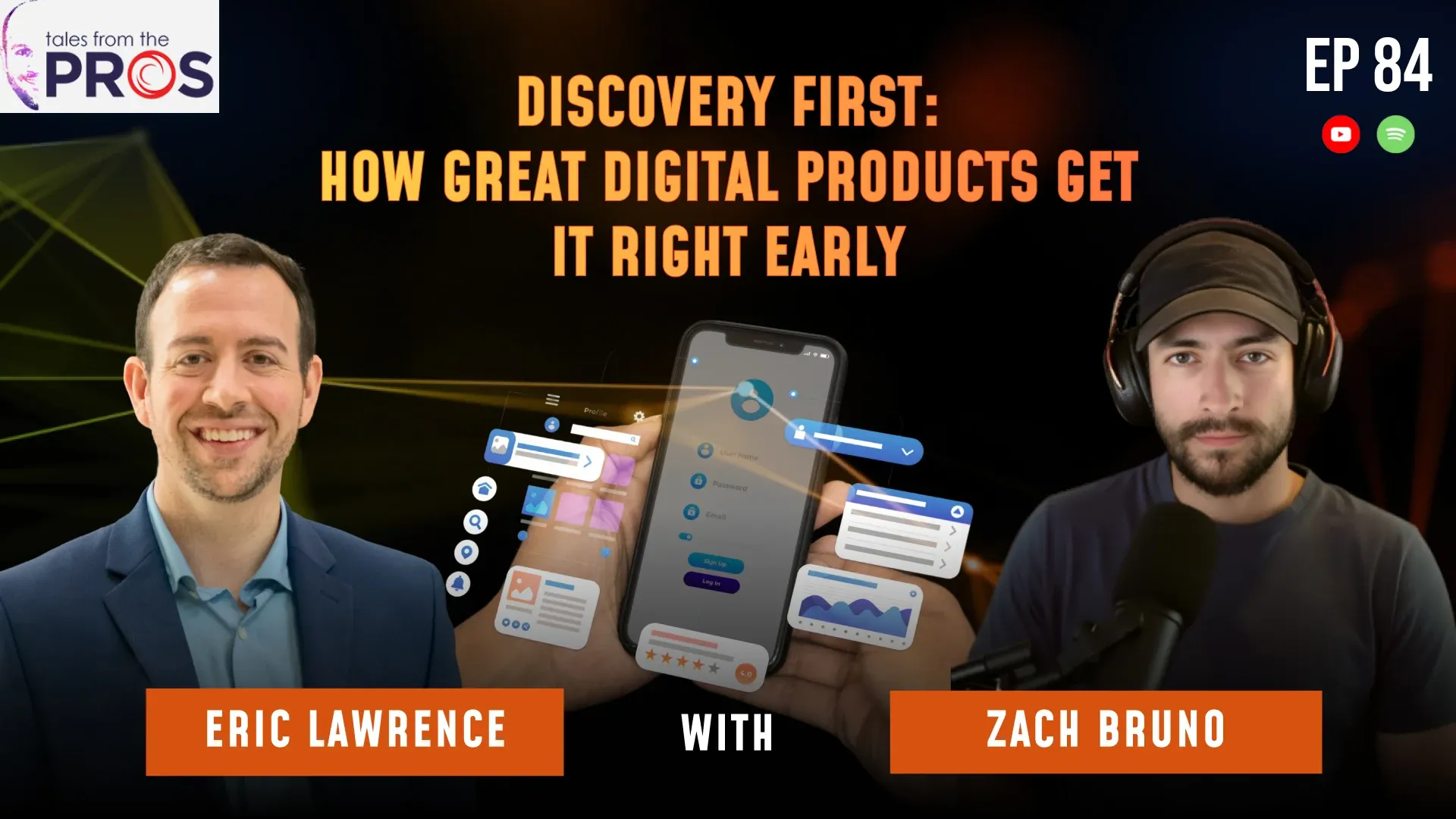
Michael Georgiou (00:01.582) Hey everyone, welcome back to another episode of Tales from the Pros. In today's episode, myself, Michael Georgiou host of Tales from the Pros and co-founder at Imaginovation I'm with my co-host and director of growth, Eric Lawrence. And today we're talking about something we see all the time when working with founders building technology products, whether it's a startup or even a larger company, everyone has an app, an idea, a platform.
or even just someone's trying to start something from scratch, but very few people ever actually build it. The difference isn't intelligence, resources, or even the quality of the idea. It comes down to one thing, decisions. Today, we're talking about the decisions that separate dreamers from founders and what tech entrepreneurs can do to move from the idea mode into actually building something real. We're very excited to talk about this today, everyone. How you doing? How you doing, Eric? What's up, man? You doing good?
Eric Lawrence (00:59.374) Yeah, doing great. This is a topic from deep experience, I would say we're both in the trenches all the time. And there is definitely a line between somebody who is a dreamer and somebody who is serious and you can tell they're different. That there's a chance at succeeding. So it's good to at least dig a little bit deeper into the topic. And I think for a lot of people out there, they might approach things with the mentality of
Michael Georgiou (01:05.924) yeah. Yeah.
Michael Georgiou (01:13.72) Yeah.
Eric Lawrence (01:28.632) No, I'm serious. I am a legitimate business owner. I'm not just a dreamer, but at a certain point, rubber meets the road and you have to not just say it. You have to be about it.
Michael Georgiou (01:42.828) Yeah. Yeah. mean, it's definitely something we, as a, as a technology company at Imaginovation we see all the time every single week. Right. And it, like you said, right. And I agree that it's, it's a vital, in my opinion, it's just a vital component to making sure that, you know, if, if you do have not just an idea, I don't want to say it's someone that, that just wants to build something just to
be cool or whatever, right? Obviously there's going to be a reason or a purpose or a motive behind it, right? To generate revenue or to solve a big problem in the market, to help people, to serve others. There's many different ways. Revenue is obviously a part of it. We all need to make a living and stuff, but no, I think we definitely see it all the time. it's so important to, that if you do have an idea whether you are a startup or you're a
an existing company, small or large, that you get into this mindset where you really believe that it needs to be built. And it's not just something like you just have this kind of crazy, massive vision that, that try to, maybe it makes you feel good or it's cool to talk about with your friends. Hey, Eric, I'm starting this, I'm starting this, this, you know, Twitter app for real, for realtors that's going to change the world. And it's going to, you know, and then you don't even do your research and you're like,
Eric Lawrence (03:06.703) .
Michael Georgiou (03:08.866) Wow, I just wasted six months researching planning. paid, I've paid all this money already to maybe advisors. I'm trying to patent my stuff. I'm trying to, you know what I mean? And then it's just, it just is a waste. So that's why it's so important to do things with a plan, with intention, purpose, right? And just being realistic that, hey, you know, if I'm going to do this, I need to build it. Otherwise don't spend that much time in, in, you know, trying to,
you know, believe that this is realistic. Otherwise time goes down the drain and money.
Eric Lawrence (03:44.337) Yeah. And I think from like a unique perspective, I speak with a lot of people that are very much in that phase where they're ideating and they're trying to come up with the right business plan to move forward with at least on the software side. And I know Michael, you're especially qualified in this area. Just thinking about it. Maginnovation started as a company in 2011, which means we're coming up on 15 years.
Michael Georgiou (03:54.371) Mm-hmm.
Eric Lawrence (04:11.512) of business. And there was a point in time where you were much younger getting this started with Pete. And there was a point where you made that switch of just thinking about it to actually being about
Michael Georgiou (04:24.716) Yeah, no, and, and, you know, I appreciate you bringing that up. And I have talked about this over the years. I've had friends and family even, and, you know, possible, prospects leads that we've, we've talked to over the years as well. And I, you know, I've learned so much over the last over 14 years. and yeah, I can tell you like for me.
When me and Pete started back in 2011, I was at a point in my life where I think it was 23, 23 or 24. was, was pretty young. Um, and I didn't have anything to lose. So I said, hell with it. You know, like let's start a tech company. You know, we, had some, uh, some, some developers that were willing to take the risk for us with us. Uh, and you know, we, or actually Pete knew them. I think Pete worked with them before from what I remember. So he knew.
He had some kind of developers that were willing to work with us until we could close business. So we basically didn't pay them anything, right? They were basically like our people, our technical team. And we couldn't pay them until I was able to generate business and generate revenue. know, so I think it was, yeah. But the thing is, is I was so focused that...
Eric Lawrence (05:40.24) That's a lot of pressure, right?
Michael Georgiou (05:49.644) I don't know, man. It's, it's crazy to think about it. I hope people can get value from this is like when you're in that mode, whatever it is that you're building, right. And like I said, whether you're a startup or you're an existing business willing to, or trying to build something new within your organization, right. So it's not always just startups. could really be anybody that you, you need to, at least in the startup pre or pre pre startup phase, you need to really be.
Like not just a believer, but you, gotta just do everything to, try to make it happen. I don't know. It sounds like cliche saying that because I was like, well, obviously Mike, mean, you're, if you don't try and put it into action, nothing's ever going to come to fruition. Right. And yes, but how many, how many times have we seen and we've heard so many ideas and not just startups, but, within existing companies and you know, just there's no execution. There's just no freaking execution, man. You know,
And we get it, things come up and it's normal. I understand that. But then, you know, I've also encountered, um, you know, people that had an idea and they've been planning for like two or three years. Like, what are you planning two or three years for? What you're, you're, you're, you're wasting time. I mean, your idea is going to be out. It's going to be obsolete by the, by, by three years time, you know, you definitely need to plan. We believe in that, right? The discovery, the planning phase, exploration, um, finding the right people in your team, all that stuff.
Critical, absolutely. But that's kind of the first part of the execution phase, right? So that's the first part of actually doing it and putting in the work. So my take on this is if you're gonna start something, you need to believe in it so much that you will do everything possible to make it a reality. That's at least how I've always operated. Otherwise, it's a waste of my time.
And that's why we are where we are right now. you know, it's just, yeah. And so this is kind of just advice for others to, you know, to, have that right mindset. And yes, I get it. There's money involved and, and, you know, you need to get funding and all that stuff. get it. you know, there's, there's always a way to try to find, to, try to build a business or to build a product.
Eric Lawrence (08:11.714) Yeah, well, what you're describing is what we would call the founder trap where there's too much thinking, not enough building. And I get it. Like, anytime you're starting a business, there's a lot of inherent risk. So you want to make sure that whatever path you take, it's going to be the right one. You don't want to be a year down the road, hundreds of 1000 spent with a failing business. Nobody wants that. But I think at the same time, what you mentioned, Mike, to your point is that
If you just keep talking about it and keep kind of ruminating over things when in your gut, tells you, Hey, this is the right move, but you're just kind of like paralysis by analysis. Then you're just not going to go anywhere. And I think for any business, and this was a conversation I actually had with somebody earlier today, who's in the same position where they were saying, Hey, I want to create a product that's going to in my mind, be revolutionary.
Michael Georgiou (08:53.056) Yes, exactly.
Eric Lawrence (09:10.626) you need to have your bases covered. You need to think about you can't just jump right in. And for this guy, he knows his product and he knows the legal side of it and who he wants to be on board there. But when I pressed him a little bit about how does he intend to market it and his response was it's going to sell itself. That to me suggests kind of the counter opposite that you do need to at least think a little bit more about it. So make sure all of your bases are covered. How do you plan to market?
How do you plan to monetize? What's the product? What's the value you're bringing? And you can even go through the process of making sure that there's a market fit. But once you have all those details figured out, there's no more need to him and haul. You have to execute. You have to jump in.
Michael Georgiou (09:57.132) Yeah, yeah, no, it's, it's very, true. know, and from my experience too, Eric, with building Imaginovation at least when we first started, you know, it is scary and you do take a lot of risks. We took risks. I we didn't pay ourselves for, man, I don't even know how long it was. I think we, me and Pete started, we would write ourselves like,
you know, certain amount of payment, whatever we could afford, right? What the revenue is coming in. We would invest most of that revenue back into the business, hiring new tools, kind of just building up the business. But, you know, we would not pay ourselves for, for probably at least maybe a year. And then after that, we were paying ourselves like probably like, I think it was like a thousand dollars a month for, three or four years. So it was a big, it was a big commitment. Not, I'm not saying everyone needs to do it like that.
You know, I was living at my parents' house. I mean, I had an MBA. I have my master's in business, you know, in marketing and, you know, and it's like, hey, do I deserve more than this? Yeah, but I'm creating a future for myself. I don't have to rely on anybody else. I can create my own future. And that's the way me and Pete thought, you know, and not everyone's like that, you know? So it just kind of depends, but you're going to get a lot of...
you're going to get a lot of clarity and you're going to get a lot of just knowledge and resilience and you're just going to build this thick skin. You're going to just get so much tougher and stronger mentally, everything emotionally, you know, even, even, don't know about physically, mean, God, I got sick so many times because I was so tired, but, no, you know, no, definitely emotionally, mentally, you know, and, and just with your, business acumen.
Eric Lawrence (11:46.234) Yeah.
Michael Georgiou (11:53.536) and how much you're learning and just building products and building your business, you learn from actually doing it and you're going to make a crap load of mistakes, man. Like it's going to happen and that's okay. And you give yourself grace for that. That's okay. Like it's all right to make mistakes. I've made thousands of mistakes. still, I still do. And, and that's how I try to get better, you know, making mistakes in my opinion shows that you're trying, you're doing something of value, at least to yourself.
And you're, you're trying to build something and then the initial idea that you might have, it, it will probably pivot and change it'll mold and evolve. It'll adapt as you keep doing it. Right. because at some point, I mean, you're going to have to generate revenue. You're going to have to try to, not say you have to always hire people sometimes Eric, sometimes the, the happiest people they can run a business.
with them or their partner or whatever, or even just by themselves with maybe one or two people. Some people just do it themselves and they have a coaching business. then now with AI, you can automate a lot of stuff. We're in different times now, but you can always keep your team small as well. You don't have to build a massive company. You don't always have to do that. And sometimes you do. It just depends on the industry, the product or the service that you're building.
So basically, yeah, you're gonna get clarity from building, from implementing, from executing. And it just, in my opinion, it just comes naturally and you learn and you grow and you just get better. You just get better at learning how to be successful in what you're trying to do.
Eric Lawrence (13:39.173) I am interested to pick your brain though, because there was a point in your own journey where you had to make the decision. You had to mentally commit to building this company. I'm sure you probably didn't know all the sleepless nights that you had ahead, but do you, do you remember what kind of pushed you and what got you to making that, that decision kind of like that jumping off the cliff and saying, we're doing this.
Michael Georgiou (13:54.754) No.
Michael Georgiou (14:05.154) Are you talking about more in like when we first started like initially or are about a little bit after when we started? It's like, what am I doing? What the hell am I doing?
Eric Lawrence (14:15.118) Yeah, I think actually when when you kind of were feeling that what the hell am I doing because I think everybody runs into that at some point.
Michael Georgiou (14:21.069) Yeah.
Michael Georgiou (14:24.684) Yeah, no, that's a really good question. Man, I mean, it's a lot of things, but you're gonna go through a crap load of emotions when you're building something that you want to last a long time. Because man, let's face it, people who are listening to this or people that will listen to this or watch this episode, you don't always have to build
a super unique product or a super unique business that's different than everybody else and expect it to be a unicorn, right? Like an Uber or you're going to change the game. And I'm not saying don't ever think like that. No, of course. mean, we want visionaries in the world at a thousand percent. But also I know personally, so many people, Eric, that have stopped
How do I say this? They've basically, they've stopped themselves from doing something extraordinary and building like a simple business where they could be so good at it and they can make a lot of money and they could make their own decisions and they don't have to rely on other people and bosses and all that crap, right? So it's like, there's a lot of emotions in it.
But you just got to accept that you're going to go through a lot of failure and failure is all very subjective, right? Failure doesn't really happen, at least in my opinion, until you just give it up and it's okay. If it's not meant to be anymore, it's not meant to be. People leave their own businesses or leave a company or whatever it is or a product every single day and that's okay, right? But at the same time, it's like, to answer your question, for me,
I believed in it so much and what me and Pete were doing. And I knew there was going to be so many sacrifices and we were so tired and we got sick because we were tired and we took, you we had, made huge financial sacrifices and you get to these breaking points as well where you're just like, what the hell am I doing? Like, what am I doing this? Like, I can't do this anymore. I got to change. I got to do something different. And then, you you sleep on it, you wake up and then the day is better.
Michael Georgiou (16:47.982) Right? The sun rises again. and then, you know, and then, five hours later or whatever, it's storming outside. It's like, that's life. Like it's sunny in the morning and then later it's storming. You're like, what, what is going on? But that's just life. You just accept it. You, you just embrace it, man.
Eric Lawrence (17:02.663) It kind of reminds me of, of, yeah, of advice that I've heard where people are dieting, where they they're, you know, just about to break. And you just have to tell yourself, I can make it to the next day. Let me just try to
Michael Georgiou (17:11.502) Yeah
Michael Georgiou (17:19.374) That's right.
Eric Lawrence (17:20.768) stick to it today and wake up tomorrow and see how I feel if I really wanted to break that. It's kind of like the sounds the same at least as far as a business where you're like, do I want to keep doing it? Sleep till the next day you might. If you keep it running until the next morning, you'll you'll feel good and you can keep going.
Michael Georgiou (17:38.99) Yeah, no, and it's a great point. You're going to go through difficult times in building. And when I say building something, like I said, it could be the business, could be a SaaS product, could be even a website that's going to be your business. There's all these different scenarios and circumstances, of course. yeah, you got to just expect that there's going to be a lot of challenges and sacrifices. Otherwise,
Are you expecting perfection? That's not gonna happen. There's no such thing. There's no such thing as perfection. You strive for that, yes, but in order to strive for that, you have to go through, it's not linear. It's gonna be like this and then this and then this and then shh. And then it's a mess. It's a crazy, it's just a mess. That's how it is. But you do your best as you learn and you get experience and you start to see some success coming, right?
And you just get better. And then you're like, man, I know how to do this now. Like our product now is getting, know, our, our, our let's just say our, web app that we built, you know, that's basically our business is generate generating revenue. We're marketing and people are finding value from it. Let's improve it. Let's keep iterating. Let's keep, let's keep building. Let's keep just moving forward with it. And then there's going to be a lot of other hard hits that come to you that make you want to quit or make you just not want to do it anymore.
Right. And it could be mentally, emotionally, it could be life. Anything can happen. Right. But it just depends on how willing, how far you're willing to do it. and, and how important it is to you, you know, of course. And, and just make sure that, you know, you give yourself grace and that you have that, that I call it like thankfulness, like gratitude, right. Where you're in a very tough spot with your business. And the, the key, the what's really helped me a lot, Eric, honestly, is like.
I will be at my, like sometimes like, for example, I'll give you guys a good example. So if we closed a big deal, right? Not if, when we closed it, like one of the largest deals, when was it? In 2018, 2019. And then, you know, we lost the project or they, I think they got acquired or something like that happened. I think they got acquired.
Michael Georgiou (20:04.066) Yeah. And, you know, we built them this really, really, really great application. and it was providing so much value to them and their customers. And we had a great relationship with the client. and then they got acquired and then we got kind of removed. and then. P and me and Pete were, were just at a point where like, my dude, what do we do? Like we're screwed, you know? So
You know, at that time, we also looked at the good things that we're doing and the good things that are happening. And yes, you have to adapt and make some changes in your business and your product and service. Of course you have to adapt. That's huge with anything. You have to always adapt and improve. But at the same time, it's, it's very mental because in your brain, right, it's thinking, you're thinking like, man, like this is, this is going to put us out of business.
We can't pay ourselves. can't pay our people. can't, we can't, it goes, it goes so bad or your mind can go so, so dark. can get to a very dark place where you just think everything's it's just, it's like, you're kind of like, how do I say it? Like, you're just in such a bad way where you think everything's going to crap. You know, there's nothing good. And if you think like that and you let it take over you, it can really mess you up. It can mess your, business, your,
your product, your service, your people, everything, they destroy everything. That's why you have to really just kind of come to terms with what's happened, whatever the challenge or obstacle is, give yourself some grace because things do happen. You adapt accordingly and you make those changes and you got to look at the good things, the grateful things, right? And that keeps you positive and moving forward. And then, you know, that's happened many times. You just keep moving and then tomorrow is a better day.
You know, that's just how it works. It's critical. Yep.
Eric Lawrence (21:56.729) have to have the right mindset. You have to have skin. And in a lot of ways, you have to be relentlessly optimistic about things, because you're right. Negative thoughts manifest negative outcomes. So you really have to be, you know, you can you can be honest with yourself, you don't have to, you know, blow air up yourself. But at the same time, you know, it's important to be optimistic. And I think from a mindset perspective,
Michael Georgiou (22:12.494) Yeah.
Michael Georgiou (22:20.088) Yeah.
Eric Lawrence (22:25.828) You touched on this, but, but I do want to at least like hammer home the point that for, for a lot of people, when you're building your, your business up, and you're building your application, your platform, you have to stop perfecting and you have to really be focused on shipping. And Zach, our chief product officer, he said in a call about a week ago that stuck with me, he said, look, you know, once, once you really understand what is the value of the
product that you're putting out in the market. Think of that getting to that outcome as getting from point A to point B. You need to get from point A to point B in order to do that. You might in your head have an image of a car to do that. But at the at the end of the day, if getting from point A to point B means that you build a skateboard to do it, you're still accomplishing the same thing and it'll take you a hell of a lot less time.
Michael Georgiou (23:09.806) Hmm.
Eric Lawrence (23:22.18) to build a skateboard than it would be to build a car. So at the end of the day, you will eventually get to the point where it is a car, but at the same time, stop trying to be perfect, get something out there, ship it, get it in the hands of people so that you can make it better over time. And I, that really just kind of stuck with me because I agree. If the outcome is the outcome, don't take forever to try to get to that point.
Michael Georgiou (23:50.998) Yeah, yeah. No, it's a great analogy. Yeah, it's very true. Because you can really get into this mode where you're looking to build this perfect Lamborghini or Ferrari or whatever, it may not be realistic at that point in time with the product that you're building in your business, where it just may not be the best.
time for that. could be a funding issue or even what to your point, right? On a product perspective, software perspective is like, it just may not be the right time for that product to be at that point in time. That will come later. And it may not even be a Lamborghini. It might be this, you know, could be like this Honda, really good Honda Pilot or whatever that's.
That's just serving so many people and it's providing for your business and it's just things are just really good. That's just how it changes. But no, I love that analogy. I think I remember that actually. I think I remember when Zach said that. I love Zach's analogies. It is true though. Yeah, it is true. You just gotta keep moving forward and keep building and improving and iterating on things on the actual...
Eric Lawrence (25:03.6) Yeah.
Yeah.
Michael Georgiou (25:14.786) business and the product that you're building.
Eric Lawrence (25:16.878) Yeah. And that actually brings me to my last point, which for people that are thinking, okay, I want to get away from being a dreamer. want to become an actual founder. I want to be successful. We've worked with a lot of businesses. The reality is many succeed. Some don't. And the relationships that we have where we, just kind of notice a trend that these guys
Michael Georgiou (25:33.166) Mm-hmm.
Eric Lawrence (25:44.421) are giving themselves the best chance to succeed as possible. They do what we call the founder decision cycle. And it's these points, they decide, so they make a decision. Once they make a decision, they move. Once they moved in that decision, then they learn from by making and moving, they adapt based on the feedback that they get. And then they repeat.
Michael Georgiou (26:00.354) Right, yep.
Michael Georgiou (26:09.304) Mm-hmm.
Eric Lawrence (26:10.606) And it's really just that loop of decide, move, learn, adapt, repeat. It's those five things. And it's over and over and over as your product gets better, as it gets more validation, as more people get on the system, it just kind of is this flywheel that builds on itself to the point where you look up one day, you're five years down the road, you have hundreds of thousands of users and it's, it's successful. but
The reality is if you don't start that flywheel, it'll never get going.
Michael Georgiou (26:39.074) Yeah, it's true.
Michael Georgiou (26:44.14) Right. And you know, and the reality is, like, based on that, that cycle, that process that you mentioned, it is very true. and you know, the reality is, is that even that cycle can also change, you know, cause that cycle does work. It works very well, but it could also, it could also change where, you know, it's like decide, move, learn, adapt, repeat, but then it could be decide, move, learn,
You know, grow, adapt, then maybe pause for a little bit based on building. Sometimes that can happen where you don't, you know, you always want to keep building, but at the same time you want to get that validation. Like you talked about, right. And then you want to, you want to get that feedback from users. and then build based on what their feedback is. And then you come back and you just, you, you keep improving, you keep improving your business, keep improving your products, you know? So.
It's the systems and cycles and things are going to change, I think, over time. And I think that's like, that's just the stage of where we are now, especially with tech, man. Right. I mean, look at AI and all the stuff that's happening. You know, it's, you, gotta, you gotta work efficiently. You gotta work smart, but you also have to have the right, you know, the right people in place, you know, the right tools in place to help you to execute your vision, because we can't always do it alone, depending on what you're doing.
You need people, you need support, you you need that expert guidance. That's why a lot of startups or even larger companies, they have multiple vendors and suppliers and they have coaches too and advisors. It's good to have a good support structure around you. you can grow your product internally and based on what your customers are saying externally.
So yeah, no, it's good stuff, man. But no, I think this is great. I really hope a lot of you can learn from this. There's just a lot of moving pieces when it comes to trying to go from like a dreamer to a founder, right? But it's just all about the execution and building and just making sure that you are doing something about it because we all get into that mental.
Michael Georgiou (29:13.418) struggle, right? Where we're just overthinking, overanalyzing, you know, and then a lot of people just never end up doing it, Like, that's the sad part, you know? And can you imagine if people actually focused on building? Gary Vaynerchuk talks about this on the social side and even life in general. It's like, stop overthinking about stuff. Like, just go out and do it. What do have to lose? Just do it. Just do it, you know?
Eric Lawrence (29:39.514) Yeah.
Michael Georgiou (29:40.614) It depends. I'm not saying go and spend a million dollars and put your house as a, you know, you have to be freaking like, be smart about it. you you just gotta make decisions that are intentional, they're purposeful. And you know, if you really want to do it, go out and build it. Go out and build that product. Go out and try to make it a reality. And I doubt you'll regret it, because you're gonna learn so much from doing it.
Eric Lawrence (29:43.28) Yeah.
Eric Lawrence (30:10.106) just got to get out there and start making mistakes. It's the way it is.
Michael Georgiou (30:10.178) Yeah, that's, that's right. Yeah. That's exactly right. Go out there and start making mistakes. But, yeah, no, mean, you know, at the end of the day, you know, the only founder who, truly fails is the one who stops. you know, I'm reading that here, this quote here. I really, I really like it. I think, I think people can resonate with it. but yeah, you know, I think every, every successful tech company or founder.
that started with the decision to build something before everything was figured out. You know, that's something that's so important to recognize. So yeah, like I said, I hope all of you find some value and some insight from this episode and really appreciate everyone. And thank you so much for listening. My name is Michael Georgiou your host from Tales from the pros and Eric Lawrence here. Thank you so much, everyone. Talk to you soon.
Eric Lawrence (31:03.002) Take care.

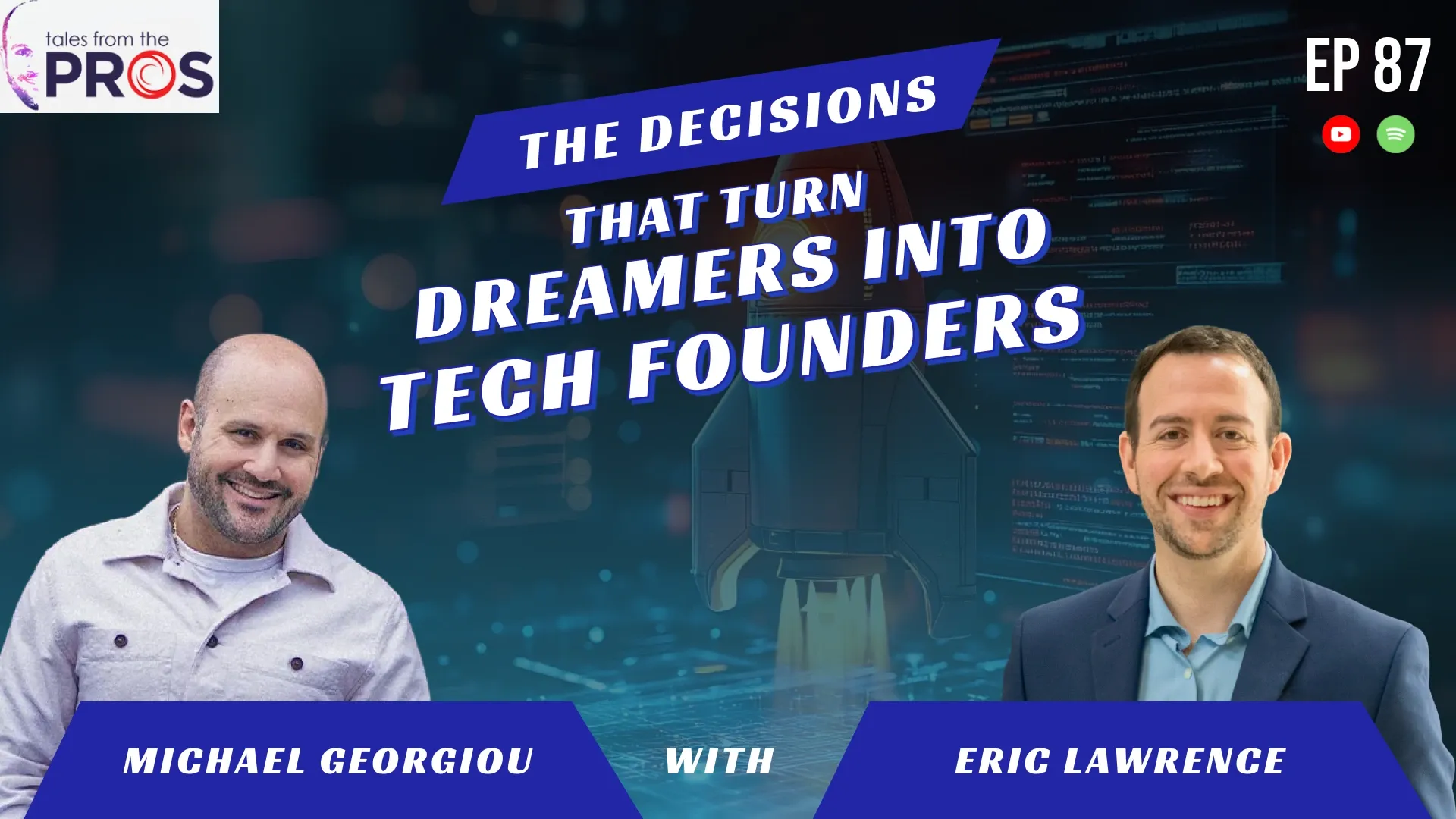
Learn how to transform your tech idea into reality by making the decisions that separate dreamers from successful founders. Drawing from real-world experience, this guide explores the mindset, execution, and resilience required to build a successful technology business.
Every day, someone comes up with the next "great app idea." Some sketch it on a whiteboard, discuss it with friends, or spend months perfecting a business plan. Yet only a small percentage ever build anything.
According to Michael Georgiou, Co-founder of Imaginovation, the difference isn't intelligence, funding, or even the quality of the idea, it's the willingness to make decisions and execute.
In this episode of Tales from the PROS, Michael and Eric Lawrence discuss what separates dreamers from founders, why overthinking kills momentum, and how entrepreneurs can move from idea mode to actually building something real.
Understanding the Dreamer vs. Doer Mindset
In the entrepreneurial world, there is a distinct divide between those who dream about possibilities and those who take action to bring those ideas to life. While resources and experience certainly matter, the biggest difference often comes down to making decisions and following through.
The Importance of Belief and Commitment
Believing in your idea isn't just about confidence—it's about commitment. Michael explains that if you're serious about building something, you have to believe in it enough to keep moving when the excitement wears off.
That doesn't mean ignoring risks or skipping research. It means making intentional decisions, validating your idea, and then having the courage to execute instead of endlessly planning.
A Common Mistake: Planning Without Building
Planning is important—but only if it leads to action.
Many aspiring founders spend months, or even years, refining business plans, researching competitors, or waiting for the "perfect" moment to start. Michael shared that he's spoken with entrepreneurs who spent two or three years planning an idea without ever building it. By then, markets had shifted and opportunities had changed.
The lesson is simple: do your homework, but don't let planning become procrastination.
The Execution Phase: Turning Ideas into Reality
Once you believe in your idea, the next step is execution. This is where many entrepreneurs struggle—not because they lack good ideas, but because uncertainty, fear of failure, or perfectionism keeps them from moving forward.
Steps to Effective Execution
- Develop a plan. Understand your market, your audience, and the problem you're solving.
- Build the right team. Surround yourself with people who believe in the vision and can help you execute it.
- Set realistic milestones. Break large goals into smaller, measurable achievements that keep momentum moving.
A Real Example from Imaginovation
Michael reflected on Imaginovation's early days, sharing that he and his co-founder started the company in their early twenties with very little financial security. They worked with developers who believed in the vision, delayed paying themselves for an extended period, and reinvested nearly everything back into the business.
Those sacrifices weren't glamorous, but they created the foundation for long-term growth. Rather than waiting until every detail was perfect, they focused on building, learning, and improving along the way.
Overcoming Common Challenges
Building a company rarely follows a straight line. Some of the biggest challenges founders face include:
- Decision paralysis: Fear of making the wrong choice often leads to making no decision at all.
- Financial sacrifices: Many founders invest significant time and money before seeing meaningful returns.
- Uncertainty: Every entrepreneur eventually questions whether they're making the right decision. That's a normal part of building something worthwhile.
The key isn't avoiding challenges—it's continuing to move forward despite them.
Stop Waiting for Perfect
One of the most memorable insights from the conversation was Eric's analogy about product development.
Imagine your goal is simply to get from Point A to Point B. You might dream about building a Ferrari, but if a skateboard gets you there today, build the skateboard first.
Too many founders delay launching because they're trying to create the perfect product. In reality, the better approach is often to build the simplest version that solves the core problem, gather feedback from real users, and improve over time.
Progress beats perfection.
Embracing Failure as Part of the Journey
Every founder experiences setbacks.
Michael openly shared moments when he questioned whether everything was worth it—after financial sacrifices, sleepless nights, and even losing a major client. Rather than viewing those moments as failure, he learned to see them as part of building a business.
Challenges aren't signs that you're on the wrong path. They're opportunities to learn, adapt, and become a stronger entrepreneur.
Learning from Mistakes
Every mistake provides valuable feedback.
Instead of asking, "Why did this happen?" successful founders ask, "What can I learn from this?"
Michael emphasized that many of the lessons that helped him grow as a business owner came from making mistakes, adapting, and continuing to move forward.
He also highlighted the importance of gratitude during difficult periods. When challenges feel overwhelming, it's easy to focus only on what's going wrong. Taking a step back to recognize what's still working can provide the perspective needed to stay positive and keep building.
The Founder Decision Cycle
Eric introduced a simple framework that many successful founders naturally follow throughout their journey:
- Decide
- Move
- Learn
- Adapt
- Repeat
Rather than waiting until every answer is known, successful entrepreneurs continuously make informed decisions, gather real-world feedback, improve their product, and repeat the process.
Momentum is built through consistent action—not perfect planning.
Key Takeaways for Aspiring Tech Entrepreneurs
- Execution beats endless planning. Research is valuable, but building creates real progress.
- Launch before everything feels perfect. Start with a solution that delivers value, then improve through feedback.
- Mistakes are part of the process. Every setback is an opportunity to learn and grow.
- Adapt continuously. Successful businesses evolve by listening to customers and responding to change.
- The only guaranteed failure is never starting. Every successful company began with someone deciding to build before everything was figured out.
Conclusion
Every successful technology company started because someone made the decision to build before they had every answer.
Whether you're launching a startup, creating an internal product, or turning an idea into a SaaS business, success comes from consistent execution—not perfect planning.
If you're still waiting for the "right time," remember Michael's advice: stop overthinking, start building, learn from your mistakes, and keep moving forward.
Want to hear the full conversation and learn more about the mindset behind successful technology companies? Check out the complete episode of Tales from the PROS: https://www.youtube.com/watch?v=9DWKaVgxYJ4
Frequently Asked Questions
Why do so many startup ideas never get built?
Many entrepreneurs spend too much time planning instead of executing. Research is important, but progress only happens once you begin building, testing, and learning from real-world feedback.
Should I wait until my product is perfect before launching?
No. As discussed in the episode, it's often better to launch a simpler version that solves the core problem, gather user feedback, and continuously improve your product over time.
What if I don't have funding yet?
Many successful founders start with limited resources. The key is validating your idea, making intentional decisions, and focusing on building momentum before scaling.
How do successful founders handle setbacks?
Successful founders treat setbacks as learning opportunities. They adapt, improve, and continue moving forward rather than allowing temporary challenges to stop their progress.
Latest Episodes
How to Successfully Scale Your App After Launch: Insights from Jonathan Maxim
 49 Minutes
 Play This Episode
Subscribe



Meet The Host
Michael Georgiou is the Co-founder at Imaginovation and the podcast host of Tales from the PROS. As an entrepreneur and business leader, he is passionate about sharing stories that inspire innovation and growth.
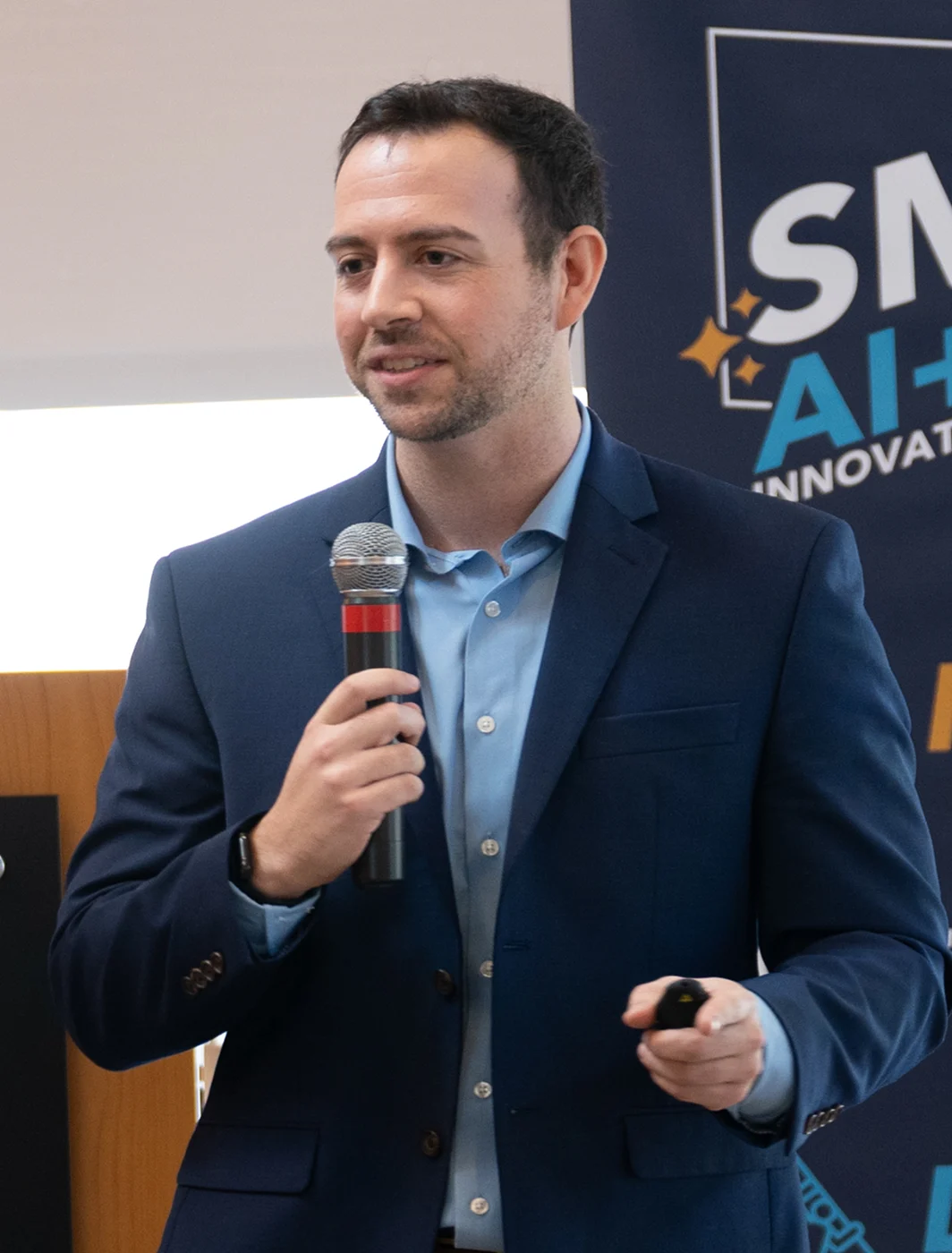
Eric Lawrence is the Director of Growth at Imaginovation. As co-host of Tales from the PROS, he brings years of experience working directly with clients seeking software and application development solutions. His insights help businesses understand what to look for in a development partner and how to set projects up for success.


One of the best business podcasts! 🚀

I have listened to several business podcasts over the years and I have to say that Tales from the PROS is within my top three favorites. Michael does a GREAT job creating an authentic and real conversation and atmosphere with the amazing guests he has on the show. If you want to learn about the realities of business, insights on how to be successful, the power of storytelling, and how overcome the business struggles that life throws at us, then this podcast is for you. I highly recommend checking it out and be ready to learn and be inspired! 🎙🎯
Amazing insight!
Michael is a great host and I really enjoy listening in on the conversations he has with business leaders. This podcast is great for anyone wanting to borrow ideas for their own business and looking to expand professionally!
An Educational Delight
This podcast presents fascinating insight into the world of business and entrepreneurship. I am in no way, privy to these topics and have found these interviews to be incredibly educational. Michael talks with trailblazers from all walks of the business world and I am here for it!!!
Love “Tales from the PROS”!
Michael Georgiou is a thoughtful and engaging host who chooses such a fascinating group of interviewees for his podcast! All of the thought-leaders, entrepreneurs, and business pros Michael invites on are exemplary in their fields and on the vanguard. I love listening to “Tales from the Pros” for inspiration and also a well- rounded and entertaining session. I highly recommend getting hooked on this podcast!
Mr podicast
Michael’s podcast’s are amazing and very inspiring. As his best friend I’ve seen the great times and the struggles of Michael building his company. He has put sweat and blood into his company and I couldn’t be prouder of him. These podcasts are great to see and anyone would be so lucky to be on it. Mike keep grinding and you are doing amazing things in life brother!!!

Check Out More Episodes
Explore more episodes packed with practical insights, expert perspectives, and real-world lessons you can apply to your business.


Justin Miller revolutionizes the wedding photography industry
50 MinutesPlay This Episode
World renowned trance DJ, Jaytech discusses building his own musical community
1 Hour 10 MinutesPlay This Episode
Michael Brenner talks on the content marketing formula for B2B companies
1 Hour 5 MinutesPlay This Episode
Fitness social celebrity Megan Ewoldsen proves how to STRIVE for progress - not perfection
1 HourPlay This Episode