
Listen on:


 Transcript This Audio
Michael Georgiou (00:01.598) Hey everyone, welcome back to Tales from the Pros. I'm Michael Georgiou co-founder of Imaginovation and your host, joined by my co-host, Eric Lawrence. Today we're talking about something we all see with founders. What happens after you raise money and build the app, because getting funding is one thing, but scaling the app successfully is a completely different challenge. That's why we're excited to have Jonathan Maxim with us here today. Jonathan is the founder of Viral Launch and has spent years helping startups think
through growth, user acquisition, profitability, and scale. We're going to dig into how founders should approach marketing a new app, how to think about getting past the net zero profit, how to know when you're actually ready to scale, how to keep building and improving the product based on user feedback and the marketplace, and what mindset matters most once real pressure sets in. Jonathan, great to have you here today, man. Thank you so much. Really appreciate you. I know you're so busy. Thank you so much.
Jonathan Maxim (00:58.44) Yeah, no, it's a pleasure to be here, Michael. And I think you really nailed it with your outline. So I'm excited to get into this.
Michael Georgiou (01:05.322) Yeah, absolutely. Yeah. And we're very excited. Yeah. We've, we've, you know, we've done a lot of research, obviously on you, your, company and what you guys are doing is great. It seemed like definitely like one of the kind of the top leaders in the space. You've been around a long time, have lots of credibility. You've worked with tons of amazing companies, products, SaaS companies, you know, and just help them to become ultimately successful, to make an impact on just the world that we live in now, right? We need it. So.
Definitely appreciate you, man. Thank you so much.
Jonathan Maxim (01:37.442) Yeah, I'm excited to be here and I'll share stories, some war stories from, you know, working with TikTok or some of these larger companies, because a lot of them deal with the same issues that these small startups are dealing with. And the main difference is that they're not scared of challenge. They're not scared of opposition. You you think about companies like Uber that went into markets with direct opposition from federal bodies, you know, from straight legal opposition, and they fought through it. And those became the biggest successes, right? TikTok fought through.
the opposition, you know, they went into short form video when Instagram was obviously already getting into that. Instagram basically stole their format and they still succeeded. I think like thinking about how do these companies do that is really good mental fodder for these startups who are getting into the space and understanding what they're up against and also not being intimidated by it.
Eric Lawrence (02:28.277) Yeah, I would say to open things up for the listeners, it'd be good, Jonathan, if you could just give us a little bit about your background and about viral launch and what led you into this space.
Jonathan Maxim (02:40.938) Yeah, so I founded an app in 2014. I bootstrapped it. It was a fitness rewards app, right? You run two miles, you get a free tank top or a free bottle of water, whatever. Cool idea, but I didn't have funding and I basically spent all my money getting it up to about 50,000 users. And then, you know, I had an investment deal with Kevin Hart fall through and that was, I was hitching my hat on that and I was really planning on that coming through. So when that fell apart, I didn't have any more runway and this happens to a lot of startups. And so
I took that lesson internally and I really tried to process what I could get out of it because I was at the precipice of something great and then it fell apart. So after that I started a growth hacking agency called KNJ and KNJ we launched about 150 apps over the course of six years and that's where we got the opportunity to work with TikTok. And so I had a few great opportunities like that after TikTok. Triller came in which is a competitor to TikTok, said, hey, we wanna know what you guys did for TikTok and we wanna replicate it.
I got a lot of app launch experience and I realized like, wow, this is a niche that I really love. It's also a very underserved space where founders, there's just not very good education around it. Most of the education is like the San Francisco lottery mindset where you raise capital, you build a viral app and boom, everyone gets rich. And that's just not the case. That's maybe 1 % of the case studies. Really the 99 % of every founders like me and you don't have that silver spoon of Silicon Valley. We don't have the proximity, the funding and all that kind of stuff.
Michael Georgiou (03:52.266) Mm.
Michael Georgiou (03:56.682) Yeah.
Jonathan Maxim (04:05.922) So that's why we built viral app launch. I said, we're going to just focus on one group, and we're just going to help them, and we're to get the best at helping them. And so we did that in 2023. So viral app launch is about three years old now. Since we launched, we've done about 200 app launches. We have about 100 going on concurrently right now. And so we've observed, obviously, lot of, if nothing else, just observing trends and what makes these startups fail and what makes them succeed.
developed a process where we go through product, marketing, sales, virality, and capital raising. So we go through all five of those phases with the startups so that one, can stay focused throughout the journey and not be, you know, spinning a bunch of different plates at once, mainly focused on a single constraint in the business, and then move to the next. And that helps conserve capital, sanity, and ultimately leads to more success. But it just requires patience and focus, which is, of course, very short these days. So.
That's kind of the backdrop that brings me into this. along the way, I also joined as a CEO of a social language learning app. Think of Facebook with Translate. So you can translate posts, can translate DMs, things like that. And so we raised $5 million for that. We took it public in the pink sheets market. And so I had the big money experience and then the small money experience, the bootstrap versus the capital raising approach. And so I've seen both sides of the.
Eric Lawrence (05:02.497) Yeah.
Michael Georgiou (05:18.77) Hmm, very cool.
Jonathan Maxim (05:31.444) and I have my own authentic perspective around it now because I've seen both of them, I've tried both of them. So that's kind of what leads us here today.
Eric Lawrence (05:39.241) Awesome. Yeah. I think going to what you said about why companies succeed and why companies fail, you know, over, over our 15 years, we've worked with a lot of startups. It's, a big part of what we do. And the reality is like many of them have succeeded, but there, there have definitely been some that have failed. And what we found is a lot of times it doesn't have to do with the product. You could have a great product, but what we found usually is the reason why a company fails is they oftentimes think if I build it,
Michael Georgiou (05:40.618) That's cool.
Eric Lawrence (06:08.79) they will come kind of like the field of dreams. but what ends up happening is, you know, if, nobody knows about the product that you have, then it gets to be really difficult about it. And I'm interested to get your own take on, you know, where you feel the differences between companies and startups and digital products that succeed versus fail.
Jonathan Maxim (06:30.81) I think if I could boil it down to one thing, would call it patience because you are going to face opposition and the world's going to be telling you you're doing it wrong. But really, that's just a feedback loop and it's just telling you where you need to adjust. even if you build an awesome product, like we launched one the other day that, you know, this I'm talking about $10,000 total budget for the whole launch. And I'm like, I don't know how this is going to succeed. Usually need like 50k or something like that total.
Michael Georgiou (06:45.267) I agree.
Michael Georgiou (07:00.52) Yeah, at least I would say, yeah, yeah.
Jonathan Maxim (07:00.876) Anyway, yeah, to get the profitable and all this, we launched and it got profitable the first day. spent $250 on ads, got four signups at 250 bucks a month, two of them converted from free trial to paid. So now she's making 500 bucks a month recurring off of a $200 ad investment. so, you know, that's basically, for LTV is three months, you're talking about like 10 extra turn on her ad spend. So there are cases where you have a, you get lucky and it just really works and you've picked a good niche, but that doesn't mean that company is going to succeed.
Michael Georgiou (07:18.058) Hmm.
Jonathan Maxim (07:30.798) And in that particular case, girl doesn't even have enough money to do the ad spend. So I was like, OK, let me invest in your company because I'm not going to let this thing die. So there's other factors that determine the success. For example, her mindset around that. To me, I'm like, oh my god, I'm going go pull out a loan from the bank and I'm going to go turn $10,000 into $50,000. For her, she's like, I have no money. I can't do it. And I'm like, yes, you can. Take another case study and you might have an awesome product that
Michael Georgiou (07:31.145) Yeah, true.
Eric Lawrence (07:38.146) Yeah.
Michael Georgiou (07:49.098) Mm-hmm.
Jonathan Maxim (07:58.094) And I would say the majority of apps that we launch, we always do a first time user experience audit. We look at the onboarding and we see how many people are getting through, getting educated, activated, and engaged with the app. And usually it's between 20 and 50%, meaning 50 % to 80 % of your customers are stopping at the door and turning around because you didn't have a nice onboarding experience. So you might have had an awesome product post onboarding, but 80 % of the users never saw it.
And so if you're only bringing in 20 % of the people that you paid to acquire through ads or through organic or something like that, then you could still have an awesome product fail. So what I have observed really makes these startups win is just not taking things personally and just using the feedback loop of data that you're getting because every market is going to face resistance. You could be in a really budding and exciting market and then a big incumbent could come in and start trying to crush you. But that doesn't mean your company has to fail. So it's more just about
Michael Georgiou (08:25.364) Yeah.
Jonathan Maxim (08:52.48) running a marathon instead of a sprint. A lot of people think of a launch as a sprint, like three or six months sprint, I'm gonna get this thing off the ground, then boom, I'm gonna disengage and everything will be good. But the truth is, it's it's way more about patience, about stoicism and just saying like, whatever happens, making a commitment to yourself to burn the ships at the beginning and saying, I'm gonna do whatever it takes to make this succeed. And then when you run into that opposition, just not taking it personally, you know, not thinking that you failed by making a product that has a 20 % registration rate, that's such a fixable problem.
Michael Georgiou (09:00.606) Exactly. Yeah, so true.
Jonathan Maxim (09:21.984) So to me, it's mainly a mindset thing and just totally committed to persistence and grit.
Michael Georgiou (09:29.234) I completely agree, You said it best. I know we had a little bit later to talk about mindset and stuff, but mindset's part of the whole thing. I mean, it really is. It's part of the whole process from start to finish. You have to almost like, in my opinion, at least what I've experienced is kind of having those expect, I don't want to say expectations. Sometimes having expectations can lead to failure, but at least setting yourself up with that mindset initially to know like,
I'm gonna go through some hard crap doing this. It's not gonna be easy. Because if it's that easy, everyone can do it. Right? So, and that's the thing I've learned. It's like, if you persevere, that's one of my favorite words. love, persevere has always been one of my favorite words ever. I love saying it. I live it. I think it's critical to building any sort of company. And you're always gonna have...
Jonathan Maxim (10:04.118) Exactly.
Michael Georgiou (10:22.334) to have perseverance and different levels of it, think it's always going to be there. And I think as you get more experience and you get tougher and you go through those obstacles, you, you just obviously get smarter. You get that experience, you get tougher, you get thicker skin. You can, you know how to manage just different problems better. And that, that gives you the foundation throughout the journey to just overcome these challenges. And through that you're learning tactically, strategically, you're getting better team.
You're, you're understanding your, your environment better. You're understanding your, your product better. You're obviously, obviously most importantly, your, your users or their end users. But I think internally it starts from here and your team and making sure that, you know, that you, you, you, you have that, that kind of very strong, resilient mindset. Cause without that, I mean, it's everything else is kind of counter effective, counterproductive.
Jonathan Maxim (11:15.68) Yeah, mean, business is solving problems. So by nature, you're going to encounter problems, and people are paying you to solve them. So you are signing up to be a continual problem solver for 5, 10, 20 years. And I think people don't realize that the more money you want to make, the bigger problem you have to solve. And so when you try to do something huge, like a massive viral app, you're taking on a very big problem, which means you're going to be encountering very difficult challenges.
And because I think because they're novel, don't go into it thinking this is going to be huge pain in my ass, which is basically what it's going to be. And then they run into novel challenges like, hey, my sign-up flow is not converting. And they think, well, then my app doesn't work. But that's not the truth. The truth is you just haven't dealt with optimizing and onboarding. For me, that's not intimidating at all. In fact, I do it for every app that we launch because it's that common.
Michael Georgiou (11:46.74) Thank
Michael Georgiou (11:54.718) Mm-hmm.
Jonathan Maxim (12:12.322) for somebody who's new and hasn't done first time user experience design, okay, I can see why that's a challenge. So I think that novelty is just scary to them. then today it might be the FTUX, tomorrow it might be financing the launch. The next day it might be dealing with some backend database issues that are causing wires to cross and the app to crash. So these challenges are all novel and I think that's why people get so rattled by them. But I just encourage everyone to just...
Michael Georgiou (12:31.402) Of course.
Jonathan Maxim (12:38.07) sit and take a deep breath, like sit down and shut up for a second and just like let things process because the emotions can flare up really, really quick in this stuff, especially when you got, you know, a lot of founders are working with agencies that build the product or that launched the product early on. And so they have less control over the deliverables and the outcomes and then they get frustrated. I'm sure you guys have seen it. People get like spooled up. For me, I work with agencies all day. Yeah. And I have no issue with it. I understand how it works, like having an outside team do it.
Michael Georgiou (12:41.29) Yep.
Michael Georgiou (12:57.08) the
Michael Georgiou (13:01.737) yeah, very emotional, very emotional. Yeah, absolutely.
Mm-hmm.
Jonathan Maxim (13:08.402) And I think we can get more into the transformational leadership and making sure you're getting the outcomes from your team that you want. I think that's a big part of it. But it all starts with the founder and how they react to things or respond, I should say.
Michael Georgiou (13:21.98) And going back to a little bit like on the kind of the marketing side of an app, at least when I'd say, I'm trying to, I'm almost trying to kind of niche it out, but I think we'll generalize it where even after the MVP, you're gonna obviously want to market, get some initial feedback, all that, right? And then iterate the app based on that feedback. And then you have the...
Obviously, probably another version of the app later on, and then you want to market that to the right customers, so on and so forth. But in all aspects of more of like app marketing and your experience, what do you think like founders are really getting wrong about it? Because we're seeing this so much, man. Like it's crazy. they just, especially with some of the older generation, feel, Eric, know this, like we'll build an app, but the founders...
Might be one or two or three of them. They think once it goes into the app store, it's like, it, it's going to just be at the top. we're like, no, we told you guys this before. Try to have a market, find a marketing partner that understands the app game, understands app store optimization and all the AI that's changing the whole game. Now, of course, on a digital marketing perspective, but yeah, you know, you're the expert here on, that stuff. Kind of get your, get your inputs here on that.
Jonathan Maxim (14:43.34) Yeah, it sounds like your optimal client is similar to mine. Ours is basically an old guy who started a business and was cash flowing it and either sold it or now is making money and then he's reinvesting once again in tech. Maybe he was in a traditional industry before. And so one of the founders that we work with, he made $40 million in three years with his, he was selling computers in the 80s. So major successful guy.
Michael Georgiou (15:10.323) Yeah, yeah,
Jonathan Maxim (15:10.734) Comes into the tech space, dude, three years, that's crazy. Like, this must have been a different world back then. And now he comes into this and everything's frustrating to him. But I empathize with him because he hasn't run this kind of business before. It's a completely different industry. Take another dude. He built a company and sold it for $100 million. Now we're doing a daily deals app for him. And he doesn't know where to get his data. He doesn't know how to analyze challenges in the app. It's a daily deals app. And so when the redemption rate isn't as high as he would want,
He's thinking this whole damn thing's not working. I'm like, no, let's look at each stage of the funnel and see exactly where the drop off is happening. So a lot of people are just not versed in being a tech CEO. So I spend a lot of my time trying to mentally prepare them for that. Like I'm giving a talk to my coaching students today. We have about 50, 60 people in that program. And I realize it's not a product issue. It's not a marketing issue for a lot of these people. that they don't understand what they're getting themselves into. And I guess I just can't harp.
on enough about how important it is that you realize it is not the product that makes the company succeed, it is the founder. And so when the founders can be adaptive and be a sponge and take feedback and not take it personally, they will ultimately succeed because again, it's a marathon, not a sprint. so when we get into the marketing and we get a product launched and stuff, the way we do it is,
We spend minimal dollars in the beginning just to essentially do research. We go and split test which audience is messaging, positioning is working best before we invest in any growth. And so at the beginning, they got 1,000 users, they're thinking, I want 10,000 users. I'm like, okay, but that's gonna cost you five times as much if we do it now without optimizing. In the beginning, cost per install might be 10 bucks after we do our split test and go down to two bucks. And now your money's going five times further. So we wait to do that scaling till after we have established the CAC to LTV or product market fit.
Is there this make sense financially? Can I get my money back in three months or six months? Once once it's there then we will hit the gas and start scaling it I think a lot of people start getting anxious in those first three months of the alpha when we're validating products making sure that people like it and that it works But again, you don't want to a hundred thousand dollars marketing budget into an app that has a 20 % Onboarding completion rate 80 % of your budget is wasted in that scenario same thing happens in ads 80 % of the budget gets wasted because people don't do proper split testing and so
Michael Georgiou (17:30.25) Hmm.
Jonathan Maxim (17:30.614) If I could just tell that to founders and help them understand that it's not broken, there's nothing wrong at this stage. You're just following a lean, smart process so that you don't, they're hyperactive. They wanna get going fast and get results and all that. But again, this is a patience and persistence game because you have to stay focused and keep blinders on. When you're a founder, people are giving you all these ideas about product features and stuff to build, and those are all just distractions. And I'm sure you guys have seen it. What ends up happening is they like,
Michael Georgiou (17:54.051) yeah, man, so true. Agree.
Jonathan Maxim (17:59.096) They lose track of the North Star, which is validating the product and putting it in market. And then it's basically mental masturbation where they go and work on all this other stuff. And it's great for you guys because you're making more money building all these features. But what happens for the users is users get confused because they don't want a 10 feature app. They want a one feature app. They want to solve one core problem.
Eric Lawrence (18:15.798) Yeah.
Michael Georgiou (18:17.684) Mm.
Eric Lawrence (18:19.104) Yeah, that's interesting. And I know you're you're kind of talking about the process. Do you lifting up the hood a little bit and at least elaborating like when you say process? What does that look like?
Michael Georgiou (18:20.059) No, it's stupid.
Jonathan Maxim (18:32.91) So the way that we do it, and this is my observation of having launched about 300 apps at this point, is first order of business is we've got to validate the product. So we call that the alpha phase, putting it out into market and getting 1,000 users on it. What we're doing in that time is we're doing split testing with the ads to figure out, we'll write like 10 different hook messages and see which one appeals most, which one has the best conversion rate. And then of those 10 hooks, let's just say two of them are performing, meaning they're getting $2 installs and the other one's are getting $10 installs. OK, this one's five times higher performing.
Michael Georgiou (18:38.666) Mm-hmm.
Jonathan Maxim (19:02.894) Then we break it out by age, gender, location, and figure out, this is millennials in tier two cities who respond to message one and two. So once we establish which messaging and audience we're targeting, which ones value the product the most, we just want to get 1,000 users in there so we have statistically significant data. After we validated the product and messaging and who this is the best fit for, then we move to marketing it. And so in the first phase, we'll establish the customer acquisition cost.
Michael Georgiou (19:24.061) Okay.
Jonathan Maxim (19:31.662) And then the second phase, which is marketing, that's when we start to go harder on making sure that the CAC is smaller than the lifetime value. The customer acquisition cost is smaller than the lifetime value. we'll go hard optimizing cost structure and bringing costs down. And then at that time, once it gets profitable, usually around month three or four, then we'll go and ramp it up to 10,000 users. Because once you're profitable, of course, you can spend essentially forever on advertising and marketing.
Michael Georgiou (19:42.568) Yep.
Jonathan Maxim (20:00.142) After that, we moved to the monetization phase. So now we got 10,000 users on the app. We know that it's profitable, but now we want to make it more profitable. So we've cranked down the CAC lever. Now we want to crank up the LTV lever. And so that comes in the form of retention marketing, so email, SMS, push notifications, optimizing the pricing and packaging. So we'll audit what the conversion rate on the payment screen is. Seven day trial, three day trial, 14 day trial, five, 10, 15, 20 bucks a month, split test.
On the landing page, it has $10 a month and $20 a month. Which one performs better? Which has a better net ROAS, a return on ad spend there. And so after we get the lifetime value up, we command as much revenue as we can from the product. Then we'll move to the virality phase. And in the virality phase, that's when we build in the referral programs. So the front end is influencers who work as affiliates. They get paid every time they send us a customer. As long as it's lower than what we're paying on ads, we'll give them $25 if it costs us $30 with ads.
And we just pay them for the customers that they get for us. Much better than just paying $5,000 for a few posts on their Instagram. That does not work. And then on the back end, we have a Bassler program. So after the user goes through the onboarding, this is our ideal onboarding that we do back in phase one. Hook their attention, ask them what brings them here today, problem. Present the solution, your app, and then the features and benefits of addressing their actual problems. So let's say it's a meditation app and they want to reduce stress. OK, cool. Our app does these three things to reduce stress.
Michael Georgiou (21:01.001) I see.
Jonathan Maxim (21:24.622) And then we actually, in that solution stage, we bring them right into the product. Go ahead and do a three minute meditation now. We're going to do a body awareness meditation to reduce stress. Get them right into the experience right from the beginning. so you're within three, five seconds of them downloading the app. Now they're experiencing the value of the app during this little meditation. Boom, you did a good job. And then we move to call to action. And that call to action, that's when we say, hey, if you want to continue reducing your stress, sign up. Seven days free, $7 a month. Give it a try, no obligation.
And then if they take that, then we say, great, if you think that this can help you, why don't you share it with a friend, and we'll give you a month free if they sign up. So we moved to putting a referral program right into the onboarding, because basically the user's emotions look like this. In the beginning, we hook their attention. They're excited. Then we bring them down in the trenches to identify their problem, like a doctor. We're consulting them. And we solve the problem. We bring them back up. While their emotions are high and their experience is high, going through that first time user experience of trying the actual product's value, then we go for the call to action.
Michael Georgiou (22:12.679) Okay.
Jonathan Maxim (22:23.234) We're leveraging their emotional state to solve their problem in real time. And so just to circle back on that, the virality stages, affiliates promoting the platform and then users becoming power users and promoting it to their friends for an incentive or reward. And then after those, that's the flywheel, product, marketing, sales, virality. When those are all working together and flywheel is gaining momentum, then we go to investors. The whole product's been validated. The business model.
Michael Georgiou (22:41.258) Thank
Jonathan Maxim (22:51.896) the shareability, all of that's been validated, then we go to those investors. And we find that process to work really well. I mean, we've made slight tweaks to it. We've been running it for like three years now and not made major changes to it. It also allows the founders to like see very clearly how long this is gonna take, how much budget it's gonna take so that they can have proper expectations from the beginning. And if they don't have the money, then they're better off not starting and going and getting the money first.
Michael Georgiou (22:52.458) Alright, yep.
Jonathan Maxim (23:18.378) And if people are self-conscious about borrowing money or getting investment, just understand that for our business, which does multi-millions per year, in November, I went and pulled out a $70,000 line of credit to scale this ads more. nobody is objectified from needing more leverage. We always need more leverage. And I think because new founders are scared of taking on more commitments, that's preventing them from doing what needs to be done.
for example, raising some capital or getting some business funding. And just last week, I pulled out another $70,000 line of credit from Amex because I'm like, why not? I always want more leverage, you know?
Michael Georgiou (23:48.115) More risk. Yeah.
Michael Georgiou (23:59.294) Yeah. Yeah. Yeah. I you can use, I think that's the thing. I know you hit a lot of, mean, I completely agree. You hit a lot of amazing points. I think that's the thing with some founders that are creating something from nothing, an app, for example, I think they get very scared and taken on that risk. And the thing is, that, you know, if you do take on some debt and you really believe, and this is where you're talking about the mentality factor, having that in your heart and your head,
Right. And that's in you and you really believe in what you're doing. And you're like, you know what, I'm going to go, I can go and get a hundred thousand dollar loan from what is it? The small business SBA SBA loans or yep. Yep. And, know, me and me and my business partner did that. Were we scared? We're human. Of course we're like, crap. Are we going to, are we going to be okay? But you know what? We're just like, you know what, man? Like.
Eric Lawrence (24:41.794) Thank
Michael Georgiou (24:54.014) We got this, we need it. We need it. have some people here that are critical to our business, right? We were trying, think at that time it was around COVID, something like that. we, COVID was crazy for a lot of small businesses, but we took on a little bit of that risk and we made that back more than 10X. That got us through some difficult months and you just do it. And we put that into marketing and investing in people, investing in lead generation, of course, during some tough times.
It's a little bit different example, but yeah, I I think it's just having that mentality that completely agree on and making sure they have a good partner like you, someone who understands the game and knows how to kind of scale their app and generate revenue and keep it for the longevity, man. Just keep it for the longterm so they can feed their families and have the right kind of have a build the life that they want, the life that they dream of.
Jonathan Maxim (25:50.958) Yeah, I think a lot of people look at case studies like your company or my company and say, oh, these guys already made it. They had X, Y, and Z. They had a good team. They have a good product. They have good funding or whatever it is. But they don't realize, I don't know about you guys, but I spent about two years in the tunnel. We were unprofitable for two years because I was investing heavily in systems and making things work. And I did not see the light at the end of the tunnel at that time. Now, could I have looking back on it? Yeah, if I had been stronger mentally at the time.
Michael Georgiou (25:58.538) Hmm.
Michael Georgiou (26:08.456) Mm-hmm.
Michael Georgiou (26:18.612) Six years for us. Yeah.
Jonathan Maxim (26:20.46) Six years in total, yeah, like that's what nobody talks about that. That's why I talk about it on these shows because business is like you guys have seen it. Every business essentially works pretty similar once you get into the guts of it and it's very monotonous and it's very repetitive and it's not driving lambos and having these awesome experiences and all this stuff. The majority, 80, 90 % of it is just notes to the grindstone hustle. for founders who are starting, whether they're starting an app business or a service business, each of them has their own pros and cons.
Michael Georgiou (26:23.878) A grind, 100%.
Michael Georgiou (26:32.734) Hmm.
Michael Georgiou (26:36.135) No man, yeah.
Jonathan Maxim (26:50.54) Service businesses make money in the beginning because of cash flow, but they are a lot harder to scale. Apps make a lot less cash flow, but they have massive back end. And so when people understand that there's just trade-offs and levers, there is no ideal business model. more about your appetite. as long as you have the right expectations, you don't get your pennies in a bunch when you run into opposition. And I just really wish that more founders would heed that advice. And I'm not saying that.
Eric Lawrence (26:55.426) Mm-hmm.
Michael Georgiou (26:56.264) Yep.
Jonathan Maxim (27:20.012) They need to listen to me specifically, you look at any, you know, listen to an interview with Jensen Huang, you know, when he interviewed Joe Rogan, he said, every day I still live in fear that my business is gonna fall apart. Those feelings don't go away. I think we have a choice whether we're gonna live in fear or not, but at the end of the day, that is being an entrepreneur, and there's nothing to be scared about. Faith is a huge part of it. This is why I've become very much a man of God, and I've become very much a manifestation person because
Michael Georgiou (27:45.235) Absolutely.
Michael Georgiou (27:48.916) Agreed.
Jonathan Maxim (27:49.07) The books I read on manifestation say basically your level of confidence that something is going to happen is the probability that it's going to happen. So let's just say I'm 90 % confident this company is going to succeed. There's a 90 % probability that will happen. And so then it forces you to make a decision. OK, how committed am I? How much do I believe in this? If I believe in it 100%, it will 100 % happen. And that's just the way the universe works. We magnetize what we have conviction in. then, yeah, we put the intention to the world. God brings it back in the form of
Michael Georgiou (28:11.54) We attract. Yep. Yep.
Eric Lawrence (28:12.93) Yeah.
Jonathan Maxim (28:17.782) opportunities for us. And then to address the fear thing, you you can, you have a choice every day, whether to live in fear or to live in faith. And I just put a background on my phone and said, faith over fear. And I read that every single day until I stopped having fear, make my decisions. And when you have fear making your decisions, of course you're like a dog that's backed into a corner. You're like, whereas like the boss man is walking chest tall.
Michael Georgiou (28:19.434) 100%.
Michael Georgiou (28:28.968) Mm.
Michael Georgiou (28:40.38) Yeah.
Jonathan Maxim (28:44.672) Shoulders broad and he's saying, I'm gonna crush this shit. He just walks right in. I'm not scared. And when the opposition does approach me, I'm not gonna duck down and be a pussy about it. I'm gonna look it on straight in the eyes and I'm gonna take it on. And that's where I really want founders to get, from the very beginning, as soon as possible, just live in faith instead of fear. I have faith that if I take out this $100,000 loan, creating a $100,000 obligation, that I can pay it back on the back end.
Michael Georgiou (28:48.298) Yeah.
Michael Georgiou (29:09.885) Mm-hmm.
Jonathan Maxim (29:13.592) And what happens is your mental psychology, you guys know how this works, the subconscious is like an engine that figures things out with data. And so you say, okay, I'm gonna figure out how to pay this back and how to make a million on top of it. And it's totally possible. I can give you 100 case studies of that. really it's just a decision that we make. We just decide whether we're gonna live in fear or faith and that's pretty much it.
Michael Georgiou (29:19.998) Yep. Yep.
Michael Georgiou (29:33.938) And the thing is, I mean, man, I love it. Yeah, I wish everyone had that mindset. And this is why we're doing this type of content, right? It's to give that inspiration, to give a little bit of that positivity. think you can get into some really tough times being an entrepreneur. We've all been there. Where you're kind of, you're human and you'll be on your knees and being like...
man, can I do this? Can I continue to do this and all that? I think if you continue to keep moving forward in the best way that you can, because all we can do is our best, right? And attract the best and stay positive every time I've, for me, I'm a man of faith as well. And when I'm positive, things always work out better. Like they always do. When I worry and I get stuck in that corner, because sometimes I do and I'm like, what am I doing here? I pull myself out of it, which is important. And when you do that,
Jonathan Maxim (30:25.838) Mm-hmm.
Michael Georgiou (30:30.482) Tomorrow it's like it's like yesterday didn't exist. It was like a Eric, know, we've been through so we've had some tough days right in in our company Right and and we're just like man. We need to just stay positive. It's gonna be fine Like we'll be fine. We'll be fine and all of a sudden it works out. It just works out So no, think That's right Yeah
Eric Lawrence (30:42.306) It always works out, right?
Jonathan Maxim (30:47.67) If you persist, you can pull the plug. Sure, you can pull the plug, but that's the end of the story. know, there is no, you know, buzzer beater, you know, shot that wins the game. There is no touchdown at the Super Bowl if you stop practice, right? And everybody wants to have their name in shining lights. I know at an honest level, because even I felt that way in the beginning, I want to be a big star, be important, you know?
Eric Lawrence (30:49.558) You have to persist.
Michael Georgiou (31:06.078) Yeah.
Jonathan Maxim (31:15.744) and make an app that changes the world. And if you want that, you gotta understand that Kobe and these guys, they woke up at 4 a.m. to make that stuff happen. And that stuff is not a factor of luck. That's what you have to understand. And when you understand that, then you realize, okay, I'm gonna do everything in my power to make this succeed. even with my first startup, think if I had figured out, I was burned out, because I worked for four years without a paycheck and spent my savings and went into debt over that company. Now,
Michael Georgiou (31:26.207) Mm.
Michael Georgiou (31:41.702) Mm-hmm. yeah.
Jonathan Maxim (31:44.022) I still think it could have succeeded. If I got a meeting with Kevin Hart, if I got him to give me a verbal investment, verbal that he was gonna invest, why can't I do that again? I should have just borrowed money from my dad at the time, been like, dad, I need 50 grand. He'd be like, you're ridiculous. But still, it could have been done if I had just had the wherewithal, maybe had a good advisor who said, look, don't throw the baby out with the bath water. Maybe take some time to reflect, do a little recess, but this can still succeed, absolutely.
To be honest, actually, there's a company called Sweatcoin that this is in the crypto era, 2017 crypto era. Sweatcoin started giving you coins for walking. For every step that you did, they would give you a little micro coin. And that company ended up doing an ICO and making like multi-millions off of it. I don't know if the company ultimately succeeded, but like they could have pivoted and still succeeded. So I stopped, they continued, they won, right?
Michael Georgiou (32:24.714) I know of them. Yeah, yeah, yeah.
Michael Georgiou (32:30.878) Mm-hmm.
Michael Georgiou (32:37.628) Hmm. No, it's cool, man. Yeah. No, I love the stories. really, I think we have like a couple of minutes here, but I really want to hear a little bit of the Kevin Hart story. I don't know why. I know you said it didn't work out fully, but how did that happen? That's so cool. I'm a big fan of him. I think he's hilarious.
Jonathan Maxim (32:57.292) Yeah, I mean it is. Let me put it this way. When you start a startup, you open major opportunistic doors and this is just something that happened. You know, me and my buddies, four of us were living in Philly. We decided to do something crazy. We got a two story penthouse in 4500 square foot unit at the top of the building and we said, fuck it, we're going to figure out how to pay this rent. And at the time I was not working. I was just a founder with a non cash flowing startup.
Michael Georgiou (33:17.162) Wow.
Jonathan Maxim (33:24.75) So we got this penthouse, we made it into the hustle house as we called it, and we're all starting startups in it. And so we would host parties, and I would host like yoga on the rooftop, stuff like that to promote my app. And some of Kanye's producers came through because in Philly there's a lot of music. And one of them, one of the managers knew Kevin Hart, and he was like, dude, you're onto something cool here. I think we should talk. And honestly, I felt like it was too good to be true, but I was like, okay, fuck it, know, at least, you know, see what's down this road.
Michael Georgiou (33:52.457) Mm-hmm.
Jonathan Maxim (33:53.768) And sure enough, one night at 11 p.m. on a Tuesday, I got a phone call, hey, Kevin's at the studio, he's just finishing a comedy show in Philly, come down and we'll let you pitch him. And so sure enough, I went down to the studio. Kevin actually didn't come into the studio, but his trainer, who's like one his best friends, and then his manager came in and then I gave him a pitch, you know? was like, there was Charlie, he's the beat maker for...
Kanye for Gunna for a bunch of that era of rappers. did, know, the Kanye album that Click was on, like those deep heavy beats. That was Charlie Heat. He's in there smoking weed and drinking kvassie with his friends in a studio. I'm over here, dorky white guy in a suit. And I pitched the guys and they're like, hey, we'll do it. Like that was it. It was like a five minute pitch and they're like, we're in. And so then,
Michael Georgiou (34:24.458) Mm-hmm.
Michael Georgiou (34:27.946) That's cool.
Michael Georgiou (34:36.138) my gosh
Jonathan Maxim (34:50.37) From there, we of course started setting up more meetings and all of that. And I met with their team several times after that. The only reason the deal fell through is because it was a running app. at the time, if you guys know, Kevin Hart was the only non-athlete to get a pair of shoes with Nike, to get a signature pair of shoes, up until I think Travis Scott or something. Anyway, he was endorsing Nike Run. He was literally on the app when you opened it up. And his legal team was like, there's no way he can be the face of two running apps.
Michael Georgiou (35:05.161) Hmm.
Eric Lawrence (35:16.15) Mmm.
Jonathan Maxim (35:16.59) And so they're like, hey, why don't we put boss, his trainer on the app and have him endorse it. And he had a good following, like 600,000, but he wanted, you know, 60 K a month in compensation. I was like, dude, I don't got that. Plus it wasn't Kevin and you know, Kevin was going to be a silent investor and all this stuff. And so the deal started falling apart and you know, at the same time I was out pitching other investors being like, Hey, I got Kevin Hart on a contingency investment. So got Mark Cuban's healthy C fund out of Philly to give me a verbal.
Michael Georgiou (35:27.849) my god.
Jonathan Maxim (35:43.838) And those are some important lessons learned, like doing contingencies is huge mistake. But ultimately that deal fell through and kind of left me empty handed. that, yeah, that led to quite a crash for myself. it still an awesome experience. We got to hang out with all the production crew and all that. They filmed two music videos up at the penthouse. So it was a lot of fun.
Michael Georgiou (35:46.474) That's awesome, yeah.
Michael Georgiou (36:06.846) That's awesome, man. That's cool. Wow. No, that's, that's great. Yeah. No.
Eric Lawrence (36:09.024) Yeah, that's a great story. So Jonathan, one of the last things that I wanted to pick your brain on this, this is different. It's just looking at the landscape. Lots changing. We're seeing it for ourselves. What are you seeing on your side as the big disruptors? And where do you see apps and the one you know, startup succeeding in this space? Where do you see them going over the next several years?
Jonathan Maxim (36:40.204) Well, it's a great question, great observation, Eric. From our side, 80 % of our clients have vibe-coded apps. So everyone's basically building with AI right now. And I'm sure you guys are seeing it too. The apps that are immediately succeeding are the single function apps, the ones that, like the case study I told you about before, where that girl has the app that made 4x its money back in the first few days.
Michael Georgiou (37:06.889) Right, yep.
Jonathan Maxim (37:07.886) That one's called ClaimScope, and basically it's for, it used to take people like hours to compile, hey, my house was damaged by a storm, I gotta take all these photos, gotta get my insurance documents, all this stuff, and analyze it put it into a nice PDF and wrap it up and give it to an insurance company. Their app basically takes like 10 hours of admin work and does it in a snap with AI. So single function app, targeting a very specific need in the niche where she works in that niche. She does disaster recovery for FEMA.
So those single function apps, like the era of building the next Facebook or the next Instagram is way, way, way behind us, fucking 15 years behind us at this point. Now it's single function apps. I'm sure you guys have seen Quitter, which is like helping young guys quit porn. Another single function app, right? There's one that's like super succeeding around helping guys height max, basically look taller, right? So you're talking about like stuff that sounds like completely crazy ideas and it's just a single function app.
Michael Georgiou (37:44.754) Mm-hmm.
Eric Lawrence (37:59.195) Yeah
Michael Georgiou (38:02.782) I've heard about that.
Jonathan Maxim (38:04.75) Yeah, there's Look Max in our apps, all kinds of stuff. So I think people need to stop overthinking it and trying to build the next Facebook and start trying to build something that scratches their own itch. And that's always, I listened to Tim Ferriss for years. He always said, build an app that scratches your own itch. And if you can just have the patience and the focus to say, I'm just going to do one thing and do it really, really well, then those are the apps that we're seeing succeed. Now, you might pick a niche that doesn't have a ton of opportunity. And sometimes that happens.
Michael Georgiou (38:21.098) Mm-hmm.
Jonathan Maxim (38:33.326) So I really recommend that people research their niche before they build, but don't build for the whole ocean. Build for the little segment that you can command a big share of. And that's what we experienced with viral app launch. When we went from being a full service company that did marketing for basically anybody and everybody, we made cash in the beginning, but there was very difficult to scale. When we moved to being a niche focus, it was very difficult for those first two years. It was not cash flowing.
The last company was making a lot of money in those first few years. When we niche down, it was a lot more difficult in the beginning. then I realized this is the hard part that you have to get through by picking a niche. But eventually you crack the code and then things really take off. so whether you get those results super fast or it takes a longer time, it's really important that you niche down. And if you don't know the niche and you have a broad app, then you can do little split testing like we talked about earlier and figure out which audience, age, location, et cetera.
Michael Georgiou (39:28.266) Mm-hmm.
Jonathan Maxim (39:31.106) really get the most value from the app. So it's all just a disappoint game.
Michael Georgiou (39:33.32) And remind me real quick. Yeah. No, and I was going to just ask a question. I don't know. I don't remember if you mentioned this early on in your story, but with viral launch, you said you kind of were everything to everybody. What did you niche to like? Cause I know you guys, you, on your website, everything, it's the, the 10 K users and all that. that, is it like the niche messaging or your actual niche? Are you working with a certain type of
Jonathan Maxim (40:00.056) No, no, no, no. Prior to viral app launch, we had a company called K and J growth hackers, which is a full service performance marketing agency. And we not only worked with Tik TOK, but we also worked with universal music doing their, you know, ecom, CRO conversion rate optimization. had a bunch of unique projects when we decided to do only apps, apps became our niche. And, and when I, when I came up with the 10,000 user promise, I, tested with ads. said,
Michael Georgiou (40:06.985) okay, okay, okay.
Eric Lawrence (40:20.598) Mm.
Michael Georgiou (40:21.021) I see. Okay.
Jonathan Maxim (40:27.062) I made 10 different graphics, and I said one was 10,000 users guaranteed, 100,000, a million. Also, how to raise a million dollars, how to raise $10,000, how to raise $100,000. And I looked at which of those hooks was most compelling, and 10,000 users was the most compelling. Even though to me, if I can get a million users guaranteed, I would happily take that, right? But I think the market chose So of course, I'm like, OK, I'll lower the bar, no problem. And that's how we learned it.
Michael Georgiou (40:36.957) I see.
Eric Lawrence (40:49.282) You know, I think to your point, Jonathan, like for for a lot of people, especially when they're building their first product, a million seems almost like insurmountable 10,000. It seems doable, but it's also a decent amount of people where it's saying like, Hey, I know, my my products validated. That's that's the big piece, right is validating that product first and then growing from there.
Jonathan Maxim (41:15.694) Yeah, absolutely. think the believability is a factor there. And second, the market, right? There's 10%, 20 % apps that are going to make it to a million. And then there's 80 % who are in the stage. I just need to get to 10,000. And so I think there happened to be a bigger market there. And so we just picked that 80 % market. And it worked out well for us. don't know. think there's, again, I think there's some luck involved there. But also, luck is just a result of.
persistence and patience and commitment, you know.
Michael Georgiou (41:45.374) Yep. That's right. You know, and it's going back to Eric, your question about kind of the, you know, what Jonathan thinks the future looks like, where things are going to be headed. And, you know, I see some interesting posts on LinkedIn. I'm on LinkedIn a lot and a little bit of Instagram. And it's not saying that I believe or anything, but just the stuff you see everywhere. And I think it was at this other software development company. I've never heard of them, but probably, guess, a competitor of us.
Eric Lawrence (41:47.03) Mm-hmm, that's fair.
Michael Georgiou (42:15.242) They build software and apps and things like that. And I think they do everything too. I think they do marketing as well and all that. But nonetheless, I think the founder was saying, yeah, I need to prepare to build another business because mine's going to fail in the next two years because of AI. I'm like, I don't believe that, man. I don't believe it. I know it's changing. Of course it is. But I think you just got to adapt. You adapt like anybody else, you know? And you find ways to innovate and make yourself different.
You just persevere. think from my opinion, I might be wrong. That's part of that persistence and perseverance, the mindset. That's the way I think. I'm not going to be driven by fear. know you're not, John, and yeah, I just think that's a mentality that hopefully will work. I believe it will.
Jonathan Maxim (43:01.454) Yeah, like I think going back to the manifestation stuff, what you believe is going to happen is ultimately what's going to happen. So you can choose what to believe. If I was in that guy's position thinking my company was going to fail, I would restructure an inside of the business, build an app that does what my company does, and then get out ahead of the market. Every business is a series of processes tethered together. So why not just fix your own business from the inside and become who the competition was going to be?
Michael Georgiou (43:09.107) Yeah, yeah, yeah.
Michael Georgiou (43:24.671) Mm-hmm.
Jonathan Maxim (43:30.508) You know, in my experience, like copywriters are not out of a job right now. Developers are not out of a job right now. In fact, apps on the app store went from about 1 million to 3 million over the last two years. So there's actually way more companies being founded. There's way more business for me and you when somebody else could argue that our businesses were going to be evaporated because, you know, creative can be done with AI and development can be done with AI. The truth is, these are just tools and, and they're not there yet.
Michael Georgiou (43:43.688) Mm.
Michael Georgiou (43:55.508) Yeah, exactly.
Jonathan Maxim (43:59.882) And I don't know if they'll ever get there in terms of like you being able to push a button, build an app, and then have it launch for you. I just don't know if that's capable because the way that AI works is it aggregates and analyzes a body of data. And then it finds the midpoint of, OK, some people do this, some people do that. OK, I'm going to recommend something that's an amalgamation of all the data that I'm looking at. So basically, by nature, AI normalizes and waters things down. And so I don't think it will ever
Michael Georgiou (44:15.402) Mm-hmm.
Jonathan Maxim (44:29.708) be smart enough where it can catch an edge that, because it's not gonna take a risk and be like, do something super fucking crazy. It's gonna say, okay, this is what's worked in the past, you know? And so that's why I just don't think that it can replace us. It's much more like a tool to me to do your dirty work. you know, like, even if it could build an app, package it and launch it and have all the features working for you, if you build as the AI recommends it,
Eric Lawrence (44:35.938) Yeah.
Michael Georgiou (44:36.008) Yeah
Michael Georgiou (44:45.428) Great.
Jonathan Maxim (44:56.078) you're gonna basically build for historical performance, not for future performance. And so this is where the visionary comes in. Nobody can replace the visionary. The visionary is the one who says, no, I wanna build this. I know AI wanted to build this way, but I wanna build this way. Steve Jobs didn't say what worked in the past, he said, what do I wanna build? So I don't think there's any fear of AI taking jobs. I think it's more just the guy who's using AI will take your job.
Michael Georgiou (45:02.89) Mm-hmm.
Michael Georgiou (45:21.074) Yeah, exactly. That's why you have to learn new skills, keep learning and educating yourself. And I love it. I'm having a ton of fun with it. I'm learning more Claude now and creating some things. And it's just making me work smarter and saving some time instead of, you know, that's it. It's helping. It's a tool and, you know, just use it to more positivity.
Jonathan Maxim (45:40.12) Yeah, mentioned something that I think is really important. Sorry to interrupt you, but like fun. That's key piece of making business work. Like we don't go play football because we want to get pummeled and beat up. We play because it's fun, right? We don't go into business because we want to go and tweak code all day. We go into business because we want to have the challenge, the win, the reward. And when we can start looking at it as fun,
Michael Georgiou (45:46.27) No, no, yeah.
Michael Georgiou (45:55.882) Mm-hmm.
Michael Georgiou (46:06.314) Yeah.
Jonathan Maxim (46:09.334) as a sport, then you stop taking things so personally. I think if people would just find the joy in it, that's something that I feel like God gifted me with. I could always find joy in my work. Even when I was doing boring ass work, I worked in a data center my first job. I was doing marketing for a data center. Literally the most boring kind of company in the world. And then I found out that 80 % of the websites hosted in data centers are fucking porn sites. And I was like, my god, the world is just disaster, right?
Michael Georgiou (46:18.216) Hmm.
Eric Lawrence (46:27.596) Yeah.
Michael Georgiou (46:36.434) right
Jonathan Maxim (46:36.746) And, but I said, no, I'm going to, I'm going to maximize this experience. I'm to have fun with it and then I'll get into something more fitting for me after. So, yeah, I think just having fun with it is just so critical. Cause like you're, you're enduring a lot of headwinds and opposition and back breaks and, you know, neck breaking experiences where if you don't find the joy in it, it will eat you alive.
Michael Georgiou (46:48.65) Mm-hmm.
Michael Georgiou (47:00.336) yeah, yeah, you can definitely self-sabotage. Things are already tough in life, but there's a lot of greatness and a lot of amazing things that are happening too, you and you just kind of create your own amazing, your own, you you choose your heart and you create your own joy, you know, and obviously faith is a big part of that and family and just enjoying what you're doing and just, you know, do the best that you can and things work out. That's what I believe, but, you know.
But no, Jonathan, this has been amazing, man. Thank you so much. Yeah. One of my favorite episodes. We definitely have to have you on again. I think there's a lot more to talk about and I think, yeah. Yeah, let's do it. That can be another, we'll do it. Yeah, I agree. Yeah, I think that will be good. Yeah, maybe we'll even have Eric, maybe we'll even have Zach. We'll have like a little round table or something like that. We can do something cool.
Jonathan Maxim (47:42.092) Yeah, let's get more gritty next time. Let's talk about some products and founder stories.
Eric Lawrence (47:45.25) Sounds good.
Michael Georgiou (47:57.906) No, this is cool. no, John, thanks again. I really appreciate you. And, yeah, just tell everyone where everyone can find you. I know you're, you're active on, on social too, and your website and anything else you want.
Jonathan Maxim (47:58.222) Yeah.
Jonathan Maxim (48:09.582) Yeah, so I have a bunch of free resources because I see founders just making the same mistakes over and over and doing what I did, which is not fun. I have a playbook if anyone wants to grab it. follow me on Instagram or DM me on Instagram. It's jmaxim, ITS jmaxim. And I'll hook you up with it. Basically, I'll help you set expectation for every step from zero to a million users. So you can mentally plan that journey. And happy to just hook you guys up with that. No email or anything required. Just give me a shout.
up with it. Yeah, I would love to connect with any founders out there.
Michael Georgiou (48:44.49) Very cool. Appreciate you, Jonathan. Thank you so much. Everyone, thank you so much for your time and hopefully someone can find some value from this. I'm sure a lot of you will. Really appreciate everyone. Thank you again. My name is Michael Georgiou your host from Tales from the Pros with Eric Lawrence, our co-host, and Jonathan Maxim. Thank you so much, guys. All right, until next time. Thanks.
Jonathan Maxim (49:03.864) Have a great evening. Thanks, guys.

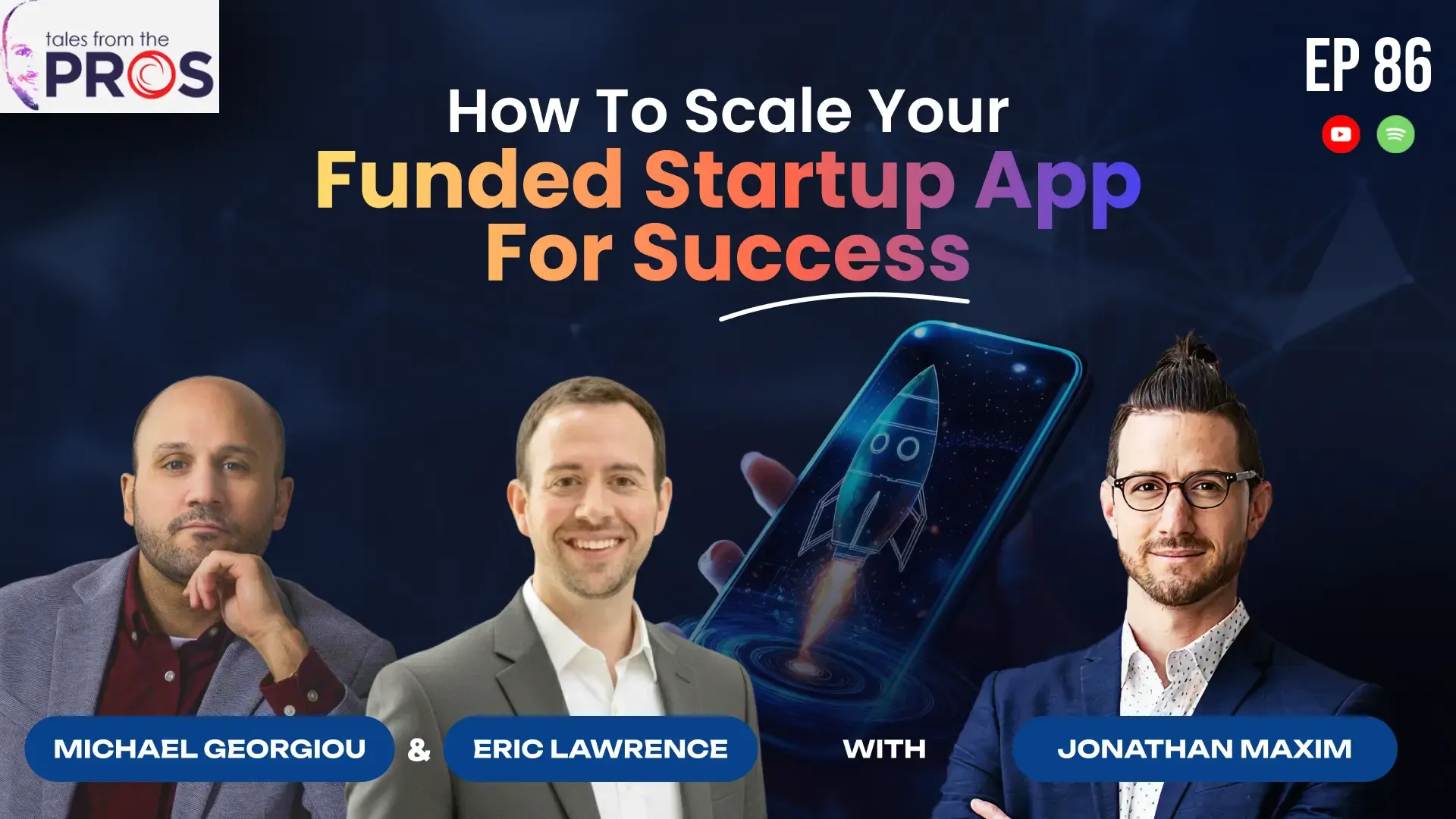
Launching an app is just the beginning. After securing funding and building your product, the real challenge lies in scaling it successfully.
In this post, we dive deep into expert strategies shared by Jonathan Maxim, founder of Viral App Launch, who has helped hundreds of startups navigate the complexities of growth, marketing, user acquisition, and long-term success.
Understanding the App Scaling Challenge
Scaling an app involves more than just initial marketing; it's about creating a sustainable growth strategy. Jonathan Maxim emphasizes that many founders underestimate the ongoing challenges they will face.
"Getting funding is one thing, but scaling the app successfully is a completely different challenge."
Success doesn't come from simply launching a great product. It comes from validating your assumptions, learning from users, refining your product, and maintaining the resilience to keep improving over time.
Step 1: Prioritize User Acquisition
One of the fundamental aspects of scaling your app is ensuring a steady influx of users. Jonathan suggests focusing on marketing strategies that not only attract users but also retain them.
"You could have a great product, but if nobody knows about it, it makes it hard to succeed."
Here are some actionable strategies for effective user acquisition:
- Leverage Social Media: Use platforms like TikTok, Instagram, and LinkedIn to generate awareness and attract your ideal audience.
- Utilize Influencer Marketing: Partner with creators who already have your target audience's attention.
- Implement Referral Programs: Reward existing users for inviting friends, creating a scalable acquisition channel.
- Test Before You Scale: Validate messaging and audience segments with small marketing budgets before increasing spend.
Step 2: Optimize Your App Onboarding Experience
Once users download your app, onboarding becomes critical.
Jonathan explains that many startups lose the majority of their users before they ever experience the product's value.
"Usually, 50% to 80% of your customers stop at the door and turn around because you didn’t have a nice onboarding experience."
Improve onboarding by:
- Conducting User Experience Audits to identify friction points.
- Simplifying Registration with fewer steps and social login options.
- Showing Immediate Value instead of overwhelming users with features.
- Educating Users through interactive walkthroughs or tutorials.
The easier it is for users to experience success quickly, the more likely they are to stay.
Step 3: Continuously Improve Your Product
Successful apps are never truly finished.
Jonathan emphasizes that founders should constantly learn from customers instead of assuming the product is complete.
"You need to keep building and improving the product based on user feedback and the marketplace."
Ways to improve continuously include:
- Create Feedback Loops using surveys and in-app prompts.
- Analyze User Behavior to identify drop-off points and opportunities.
- Release Regular Updates that solve real customer problems.
- Measure Results before adding new features.
Remember: feedback isn't criticism—it's valuable data.
Step 4: Focus on Product-Market Fit Before Scaling
One of Jonathan's biggest lessons is that founders often try to grow too early.
Instead of spending heavily on marketing immediately, validate your product with a smaller audience first.
This allows you to:
- Identify your best-performing customer segments.
- Improve messaging.
- Reduce Customer Acquisition Cost (CAC).
- Increase Lifetime Value (LTV).
- Build a repeatable growth engine before investing heavily.
Scaling becomes much easier when you've already proven people want what you're building.
Step 5: Cultivate a Resilient Founder Mindset
Perhaps the biggest takeaway from the conversation isn't about marketing or product development—it's mindset.
Jonathan believes entrepreneurship is ultimately about patience, persistence, and learning.
"Running a startup is about patience, persistence, and grit."
Founders should:
- View setbacks as learning opportunities.
- Stay committed during difficult periods.
- Avoid taking customer feedback personally.
- Focus on solving problems rather than dwelling on failures.
The entrepreneurs who succeed aren't necessarily the smartest—they're often the ones who refuse to quit.
Why Founder Mindset Matters More Than Your Product
Jonathan argues that startups rarely fail because of a bad idea—they fail because founders give up too early or become discouraged by inevitable challenges.
Every startup encounters obstacles, whether it's poor onboarding, marketing challenges, funding issues, or technical setbacks.
The founders who succeed are those who treat obstacles as feedback instead of failure.
Rather than chasing overnight success, Jonathan encourages entrepreneurs to enjoy the journey itself.
Business isn't just about building products—it's about solving problems consistently over time.
Conclusion
Scaling an app after launch requires far more than simply acquiring users.
It demands continuous product improvement, effective onboarding, disciplined marketing, patience, and the resilience to keep learning.
As Jonathan Maxim explains, founders who focus on validating their product, listening to customers, and enjoying the process are far more likely to build sustainable businesses.
If you're preparing to launch or grow your own app, these principles can help you avoid common mistakes and create a stronger foundation for long-term success.
🎯 Key Takeaways
- App scaling is a long-term process that requires patience and consistent execution.
- Validate product-market fit before investing heavily in growth.
- User onboarding has a major impact on retention and long-term success.
- Optimize Customer Acquisition Cost (CAC) before increasing marketing spend.
- Focus on solving one problem exceptionally well instead of building too many features.
- Customer feedback should guide product improvements—not discourage founders.
- AI is a powerful tool, but vision and execution still belong to entrepreneurs.
- The businesses that last are built by founders who enjoy the journey, not just the outcome.
💡 Highlights
- Why great products still fail without effective marketing
- The biggest onboarding mistakes startup founders make
- How to validate product-market fit before scaling
- Jonathan Maxim's framework for growing from 1,000 to 10,000 users
- Why Customer Acquisition Cost (CAC) and Lifetime Value (LTV) matter
- The importance of niche products over broad platforms
- How AI is changing startup app development
- Why enjoying the entrepreneurial journey leads to better long-term success
Latest Episodes
Subscribe


Meet The Host
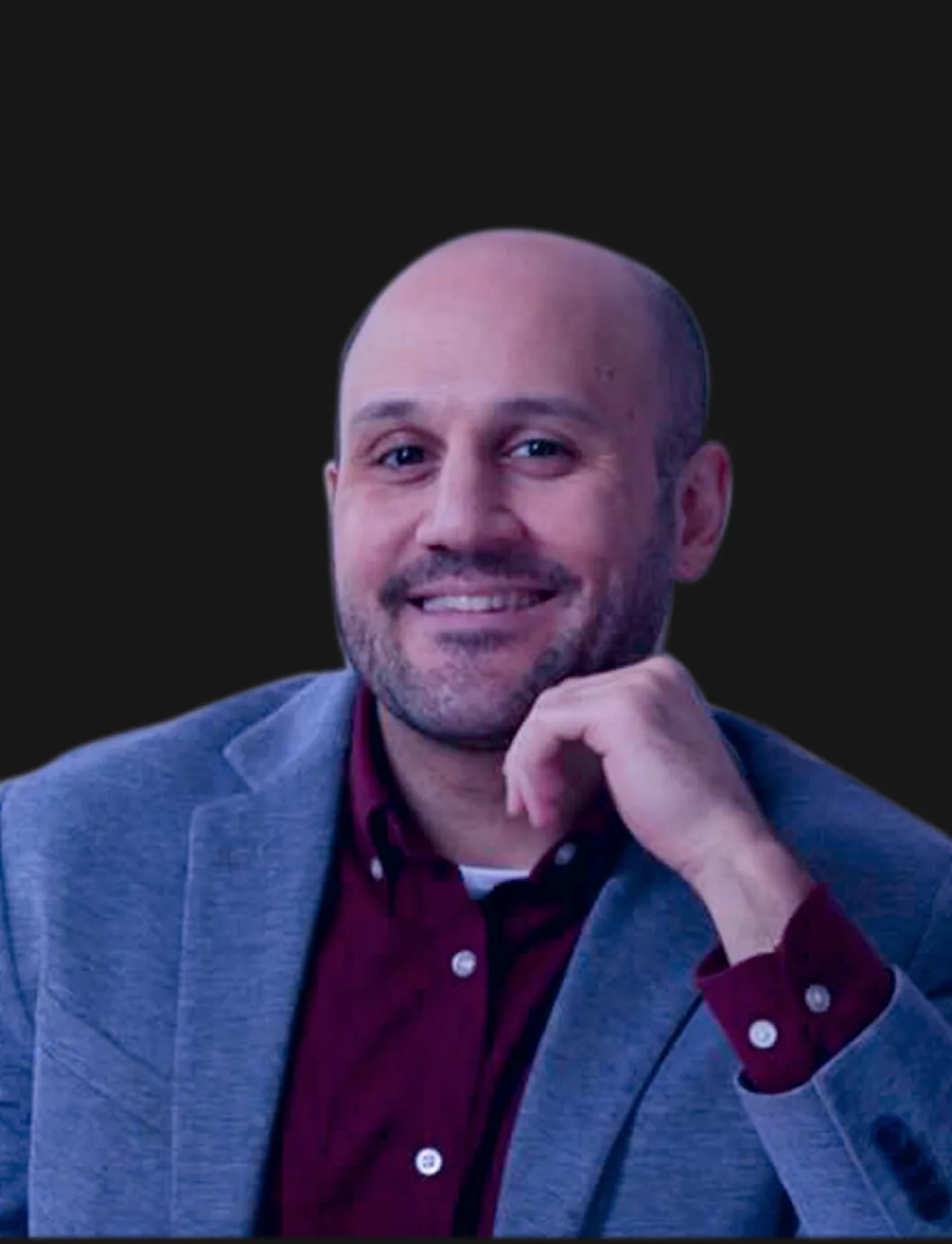
Michael Georgiou is the Co-founder at Imaginovation and the podcast host of Tales from the PROS. As an entrepreneur and business leader, he is passionate about sharing stories that inspire innovation and growth.
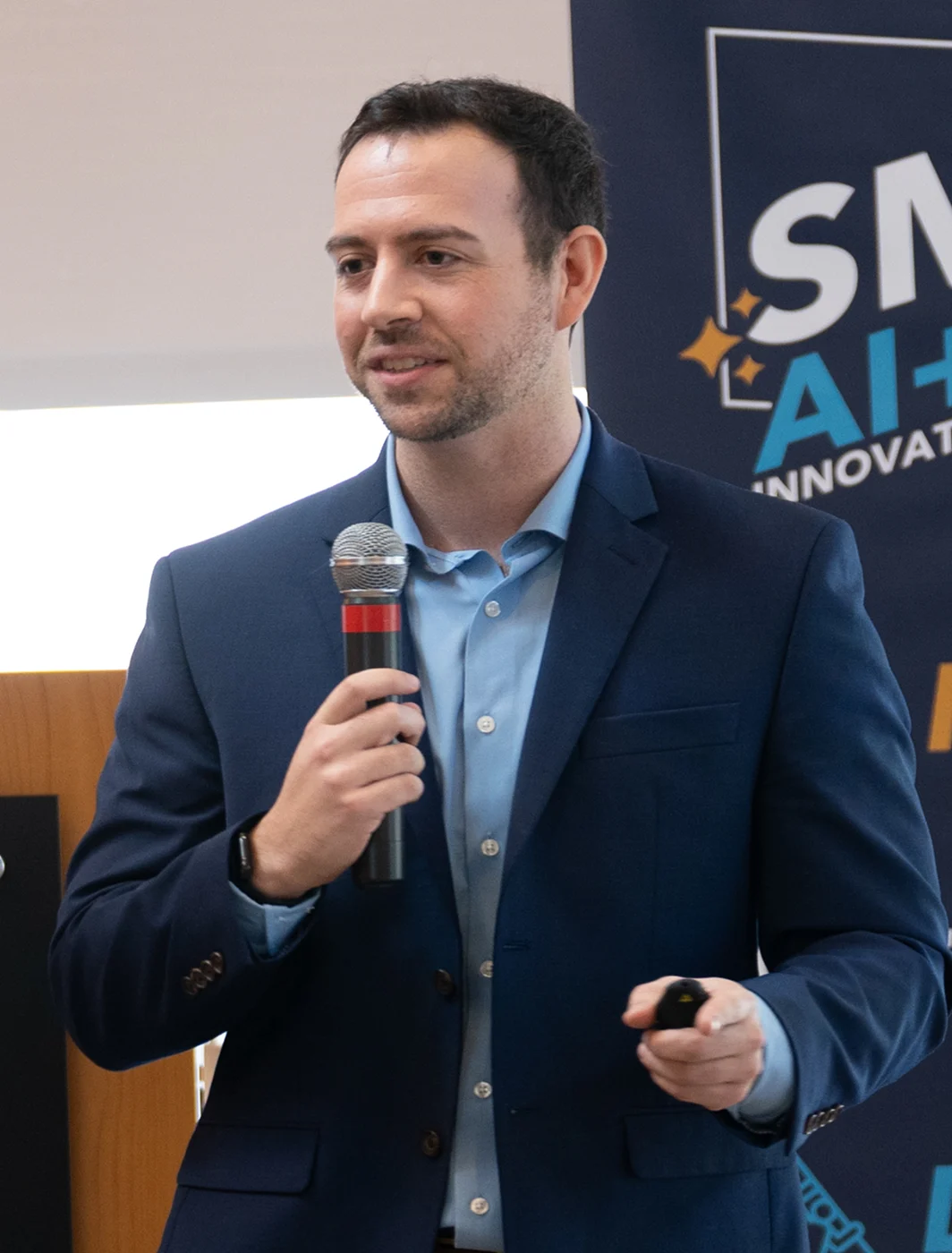
Eric Lawrence is the Director of Growth at Imaginovation. As co-host of Tales from the PROS, he brings years of experience working directly with clients seeking software and application development solutions. His insights help businesses understand what to look for in a development partner and how to set projects up for success.


One of the best business podcasts! 🚀

I have listened to several business podcasts over the years and I have to say that Tales from the PROS is within my top three favorites. Michael does a GREAT job creating an authentic and real conversation and atmosphere with the amazing guests he has on the show. If you want to learn about the realities of business, insights on how to be successful, the power of storytelling, and how overcome the business struggles that life throws at us, then this podcast is for you. I highly recommend checking it out and be ready to learn and be inspired! 🎙🎯
Amazing insight!
Michael is a great host and I really enjoy listening in on the conversations he has with business leaders. This podcast is great for anyone wanting to borrow ideas for their own business and looking to expand professionally!
An Educational Delight
This podcast presents fascinating insight into the world of business and entrepreneurship. I am in no way, privy to these topics and have found these interviews to be incredibly educational. Michael talks with trailblazers from all walks of the business world and I am here for it!!!
Love “Tales from the PROS”!
Michael Georgiou is a thoughtful and engaging host who chooses such a fascinating group of interviewees for his podcast! All of the thought-leaders, entrepreneurs, and business pros Michael invites on are exemplary in their fields and on the vanguard. I love listening to “Tales from the Pros” for inspiration and also a well- rounded and entertaining session. I highly recommend getting hooked on this podcast!
Mr podicast
Michael’s podcast’s are amazing and very inspiring. As his best friend I’ve seen the great times and the struggles of Michael building his company. He has put sweat and blood into his company and I couldn’t be prouder of him. These podcasts are great to see and anyone would be so lucky to be on it. Mike keep grinding and you are doing amazing things in life brother!!!

Check Out More Episodes
Explore more episodes packed with practical insights, expert perspectives, and real-world lessons you can apply to your business.


Justin Miller revolutionizes the wedding photography industry
 50 Minutes
 Play This Episode
World renowned trance DJ, Jaytech discusses building his own musical community
1 Hour 10 MinutesPlay This Episode
Michael Brenner talks on the content marketing formula for B2B companies
1 Hour 5 MinutesPlay This Episode
Fitness social celebrity Megan Ewoldsen proves how to STRIVE for progress - not perfection
1 HourPlay This Episode