
Listen on:


 Transcript This Audio
Eric Lawrence (00:01.645)
Hi, welcome everyone. Welcome to Tales from the Pros. I am Eric, Director of Growth at Imaginevation. Our guest today has spent over 20 years building software and leading engineering teams. Welcome, Ricardo Garcia. He founded Teravision Technologies and grew it into a 200-person engineering team working across nearly every industry. He also interviewed over 150 tech leaders on how AI is changing software development.
And turned it into a book. Ricardo didn't study this from the outside. He rebuilt his own company around it. And his big takeaway is one we keep coming back to, which is the technology is the easy part. Leading people through the change is what's actually hard. Today we're digging into what AI is really doing in software development, where companies get it wrong, and why the hardest part of this has almost nothing to do with the tech itself. So, Ricardo, welcome to Tales from the Pros. It's great to have you.
Ricardo Arcia (00:59.928)
Thank you, Eric. My pleasure.
Eric Lawrence (01:02.543)
Great. And and Ricardo, I know you have a a pretty big background and you have a story to tell as to how you became CEO of Terravision Technologies, what led you to the point of the the company growing to, you know, 250 engineers. Can you walk our listeners through what your journey has looked like?
Ricardo Arcia (01:22.604)
Of course. well, Eric, 25 years ago, we I I had a a vision that the internet was going to change every single industry. as I'm sure you already have seen, it's changed telecommunications, entertainment, banking. And right now my kids shout at Alexa and
And two seconds later, they are listening to any song written in the planet. So for that reason, I believe that was going in a way to happen. And we created TerraVision Technologies, that is this software company that could be the partner of companies through that digital transformation. So that's pretty much the way we created the company.
Eric Lawrence (01:51.671)
Yeah.
Ricardo Arcia (02:20.137)
why we were there. And and we've been navigating this process for about 20 years. it's been a very interesting path. And then I've been following AI for about 10 years. but two years ago exactly, I was reviewing the the topic with my CTO and we realized that the AI models started to be a lot more intelligent than before. We started to see that they were able to write code.
Not perfect code, but they were able to do it. So at that point, we we realized that we had to intentionally do something and and try to understand how this could really impact our business and the way we did software.
Eric Lawrence (03:09.238)
Absolutely. And it's it's been interesting because it feels like just the day-to-day has entirely changed. And I know our team's changed the way that it approaches projects with AI there. But you know, specifically what I've noticed, because I'm I'm more on the the business side of things, is that for a lot of our clients, a lot of people would come in as entrepreneurs with an idea saying, Hey, can I build this? And really what they needed.
is to get a product out there and for validation. And what I've noticed is that with a lot of AI tools now, they're able to do that maybe without a full product team. They can figure it out on their own just to get something out there to get validated. So I'm not sure if you've been seeing the same.
Ricardo Arcia (03:55.616)
I do. let me tell you a little story about what we did exactly two years ago and and it mimics very much the the the symbol that you're mentioning. because we didn't know how this worked, we decided to create in our innovation lab three different teams, the type of teams that could deliver from start to finish product design, development, testing and and
And cloud, and we asked them to deliver a project, a minimum viable product that we did in seven months, three years before. We asked them to try to do it in eight weeks using AI, any AI tools that they could find, to see what happened. And and it comes related to what you're mentioning. So basically, we started seeing important patterns. The first one was that.
the more junior the engineers were, they were more eager to to use this technology. They were excited about it. But the quality that we were getting from what they did was really low. Was crap. It wasn't really good. and the senior engineers, they were more reluctant, they were thinking more about it and taking more time. They they thought it was sometimes too good to be true.
Eric Lawrence (05:05.273)
Mm-hmm.
Ricardo Arcia (05:19.009)
And we were getting better results from them, but sometimes inconsistent, sometimes good, sometimes better. So that was kind of the first pattern that we that we got. And the second one is 100% related to what you're saying. That is that we from the very beginning, we clearly saw acceleration on specific stages of the process. You could see a a product owner writing requirements that
typically took them a week in a couple of days. You could see a a a team of somebody testing the software and instead of it taking them a couple of weeks to go through a a testing matrix process, it takes them three days. So but we were also seeing that the whole system was not improving. It was we saw the the specifics in in each of the the
the acceleration in each of the stages, but the system, the complete system wasn't really improving. So at that point, we well, we realized first that the way we have been doing software for 20 years was obsolete and that we had to change something. And we also understood that the the real problem, as you mentioned at the beginning of the conversation,
It wasn't the tools. It was about how to orchestrate them and how to make them work as a system properly.
Eric Lawrence (06:49.123)
Hmm, interesting. Did you ever find when you were doing these tests that there was levels of complexity that AI just could not match? If there was a system that required too many complex things or had a lot of different integrations, that there was a limit to what AI could actually do to help?
Ricardo Arcia (07:11.179)
Absolutely. This is a a great question. your what I what we have seen is that for the example that you mentioned, this proof of concept, these MVPs, you can see great levels of acceleration and and it's like you are giving a superpower to the engineers. It's like now you have a an architect that can deliver a a minimum viable product. I'm not gonna say a minimum viable product.
a proof of concept in a week, something that sometimes it took two months from a team in the past. So it that's amazing. That being said, it's very different than the challenges that we have found on mid-sized companies, Brownfield projects, the typical company that has code written for 15 years and you have a a team of 80 engineers, that's another challenge. That's another situation. And that is
where we have seen that these type of companies are able to increase their productivity in a good way, but it's not five X or ten X like the the increase in in productivity that you get for these minimum viable products or or proof of concepts. That's what we have seen.
Eric Lawrence (08:30.137)
That's interesting. Yeah, because you're right. There's basically two types of projects out there. There's the MVP creation for the entrepreneurs out there that are looking to launch something and find a good, viable business. But then there are the existing businesses out there, right? That have teams that have software. Maybe they have manual tasks that you need to digitize and you go through that whole journey of digital transformation. And then when they're those moving pieces
Ricardo Arcia (08:47.319)
Yes.
Eric Lawrence (08:59.053)
It can be a little bit more complex and there's things that you have to navigate. Maybe there's some office politics that you have to navigate and make sure that everything that you build kind of fits and aligns itself well with the business.
Ricardo Arcia (09:13.825)
Absolutely.
Eric Lawrence (09:15.619)
That makes sense. And you know, I you mentioned there was kind of that turning point two years ago. What what was that signal for you that you said this is something that's that's completely changing the game? Was there something that you saw or or that you noticed?
Ricardo Arcia (09:33.498)
I I think during that exercise of eight weeks, that by the way, nobody finished in eight weeks, but it didn't matter. At the end we really got the gist that this had to change. we had to rethink it. And at that moment w we had some important thoughts. The first one was that we fear for the junior engineers. We said, okay, how are they gonna fit into this if they don't know what they don't know? So the answer to that or the
Eric Lawrence (09:39.962)
Yeah.
Ricardo Arcia (10:03.321)
theorical answer that we found that was that we created a a training program. And we said, okay, let's train these people, everybody, so level we can level the field, we can start explaining them that they're gonna stop executing and they're gonna start orchestrating and and validating what these models bring. So so to try to change their mindset. And then the second thing we did is that we created a framework. Now we call it the cognitive engineering framework.
But it was our idea with our 20 years of experience on how you could connect AI in the different phases of the process. So this the complete system really increases acceleration. And we are talking specifically about the second type of projects we were talking about. I mean, our clients are typically mid-sized companies with all those characteristics that we mentioned. So to really be able to help those companies.
We thought we needed to do to have those two things. and once we had those two things, we because we have these 20, 200 plus engineers, we started pushing this training and this framework into all of our teams and our client teams. And we started telling them, hey, this is what we're doing. We're trying to think what's the best way of using this. And at that point is where we really started finding the real problems. The the real problems that
Eric Lawrence (11:30.723)
Mm-hmm.
Ricardo Arcia (11:32.597)
I mean, I can tell you that I wasn't expecting many of them, but it was very interesting to to go through that process. Uncertain but but fun.
Eric Lawrence (11:42.437)
Yeah, so before we get into the framework, because I think our listeners are gonna be interested to hear what that looks like, give us a good example of some of the problems that you ran into.
Ricardo Arcia (11:54.398)
absolutely. let me tell you a story. So imagine that you have a this case was a a client and this client they had a they were shipping code without the an architectural decision log. So they every time w they ship code, they didn't have that information really settled in a in a place organized.
And before AI, that was working, I'm not gonna say say perfectly, but it was working. It wasn't ideal. But because the engineers were there and they were deploying on their own, they always knew the right answer and they were managing the deployments. But when we started introducing AI into this, what happened was that the engineers were building features using AI models, and the code coming from that model was correctly solving.
What it was asked to solve. So the features were working, but because he didn't have the correct architectural guidelines, we were getting when they push it into the repositories, we were getting architectural inconsistencies. And we started piling up technical debt. And at that moment we stop and say, Stop. I mean, we need to stop this because we are amplifying the chaos and we're not amplifying the good practices. So that was one of the first ones that we realized is that
for teams to start using AI in the proper way, you really had to reth to have your a strong engineering standards. And if you had any specific weaknesses in the process, you had to get them better before you introduce something that will amplify whatever it is. If it's good, it's gonna amplify the good. If it's bad, it's gonna amplify the bad. So that was the first one. the second one
was kind of the same. We have been talking about the this acceleration into the silos. the third one was more aligned with when we pushed this into teams that into companies that had several engineering teams. Imagine you have four pods four engineering teams and we were pushing all this training and and framework at the same time and
Ricardo Arcia (14:20.631)
Couple of the teams were getting it great, they were accelerating, they felt great, but we had some other two teams that were not getting it. They were having trouble. And we at the at the moment we didn't know why, but there was a problem that we had to solve. I mean, to help the company really learn this new way of working and and using this and and compound the the productivity together. So that was another problem. And the fourth one that we found that
I wasn't expecting that one at all. Was that we were seeing some companies that were and teams that were feeling that they were doing great. They were feeling that things were progressing, they were doing things clearly faster and and with better quality, but they were not able to prove that to their management. They were not able to prove the ROI. So as you know, any
Eric Lawrence (15:13.37)
Mm.
Ricardo Arcia (15:16.851)
Initiative that you have in your organization, if you're not able to prove ROI, how can you ask for additional funding? So they started having that problem of how can I prove this? So all that all those problems that emerged during that initial phase of implementing this is what really help us rethink all this and create what we call now the AI transformation accelerator program. That is the way that we found
Eric Lawrence (15:23.095)
Exactly.
Ricardo Arcia (15:46.285)
to help our clients and our internal teams go through all these problems and and solve them one by one in a way.
Eric Lawrence (15:54.795)
Interesting. So those four things, yeah, I could see exactly why you guys needed basically a set of standards for everybody in the team, especially when you have that much personnel to hereby. What does the program look like? How how does that break down?
Ricardo Arcia (16:13.55)
well the the program has a
five phases, five specific phases. the first one is training and and it's where the the way I see our clients, the the way we have seen them working, they start providing the engineers with with the with the tools for them to test. Then you go to the next phase and then you train them. So we train them and and as I mentioned before the main idea is for everybody to
talk the same language and for everybody to know that they have to switch the way of thinking around this, then you have to create a framework. We have our own framework, but you need to tell your engineering team how you are expecting them to use AI and where. and then there is one that that was one of the most interesting ones that is something we call the Team Zero.
You remember that I mentioned that we found a problem where we had some teams moving faster than others. The way we solved the problem was that we created a what we call a team zero. This team zero is a team that is the team that you're going to allow in your organization to do innovation. If you ask everyone to be always looking for the new trend on the internet about AI and implementing that into their software process, you're gonna have
inconsistencies and no standard. So, but what we did is that we created this Team Zero. And what this teeth Team Zero does is that they take our framework and they adapt our framework to their own company, to the way they work. This is a team that delivers like any other team from start to finish. And they go on a sprint and in about four to eight weeks, they create something that we call a transfer package.
Ricardo Arcia (18:14.635)
This transfer package is the translation or the adaptation of our framework to their company. And now, once they do that, they take that package and they give that to the other teams team one, team two, team three, team four. Those teams are not innovating. Those teams are your following guidelines that the other team were giving them. And they don't have to really start thinking about this is a new model that came in, we're gonna use this to connect that. No, no.
I'm just gonna follow the guidelines of my zero team, and we have seen that that really helps on the scaling of all this. Those are the type of problems that I was mentioning at the beginning. When you have a a bigger organization and a more complicated sort of problem or software, you really need to go step by step organizing it. So that was the third step. the fourth one was that we
Created something called the 90 day loops. Basically, we found that 90 days were short enough to push your teams to provide and deliver value and deliver measurements. And it was long enough to be able to see results. So the idea and our thought process was: we don't need you to accelerate this.
Eric Lawrence (19:14.308)
Mm-hmm.
Ricardo Arcia (19:39.224)
From zero to thirty percent in productivity from one day to another. No, we need you to incrementally every 90 days increase your productivity and get better and better at the way you're doing software. so we implemented these 90-day loops. And inside of these loops, one very important thing was measurement. to answer to that question about how to prove ROI.
Eric Lawrence (20:07.49)
Mm-hmm.
Ricardo Arcia (20:07.637)
we built a set of measurements that you need to follow. So you start from the very beginning measuring, and that allows you in 90 days, in 180 days, to be able to compare and provide ROI to your organization. And finally, and this is the one that blew my mind that I wasn't expecting, Eric, was that we figure out that this is not a technical problem at all.
Is this a people and a leadership problem? Because even though after you gave everything, all this that I'm telling you, some of them we are human beings and we are we want to do things the way we've been doing it for 20 years. So why you're telling me to change this? I I feel more comfortable with the other way of doing it. So we have to bring a layer of coaching on top to really
be able to help them on a daily, on a bi-daily basis, on a weekly basis, on how to really embrace this change. Because I'm pretty sure you agree with me that there is no way that we are going to do software the old way two years from now. It's going to be the new way. So we have to there are going to be challenges and we had many examples of challenges that we found, but we had to go there. So we had to bring this coaching into that
Eric Lawrence (21:21.006)
Yeah.
Ricardo Arcia (21:31.827)
And that is the reason why I called the book the cognitive leader, because i it was at the end I realized that this is a leadership problem and a people problem more than the technology, as you mentioned at the beginning, is just a tool, something new that we have to learn and and that help us during our our process.
Eric Lawrence (21:56.953)
That's that's fascinating because what I've noticed, and there are a lot of companies out there. I think you can kind of spot this in certain industries where having that that right innovative leadership mindset, it's just like completely foreign. But what I've noticed is a lot of the companies that we end up working with, where we go into some form of digital transformation, there's at least one innovator.
That is kind of the link between them getting in touch with us and when we go into that process of digital transformation, they're having to do a lot of the heavy lifting to basically motivate everybody within the leadership team that this is a great idea. We're moving forward. This is going to bring a lot of great change to our company, which I think you you hit the nail on the head, Ricardo, which is the easiest decision to make is no decision at all.
For for a lot of people. But you take it one step further in that sometimes that one person isn't enough. You need to basically bring the team in. You have team zero already, but you bring the team in to really coach everybody up on how to embrace this. And I I could see the value in that because now that responsibility doesn't just land to that one person anymore. It's it's really being adopted across the board at the leadership level at the organization.
Ricardo Arcia (22:56.129)
Yeah.
Ricardo Arcia (23:25.919)
And and that's a real challenge, Eric. That's what we have seen is a real challenge. the other ones, I'm not gonna say they're easy or minor, but definitely the really embracing this as an organization and go through this transformational process, it's where where I believe it's the where the value is gonna come from, especially for software development teams.
Eric Lawrence (23:52.055)
Hmm. So for for some of the listeners here, because they're, you know, they're CEOs, CTOs that listen to this, to test your thesis, where you say it's it's not a technology problem when it comes to AI, it's a leadership problem. What does the failure look like usually if they're looking to pursue AI but but the leadership isn't aligned? What does that look like?
Ricardo Arcia (24:17.461)
I can tell you many examples from the from the comp from the CTOs and and tech leaders, the hundred and fifty that I interviewed during this process. Because at the time, at the moment that I completed the the innovation lab exercise, I decided to talk to people because I imagine everybody was going through the same conversation. They wanted to to know what to do and and nobody has told us how to do it. So
After the 10th or the 15th conversation, I realized that everyone, and I can tell you that every one of those 150 leaders were having the same question. How can I use this tool, this AI, to increase my productivity, make my team better? And I started seeing different patterns. One of them was there were teams that they just gave their engineers access to the tools.
And okay, that's fine. what happened there, what typically we were seeing there is that some engineers were using it for some things, some others won were using it for another thing, there was no standardization. you had ten percent of them very happy and 90% of them they felt like I don't know what to do with this. then some others put the training on top. And and the training was good, but again, without
all the other layers, if you don't tell them how to do it, how to iterate, you give you have only a fraction of your team innovating, you cannot have everybody innovating. So you see that they get stuck. And and it's not bad. I mean it's is everybody has to go at a certain pace. but I I I think what we found out here is in a way and and probably our difference with
other organizations is that we intentionally with 200 engineers we're trying to push and see the different patterns and how we could fix them. And I'm pretty sure our recipe is not perfect. And we have to still figure out a hundred things. But at least we have figured out some of them and that's what I try to place on the book to help these CTOs and VPs of engineering give them a path on how they could
Ricardo Arcia (26:43.469)
start approaching this without the guesswork, without all the guesswork we or many of the guesswork we did it in the last couple of years with our experimentation.
Eric Lawrence (26:54.041)
Hmm. 150 conversations. That's that's a lot. Was there was there any story that like resonated with you the most out of those conversations you had?
Ricardo Arcia (27:08.299)
Yeah, we had it was interesting because I I can tell you that about ten companies were ahead of us on what they were doing. They were more mature. They I I was amazed about what they were doing, but it was funny because everyone thought it was late. Every leader. Everyone thought that in every conversation, yes, I mean we're we're late.
Eric Lawrence (27:32.581)
It's like the human condition, right?
Ricardo Arcia (27:37.088)
And and I can tell you, I don't know, I I would love to hear your your stories about this and your clients, but I was in a CEO event on September last year in 2025, and this event has like the the way it's set up is conversations, and you get from the hundred and fifty C CEOs that go there from mid sized companies, you have like 30 or 20 in a conversation and you talk about a topic. And there were a couple of topics about AI.
And and I raised my hand and I said, What are your engineering teams doing with AI? We're talking about mid-sized companies that make from a hundred million dollars to a billion dollars. So they must have they have an engineering team, a very big one. And I was listening to crickets. two or three of them had and we're talking about the CEOs, two or three of them, they knew what their teams were doing, the other ninety percent.
They were not doing anything. Or or they were doing something that wasn't as mandated that they knew. I mean, I'm sure any of those teams were using some tools and any of those tools were getting training, but it wasn't a formal way of really measuring and saying, okay, now I'm gonna use my software team to really deliver 30 to 40 to 50 percent more.
of value to my organization. That that wasn't there. It it wasn't part of the of the conversation then. Now I think it is more, for sure.
Eric Lawrence (29:10.885)
That's interesting. Yeah, there it's everybody's at their own different stage, but I think what you said, everybody feels like they're behind. Just with the pace of how everything's going, there's new models coming out every week, it feels it's easy to feel like you're behind.
Ricardo Arcia (29:27.415)
Yes.
Eric Lawrence (29:29.219)
So Ricardo, for a founder or an operator who buys their software versus builds it, what what kind of implications does it have for for somebody that's just trying to kind of piece it together with software that's already out there versus investing in their own and building it?
Ricardo Arcia (29:51.5)
I think that now's a perfect timing for those type of organizations. I mean, I imagine that if you buy the different packages and if you have a small engineering team helping you interconnect them now with all the tools, it becomes a lot easier than before. So I think if that's
part of what you're able to do and fits your your need, I think it's a perfect timing to to really save a lot of effort and and budget. having your your back end or your your back office with with a specific system. I think it would be a a great timing for that.
Eric Lawrence (30:40.729)
Good, good. And I I wanted to ask you for the non technical leaders that are out there, what questions should they be asking right now if their business runs on software?
Ricardo Arcia (30:58.389)
I think Eric, what one of the things, let me come back to a story about 15 years ago as as you, I'm pretty sure you guys lived it as well. The the mobile revolution when the iPhone came out. And and at that point, we had to learn something on top of what we already knew. We already knew how to do web applications, and now this new technology that everybody has in their hands, we have to learn how to
design for this and learn on this, but it was something that we just put on top. You could imagine easily before when I saw the first iPhone, I could easily imagine the steps to follow to create a software for that iPhone in a way. That being said, now with this disruption of the AI, there is no way that you have an idea of how it works unless you go and use it. And you get that dopamine moment
Of wow, this is how it works. So my suggestion for any technical, non-technical is go intentionally and use it. Because it's it's the only way of really getting into this. my thesis is that this is here to stay, and the sooner you get, the faster you're gonna be taking advantage of this.
And be in front of your competition. If you don't do it, and that's probably part of the reason why everybody feels late on this, because you feel that somebody else is doing it faster than you, and that could jeopardize your your business or your career. I think I always tell my engineers when we did that exercise two years ago, I realized that many of my engineers were they they fear for the job. And I understood it. And and for a time I was like,
I don't know what to say. I mean, yes, probably they're right. but then after we started pushing this and training them and and putting the framework, it it came to me that really, I really needed the engineers anyway, but I needed the engineers that wanted to harness this and work with us to jump from this building without a parachute and trying to build this together going down. But
Ricardo Arcia (33:20.865)
the the work, I mean AI wasn't going to replace them, was going to replace them another engineer that wanted to jump with us from the building without the parachute. That was it the the situation. And and when I told them that I realized that and in one of our quarterly report meetings, I sat and I explained that to everyone in the organization and and I saw the faces of relief. Like, okay, now I know that if I I know it's an uncertain time. I know we all feel uncomfortable.
And it's natural, but but there is no I I don't see other way. I I see the only way is let's go and let's push it and let's test it and let's see if it works. And if it doesn't work, then we iterate again and we try it again until we get it right.
Eric Lawrence (34:06.841)
Funny that you say that. I had a conversation with Michael just the other day where he said himself, there was a point in time where he was wondering with AI, is this thing going to make the software development industry obsolete? And it seemed a little bit like that at first, just as we were starting to like get into it and get it, you know, accustomed to it and seeing how the market reacted to it.
But he's noticed, and we've noticed ourselves with the conversations we've been having and the projects we've been taking on, that if anything, people are learning now that AI is a tool like anything else. It helps make things better, faster, and it's not something that's going to replace a full engineering team. and that's just something that we've been noticing for ourselves. So it's it's interesting to to hear you say that, Ricardo.
I think it would be helpful though, because if you're not in this world, I don't blame you if you don't see these things or experience these things on a day-to-day basis. I I would be interested to get your take, Ricardo, on for tools out there like Lovable or Base 44, where somebody can come off the street and say, hey, this is what my idea is. Build it for me. What's what do you find is is really the big difference between tools like lovable and
And having a team that leans on AI to build.
Ricardo Arcia (35:37.506)
That's a a great question. And this game I don't remember where I hear it and and it clicked with me about three weeks ago. I you know, we've been doing software for twenty years and and we've been doing it in a deterministic way, meaning my team says, Okay, I need to do this requirement, so I designed this screen.
And now I have to see that this screen does exactly what the requirement says. So we are doing it in a deterministic way. And that's how our brain works, at least in our company. Now, when you have things like lovable and all the AI models, they do not deliver on a deterministic way. They deliver on a probabilistic way. So they what they do is that they deliver something that
probably is close to what you asked them to do. And the better your context is, the more probable that comes in. So to give you an example, my team we had a conversation two weeks ago and and we are building something internal, a product internal for the book and and everything. And we were going to design our design team was going to design the screens and
And I stopped them and told them, I just hear this idea, and I think we are wrong about this right now. I'm not telling you I'm right right now. I'm just telling you the story. And I told them, let's try this. Let's try no, I mean, let's tell the model, I want this to be done this way with these branding guidelines, with all this. I want you to give me that and see what happens. What's what I haven't seen the results. We're working on it.
But I think it's part of what we need to let go as engineers to stop thinking about this in a deterministic way. This has to there is only one solution. No, there is not only one solution. There are many solutions that solve the same problem and and that solve it in in a good way. So I just need to find I I think if I make my peace with that, then I should be able
Ricardo Arcia (37:59.086)
to take advantage of all this new technology better because I'm gonna be able to go faster and deliver things in a in a better way. So just a thought. I mean it was something that came you it's funny that you say it because I mean we are learning every single day about this and and trying to understand what's a I'm pretty sure you guys are doing the same. How the the engineering teams or how the software companies of the future look like.
I I don't have the answer for that, but I'm trying to answer that every day.
Eric Lawrence (38:30.724)
We're learning every day. That is the truth of it. So Ricardo, thank you again. I I think as just kind of a a parting note, for the people that want to get in touch with you or want to learn more about the book, how can they find you? How can they you know, find the book, get engaged with you?
Ricardo Arcia (38:51.187)
the book they can find it in thecognitive leader dot com. and they can follow me on on LinkedIn, Ricardo Arcia, and our company's Teravision Technologies. either way works. I always I'm always talking about AI transformation on my on on LinkedIn. So if you can follow me or contact me there, I'm pretty sure we can.
Have great conversations.
Eric Lawrence (39:21.944)
Great. And the big takeaway that you have for the book, what what's something that you want any reader to take away when they pick up your book and they read it?
Ricardo Arcia (39:32.653)
I think the the thesis of the book that is that you need in your organization, in your mid-sized company, you need a CTO, a VP of engineering, somebody who intentionally creates the right environment for this to happen. And what I mean by that is somebody that orchestrates the people, the processes, and the AI systems and create a synergy for these two add.
more value into your organization and to scale on an iterative way one loop after the other. And that's what I call the cognitive leader and and why I call the book that way.
Eric Lawrence (40:16.58)
Amazing. Well, for all the listeners out there, be sure to check out Ricardo's book, connect with him on LinkedIn. And again, I'm Eric Lawrence, your host of Tales from the Pros, joined here by Ricardo Garcia, CEO of TerraVision Technologies. Thank you again, Ricardo, for joining. It's been a pleasure. It's it's been, I think, very insightful because it's not often that we get the chance to have two industry leaders talk about what AI looks like. You guys have clearly taken a very proactive stance.
when it comes to taking advantage of AI and making the most out of it for your own organization. So Ricardo, again, thank you. And for everybody listening, we appreciate it. We'll see you on the next episode.
Ricardo Arcia (40:59.115)
My pleasure, Eric. Thank you for the opportunity.
Eric Lawrence (41:02.287)
Course.

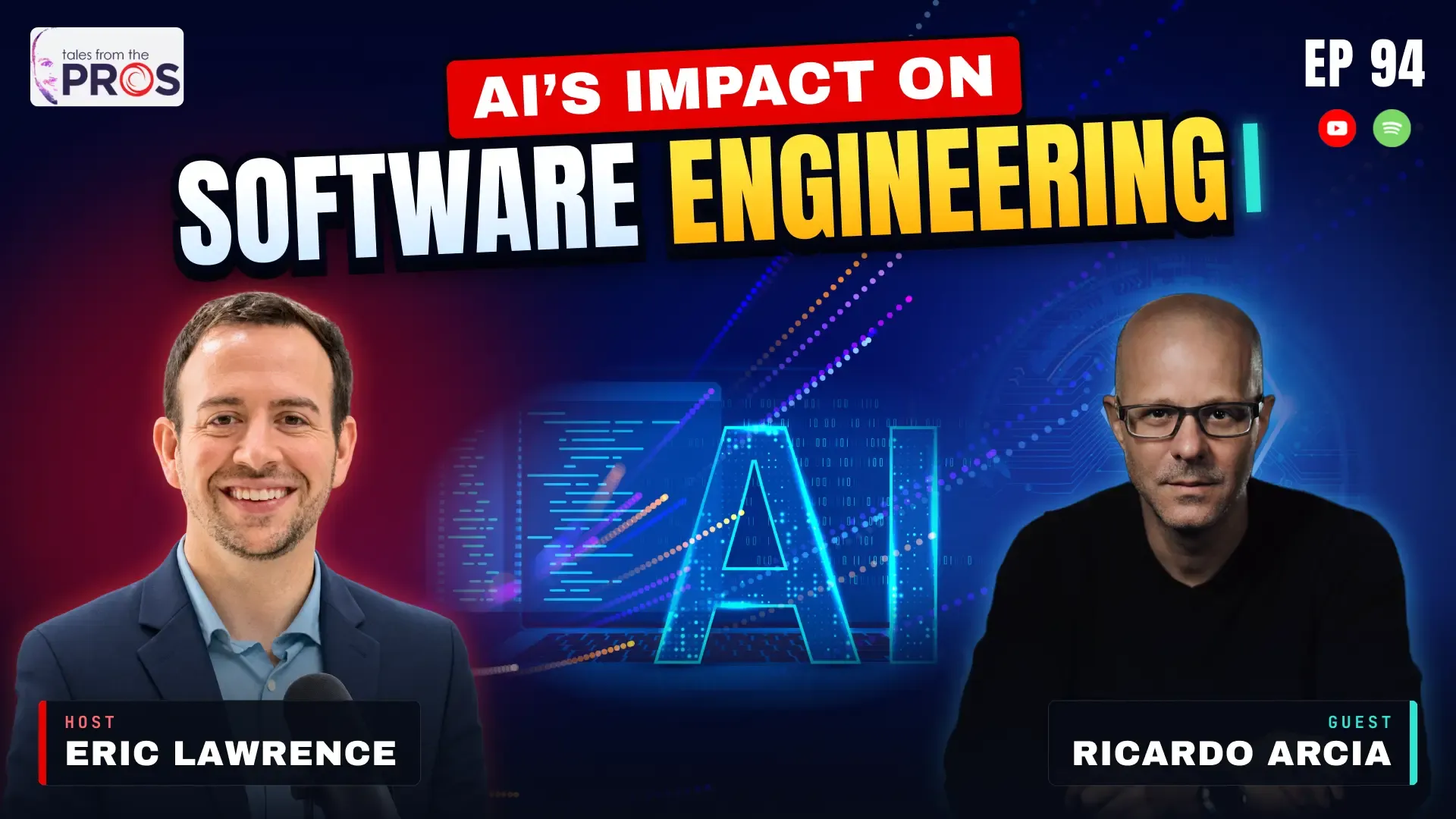
In this episode of Tales from the PROS, Eric Lawrence sits down with Ricardo Arcia, CEO and Co-Founder of Teravision Technologies and author of The Cognitive Leader, to explore how AI is changing software development and what it takes for engineering teams to adapt.
After experimenting with AI across his company's 200+ engineers and interviewing more than 150 technology leaders, Ricardo discovered that faster coding doesn't necessarily mean better software delivery.
He shares what happened when his team tried to complete a seven-month development project in just eight weeks using AI, why introducing AI without proper engineering standards can increase technical debt, and how companies can build a structured approach to AI adoption.
They also discuss the future of software engineering, AI-powered development tools, measuring productivity gains, and why successful AI transformation ultimately depends on leadership and people.
🎯 Highlights You Won't Want to Miss
- What Ricardo learned from experimenting with AI across engineering teams
- Why AI accelerates individual development tasks but doesn't always improve overall delivery
- How AI-assisted coding can introduce technical debt
- Why AI adoption is different for MVPs and established software systems
- How the Cognitive Engineering Framework helps teams adopt AI consistently
- Why measuring AI productivity and ROI is essential
- What Ricardo learned from interviewing 150+ CTOs and technology leaders
- Why leadership and organizational change are the hardest parts of AI transformation
🎧 Listen and Subscribe
Spotify:
https://open.spotify.com/show/6QkUtrcNllUkqtq1fjlwnZ
Apple Podcasts:
https://podcasts.apple.com/us/podcast/tales-from-the-pros/id1371067192
YouTube:
https://www.youtube.com/@Imaginovation/podcasts
SoundCloud:
https://soundcloud.com/talesfromthepros
💡 Key Takeaways
- AI can significantly accelerate prototyping, but complex software systems still require experienced engineering teams.
- Poor engineering practices can become bigger problems when AI accelerates development.
- Giving developers access to AI tools isn't enough. Teams need training, standards, and clear processes.
- A dedicated innovation team can help organizations test AI workflows and scale successful practices.
- Measuring engineering performance in 90-day cycles can help demonstrate the value of AI adoption.
- The biggest challenge in AI transformation is often getting people and leadership aligned around a new way of working.
🗂 Topics We Cover
- AI in software development and engineering
- AI-assisted coding and developer productivity
- MVP development vs. complex enterprise software
- Technical debt and engineering standards
- The Cognitive Engineering Framework
- Scaling AI adoption across development teams
- Measuring AI ROI and engineering performance
- AI leadership and organizational change
- AI coding tools like Lovable and Base44
- The future of software engineering careers
⏱️ Chapters
00:00 — Introduction to Ricardo Arcia
01:22 — Building Teravision Technologies
03:55 — Experimenting with AI in software development
06:49 — AI for MVPs vs. complex software systems
09:33 — Training engineers to work with AI
11:54 — How AI can amplify technical debt
15:54 — Building a structured AI transformation framework
18:14 — Using Team Zero to scale AI adoption
19:39 — Measuring AI productivity through 90-day cycles
20:07 — Why AI transformation is a leadership challenge
23:52 — What happens when companies lack an AI strategy
26:54 — Lessons from 150 technology leaders
29:29 — Buying software vs. building with AI
30:40 — Advice for business leaders adopting AI
34:06 — Will AI replace software engineering teams?
35:37 — How AI is changing the way software is designed
38:30 — Ricardo's book, The Cognitive Leader
39:21 — The future of AI leadership
Latest Episodes
AI's Next Reckoning: Why Companies Need Guardrails Before It Goes Wrong | Robert Levitan
 49 Minutes
 Play This Episode
Why AI Projects Fail to Scale: The Data Integration Problem | Matt Soltau
37 MinutesPlay This Episode
Subscribe


Meet The Host
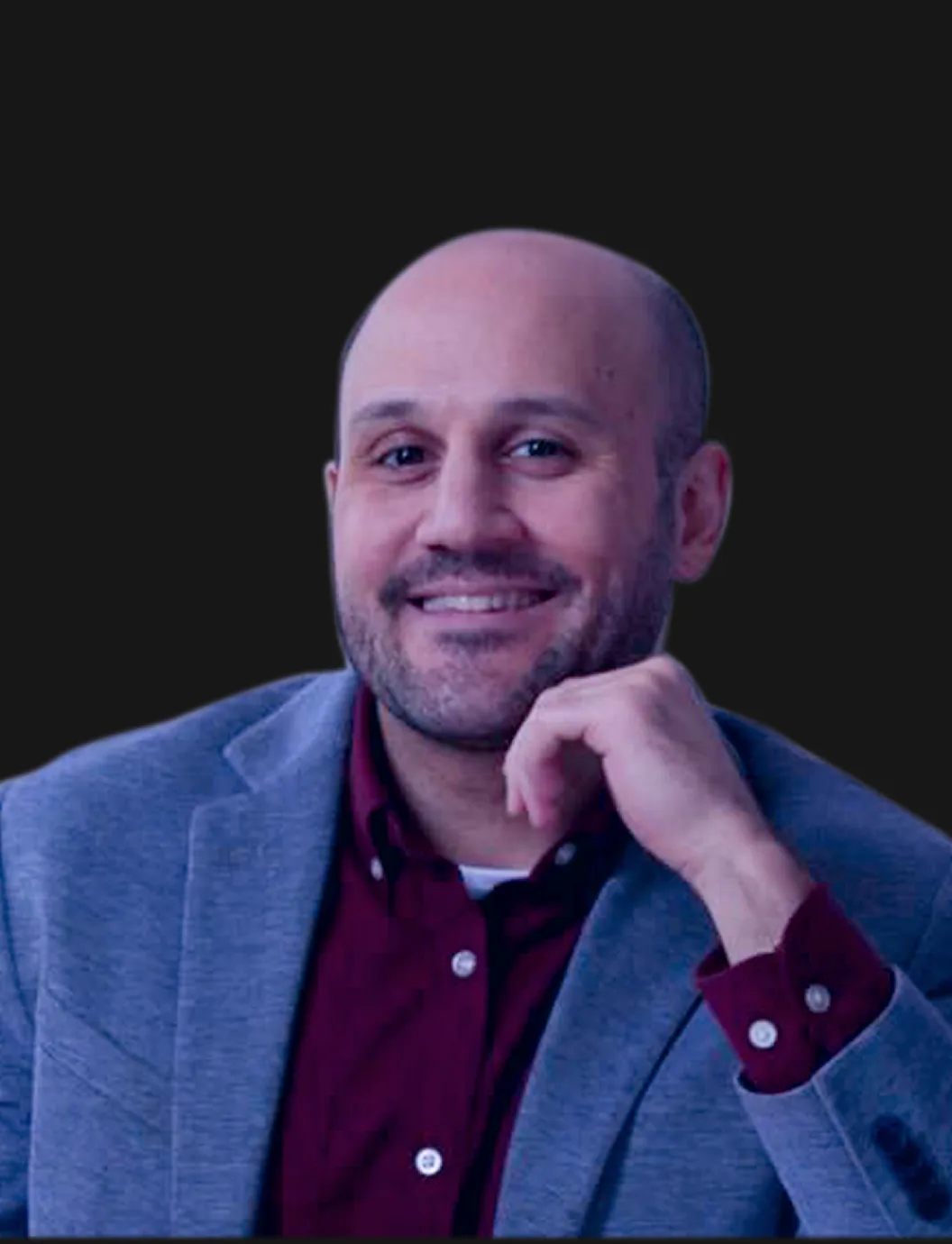
Michael Georgiou is the Co-founder at Imaginovation and the podcast host of Tales from the PROS. As an entrepreneur and business leader, he is passionate about sharing stories that inspire innovation and growth.
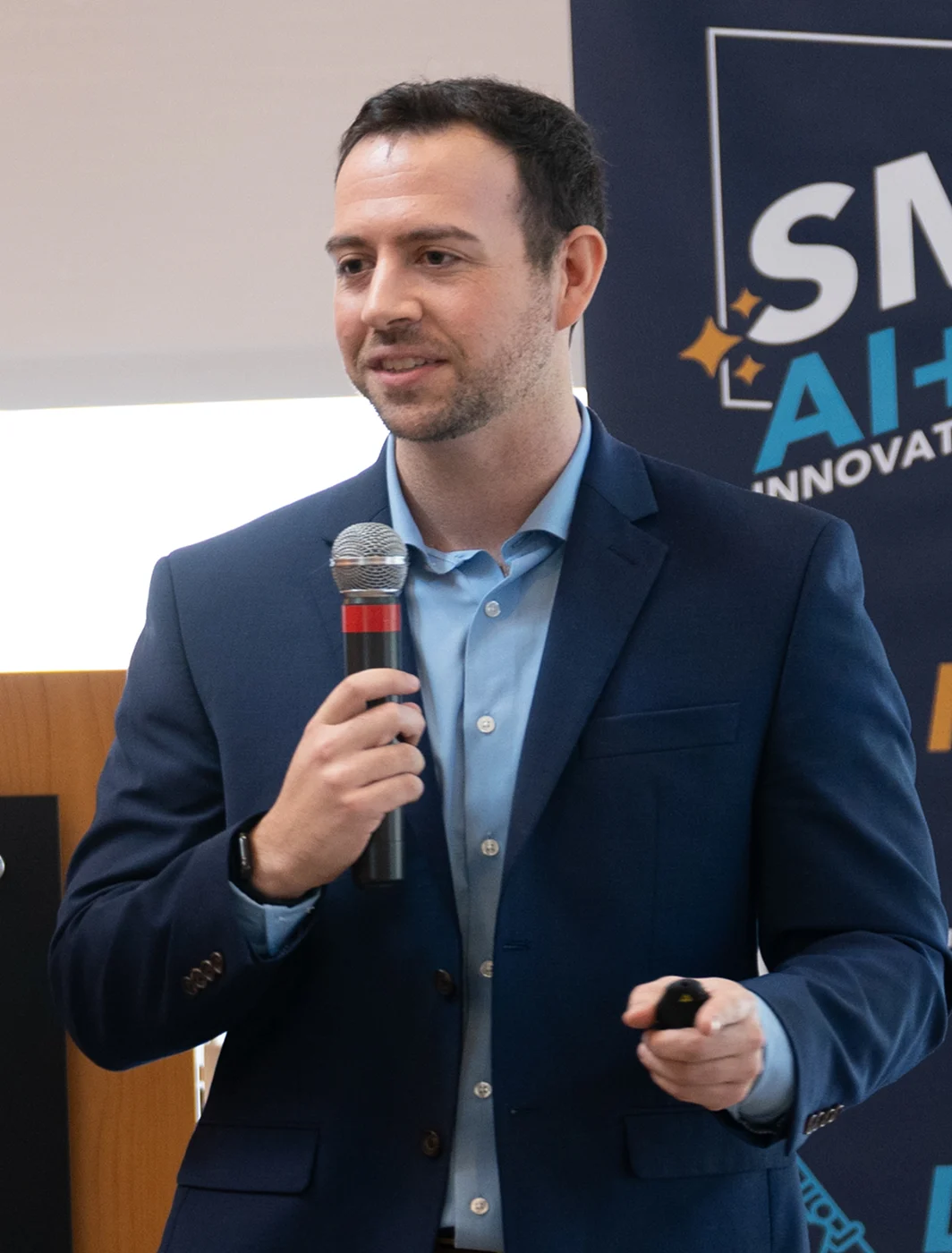
Eric Lawrence is the Director of Growth at Imaginovation. As co-host of Tales from the PROS, he brings years of experience working directly with clients seeking software and application development solutions. His insights help businesses understand what to look for in a development partner and how to set projects up for success.


One of the best business podcasts! 🚀

I have listened to several business podcasts over the years and I have to say that Tales from the PROS is within my top three favorites. Michael does a GREAT job creating an authentic and real conversation and atmosphere with the amazing guests he has on the show. If you want to learn about the realities of business, insights on how to be successful, the power of storytelling, and how overcome the business struggles that life throws at us, then this podcast is for you. I highly recommend checking it out and be ready to learn and be inspired! 🎙🎯
Amazing insight!
Michael is a great host and I really enjoy listening in on the conversations he has with business leaders. This podcast is great for anyone wanting to borrow ideas for their own business and looking to expand professionally!
An Educational Delight
This podcast presents fascinating insight into the world of business and entrepreneurship. I am in no way, privy to these topics and have found these interviews to be incredibly educational. Michael talks with trailblazers from all walks of the business world and I am here for it!!!
Love “Tales from the PROS”!
Michael Georgiou is a thoughtful and engaging host who chooses such a fascinating group of interviewees for his podcast! All of the thought-leaders, entrepreneurs, and business pros Michael invites on are exemplary in their fields and on the vanguard. I love listening to “Tales from the Pros” for inspiration and also a well- rounded and entertaining session. I highly recommend getting hooked on this podcast!
Mr podicast
Michael’s podcast’s are amazing and very inspiring. As his best friend I’ve seen the great times and the struggles of Michael building his company. He has put sweat and blood into his company and I couldn’t be prouder of him. These podcasts are great to see and anyone would be so lucky to be on it. Mike keep grinding and you are doing amazing things in life brother!!!

Check Out More Episodes
Explore more episodes packed with practical insights, expert perspectives, and real-world lessons you can apply to your business.


Justin Miller revolutionizes the wedding photography industry
50 MinutesPlay This Episode
World renowned trance DJ, Jaytech discusses building his own musical community
1 Hour 10 MinutesPlay This Episode
Michael Brenner talks on the content marketing formula for B2B companies
1 Hour 5 MinutesPlay This Episode
Fitness social celebrity Megan Ewoldsen proves how to STRIVE for progress - not perfection
1 HourPlay This Episode